Trending
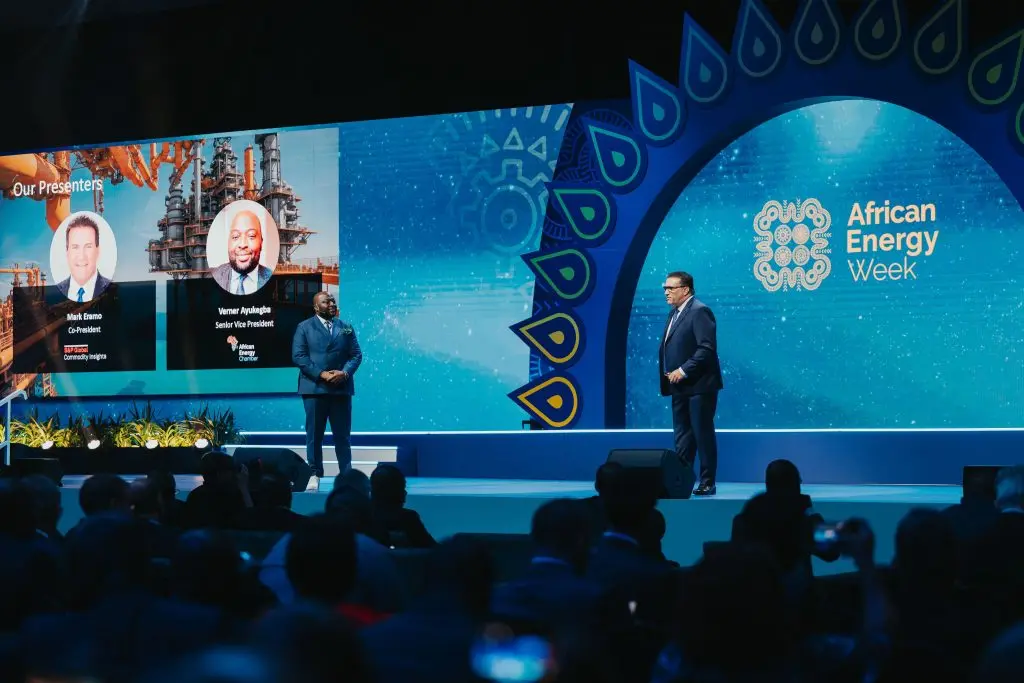
African Energy Week is approaching Cape Town carrying something heavier than the usual expectations attached to a major energy conference.
When ministers, investors, executives and policymakers gather from October 12–16, they will come to discuss oil, gas, electricity, infrastructure, financing and Africa’s persistent energy deficit. But hanging over the gathering is another question that has little to do with barrels, megawatts or investment commitments.
Can Africa Build Institutions Strong Enough to Survive Africa’s own Disagreements?
That question has acquired urgency amid concerns over the treatment of African migrants in South Africa and tensions involving Nigeria and South Africa. Against that backdrop, some have suggested that African Energy Week consider leaving Cape Town temporarily for an international destination such as London, Houston or Dubai.
On the surface, relocation has its attractions.
International conferences depend heavily on perception. Organisers need delegates to feel safe. Sponsors require certainty. Ministers and corporate executives do not travel into situations their security advisers regard as unnecessarily risky.
Moving AEW could therefore be presented as prudent event management rather than retreat, but African Energy Week has chosen another course. It intends to remain in Cape Town.
The significance of that decision is not that the organisers are pretending the problems do not exist. It is that they are making a larger proposition: Africa cannot build continental institutions if its first response to continental tensions is disengagement.
A Conference Becomes a Test
The African Energy Chamber made that philosophy clearer in a statement issued ahead of AEW 2026.
While condemning violence and mistreatment directed at African migrants, the Chamber argued that tensions should not be allowed to undermine investment, trade and cooperation between African countries. That is an important distinction.
There is no contradiction between condemning hostility towards African migrants and believing that African countries must continue doing business with one another. Indeed, the harder proposition may be that both must happen at the same time. Grievances must be confronted. Safety concerns must be addressed. Governments must be held responsible for protecting people within their borders, but commercial and institutional relationships built over decades cannot be dismantled every time relations between African countries deteriorate.
For Nigeria and South Africa in particular, that matters. The two countries occupy outsized positions in the continent’s economy. Their companies and investors have built relationships across telecommunications, banking, retail, entertainment, finance and energy. What happens between them rarely remains confined to diplomacy.
When relations deteriorate, businesses feel it. When businesses retreat, jobs and investment can follow. AEW’s decision to stay therefore represents something larger than loyalty to Cape Town. It asks whether dialogue can survive disagreement.
The Irony of AEW’s History
An intriguing historical symmetry emerges. African Energy Week itself emerged during another moment when circumstances made remaining in Africa difficult.
The COVID-19 pandemic devastated the international conference industry in 2020. Borders closed, flights disappeared, convention centres emptied, and governments restricted public gatherings.
Africa Oil Week, long one of the continent’s established petroleum conferences, was caught in that disruption. Its 2020 programme was affected and, eventually, organisers moved the November 2021 edition from Cape Town to Dubai.
Their reasoning was not irrational. South Africa was still dealing with COVID restrictions and uncertainty around international travel. Dubai offered greater predictability for staging a major global gathering.
AOW described the move as temporary, emphasised delegate safety, and said the conference would return to Cape Town. But the African Energy Chamber drew a different lesson from the episode.
If the subject of the gathering was Africa’s energy industry, it argued, Africa should remain where that conversation happened. That disagreement was not simply about Cape Town versus Dubai. It concerned ownership. Who hosts Africa’s important conversations? Who benefits economically from them? And when circumstances become difficult, does Africa remain the centre of its own affairs or does the centre move somewhere else?
In June 2021, the Chamber announced the first African Energy Week. It chose Cape Town.
The Risk That Defined AEW
Looking back, it is easy to underestimate how uncertain that decision was. No one could guarantee a newly created energy conference would attract international executives in the middle of a pandemic. No one could guarantee ministers would travel. No one knew whether changing health regulations would derail the event altogether.
Yet the inaugural AEW went ahead in November 2021. That decision established something more valuable than another annual conference. It established an institutional principle.
Africa’s energy conversation should remain physically rooted in Africa. Five years later, that principle has returned in an unexpected form. The threat is no longer a virus. The question is whether political and social tensions can achieve what COVID uncertainty could not: persuade AEW to leave. So far, the answer is no.
Why Leaving Would Be Easier
There should be no romanticism about the alternatives. London could host AEW. So could Houston. Dubai certainly could. Each possesses sophisticated conference infrastructure, excellent international connectivity, deep pools of capital and substantial energy-industry networks. In purely operational terms, relocation might even solve several immediate problems, but institutions are defined partly by the precedents they establish.
If AEW leaves Africa whenever conditions become politically difficult, when exactly should it remain? Africa will not become frictionless.
Elections and diplomatic disputes will happen. There will be migration tensions. Governments will disagree. Security challenges will arise. Trade disputes will occur. An institution aspiring to become continental cannot require continental harmony to function. It must learn to operate through disagreement. That is what makes the Cape Town decision consequential.
Energy Cannot Wait for Perfect Politics
Africa’s energy predicament adds urgency to the argument. Hundreds of millions of Africans still live without electricity, while many more lack access to clean cooking. The consequences penetrate almost every part of economic life.
Manufacturers struggle with unreliable grids. Small businesses spend scarce capital generating their own electricity. Hospitals need dependable power. Digital economies require data centres and telecommunications infrastructure that consume enormous amounts of energy. Industrialisation itself is impossible without reliable electricity.
Africa therefore has an investment problem that cannot wait for perfect political relations. Gas projects require financing. Transmission networks require capital. Renewable projects need investors. Oil and gas developments require services and infrastructure. Power pools require cooperation between neighbouring states. Energy companies increasingly operate across national borders.
The continent cannot build interconnected energy systems while simultaneously allowing political disputes to disconnect its commercial relationships. This is where AEW’s emphasis on dialogue becomes more than conference rhetoric. Energy itself demands cooperation.
The Real Meaning of African Integration
The debate also exposes an uncomfortable contradiction surrounding African integration. Africa wants a continental free-trade area. It wants African companies investing across African borders. It wants greater African ownership of natural resources. It wants African banks financing African infrastructure. It wants regional electricity markets and cross-border pipelines. Yet Africans themselves can still find travelling around their continent remarkably difficult.
Visa requirements, inconsistent immigration procedures and bureaucratic restrictions continue to complicate intra-African movement.
The Chamber has used the present debate to renew its argument for easier travel across the continent. A compelling economic logic underpins that position. A free-trade area cannot achieve its full potential if goods are supposed to move more freely than the people selling, financing, building and servicing them. An engineer should be able to move between African energy projects. An entrepreneur should be able to meet investors in another African capital. A business executive should not find travelling from one African country to another more complicated than travelling outside the continent.
Mobility is not separate from economic integration. It is one of its foundations.
But Cape Town Must Earn the Confidence
There is nevertheless a danger in turning AEW’s decision to remain into an uncomplicated story of bravery. Staying carries obligations. If organisers ask thousands of people to travel to Cape Town, assurances about their safety cannot remain rhetorical.
South African authorities, the City of Cape Town and AEW organisers must demonstrate that delegates will be protected and welcomed. That means security planning. It means clear channels for visitors to seek assistance. It means efficient immigration and airport processes. It means communication that addresses concerns rather than dismissing them. And, perhaps most importantly, it means recognising that Africans arriving in South Africa should never be made to feel that Pan-Africanism ends at immigration control.
The burden therefore does not fall on AEW alone. Cape Town itself is being tested. South Africa is being tested.
If the country wants to remain one of the continent’s great destinations for business, tourism, investment and international conferences, it must protect the confidence that makes those industries possible.
An Economic Relationship Too Important to Sacrifice
Nigeria and South Africa offer one of the clearest examples of why engagement matters. Their relationship has never been uncomplicated.
Political disagreements have surfaced repeatedly. Economic competition exists. Migration has generated tension, yet their economic interdependence remains substantial.
The lesson should not be that commercial relationships must be insulated from legitimate political criticism. Rather, countries need mechanisms through which cooperation can continue while disagreements are being addressed.
Africa will not integrate because its countries stop disagreeing. It will integrate when disagreements no longer automatically destroy cooperation. That is a much more difficult ambition.
AEW can contribute to it precisely because conferences create spaces where governments, investors, and businesses that may disagree elsewhere continue sitting across tables from one another.
Sometimes a conference’s importance is not what is said from the podium. It is who remains in the room.
From Event to Institution
That may ultimately be the most interesting part of AEW’s evolution. The first African Energy Week was partly an act of defiance against circumstances.
AEW 2026 presents a different challenge: whether the conference has matured sufficiently to become an institution rather than simply an annual event. Events happen when conditions permit. Institutions endure when conditions do not. The distinction matters.
If AEW is merely another international energy conference, there is little reason it could not move to Dubai, London, Houston, or elsewhere whenever those destinations offer greater convenience.
But if it sees itself as part of Africa’s emerging institutional architecture—alongside continental financial institutions, regional economic communities, development banks and African-led investment platforms—then geography assumes greater significance.
Africa becomes not merely the subject of the conference. Africa becomes part of its purpose.
Neither Flight Nor Denial
Two bad responses are available to AEW. One would be denial: pretending that concerns surrounding African migrants and delegate confidence are exaggerated and proceeding as though nothing has happened.
The other is flight: assuming the only way to manage difficult circumstances in Africa is to move the African conversation elsewhere.
There is a third possibility. Stay. Acknowledge the problem. Demand solutions. Protect delegates. Keep investment discussions alive, and use the gathering itself to demonstrate that disagreement does not have to become disengagement. That appears to be the course AEW has chosen.
It is harder than relocation because it requires several things at once: courage from organisers, responsibility from South African authorities, restraint in political rhetoric, and willingness among African countries to keep talking.
But perhaps that difficulty is precisely the point.
Cape Town Is Now About More Than AEW
When delegates arrive in October, the success of African Energy Week will inevitably be measured in conventional ways. How many people attended? Which ministers came? How many companies participated? What projects were announced? What investment agreements were signed? Those things matter.
But another measure may matter more. Did Africa demonstrate that its institutions can withstand political strain? The answer matters well beyond the energy industry. The African Continental Free Trade Area ultimately depends upon it. Regional integration depends upon it. Cross-border investment depends upon it. Pan-African institutions depend upon it.
There will never be an Africa without disagreements. The real question is whether Africa can build systems strong enough to prevent those disagreements from continually pulling it apart.
That is why the decision to keep AEW in Cape Town is more significant than an event-management choice.
In 2021, African Energy Week emerged from a conviction that Africa should remain the centre of its own energy conversation even when circumstances made that difficult. In 2026, that conviction is facing a different kind of pressure. This time, staying alone will not constitute success.
Success will mean demonstrating that grievances can be confronted without destroying cooperation; that safety can be demanded without abandoning engagement; and that African institutions can remain standing even when the political ground beneath them becomes uncomfortable.
AEW has chosen to stay. Cape Town must now show that Africa can disagree without walking away from itself.