Trending
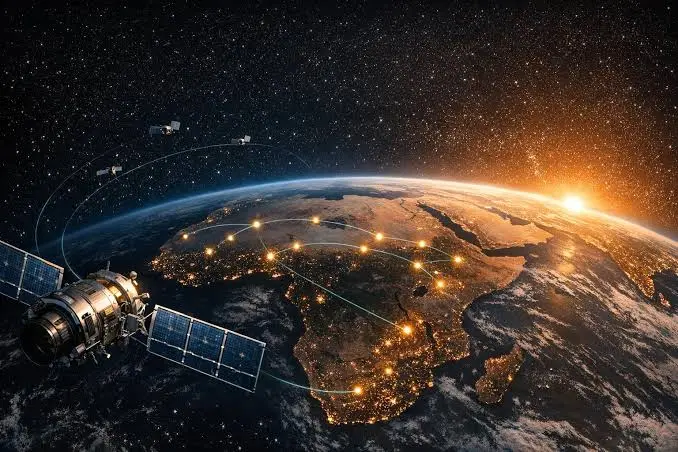
Africa has stepped up efforts to build local space expertise, with governments and partners training engineers, researchers, and students to support growing satellite programmes.
According to SpaceHubs Africa’s August 6, 2026 tally, the continent has launched 69 satellites across 18 countries, up from 58 satellites across 15 countries in 2023.
The growth has increased interest in Earth observation, communications and technology demonstration.
Read More : Spotify Expands Audiobooks to 180 Markets
However, experts say Africa still depends heavily on foreign institutions to design and build spacecraft.
A 2023 United States Institute of Peace assessment found that only 19 of 58 African satellites had been manufactured locally, while 39 were produced by foreign institutions.
A study published in Perspectives of Earth and Space Scientists also found that 90 percent of African Earth-observation projects in its sample were led by non-African organisations.
The growing focus is now shifting towards developing local skills alongside satellite projects.
In Rwanda, Czech satellite manufacturer TRL Space has established a cleanroom and engineering team in Kigali to develop TROLL NG, Rwanda’s first registered commercial satellite, planned for launch in the second half of 2027.
Rwandan engineers have worked on the project for four years, with local teams involved in subsystem development and analysis.
Uganda, Kenya, Rwanda and South Sudan have also agreed to study a jointly owned communications and broadcasting satellite, although the project remains at the feasibility stage.
Training programmes are also expanding.
Through the Africa-EU Space Partnership Programme, the European Space Agency and African Space Agency are training African engineers and scientists in spacecraft systems.
In 2026, 15 African master’s and PhD students were selected for ESA’s Earth Observation Satellite Systems Design Training, covering satellite architecture, payloads, ground systems, operations, verification and testing.
A separate ESA workshop scheduled for August 31 to September 4 will train young African engineers in spacecraft testing and mission engineering.
The wider Africa-EU partnership is backed by €100 million, with €45 million already committed, according to the European Union.
The private sector is also creating opportunities for technical training.
Cameroon-based Nanosatellite Missions Design has trained more than 200 African professionals and is developing Mission 237, a practical training constellation designed to give engineers experience with real spacecraft, telemetry and mission data.
The company won the 2026 NewSpace Africa Conference Startup Pitch Competition in Libreville.
Experts, however, say Africa’s challenge is not simply a shortage of graduates.
Johnmark Ochieng, an innovation advisory partner at RIIS, said African universities already produce astrophysicists, geospatial engineers and remote-sensing specialists, but many struggle to find opportunities at home.
“More often than not you’d either find that they sort of look for opportunities abroad,” Ochieng said, pointing to the impact of brain drain.
He also identified access to funding as a major challenge for graduates and researchers seeking to develop businesses or applied research.
“There are so many astrophysics graduates. There are so many geospatial engineers. There are so many remote sensing experts,” he said. “Someone might have an idea, they might want to have a startup, but then they wouldn’t know where to go to get this funding.”
Efforts to build the next generation of space professionals are also reaching schools.
In August, seven South African high school students represented the country at NASA’s Kennedy Space Centre during the International Space Settlement Design Competition.
The students were the only African participants in the finals and joined teams from the UK, Australia, Brazil, China and the US.
Their Team Rockdonnell proposal, Hermes, won the competition.
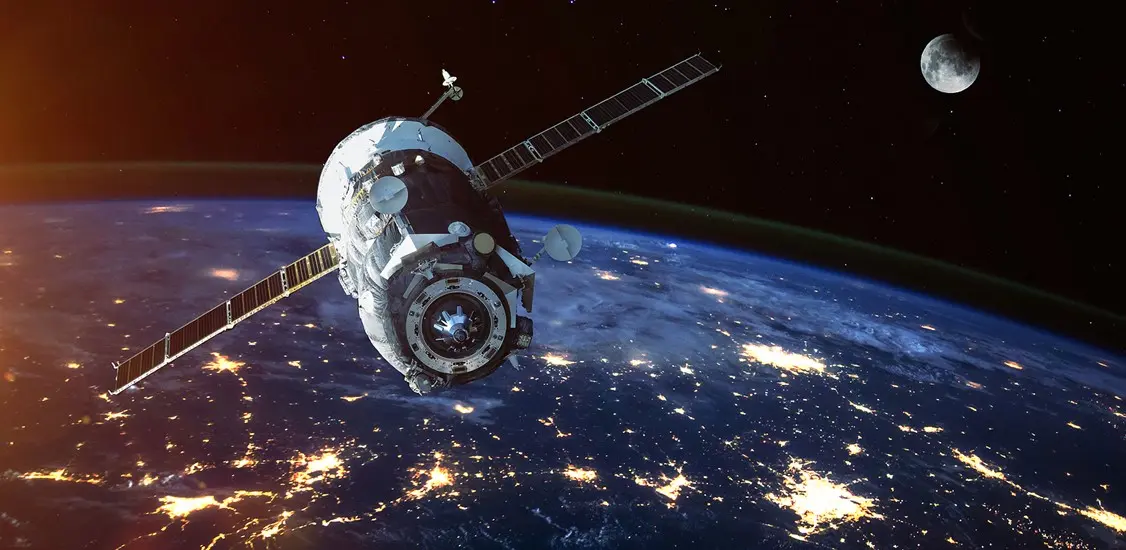
The spacecraft concept was designed to transport 3,000 people across the inner Solar System.
The team had qualified through the inaugural South Africa Space Design Competition, which involved 109 students from nine schools.
One participant, Joseph Allderman of Westerford High School, won the Anita Gale Creative Genius Prize.
“Team ZA worked so cohesively together that we all deserved this award. I was just the one who got picked to represent it,” Allderman said.
Jagger Cooper-Doubell, chair and executive director of the South Africa Space Design Competition, said the result showed the importance of creating opportunities for young people.
“The talent was never missing in South Africa. The opportunity was,” he said.
Kenya also expanded its space education efforts on August 5, when students in Nairobi spoke with European Space Agency astronaut Sophie Adenot aboard the International Space Station through the ARISS programme.
Kenya was the only African country selected for the 2026 ARISS cycle, according to the Kenya Space Agency.
Boeing and the Future African Space Explorers STEM Academy have also expanded their Pathways to Space programme to Ethiopia, Kenya, Nigeria and South Africa.
The programme targets more than 2,000 students and introduces them to aerospace engineering, spacecraft design, mission control, launch operations and space research.
The push comes as Africa’s space economy continues to grow.
Read More : AI Governance Diverges Among Global Powers
Space in Africa estimates that the continent’s space economy was worth US$24.95 billion in 2024 and could reach US$39.52 billion by 2030.
For African countries, the growing focus on training could determine whether future satellite programmes create lasting local expertise or continue to depend heavily on foreign technology.
Credit: Bonface Orucho by Bird Story Agency.