


 Trending

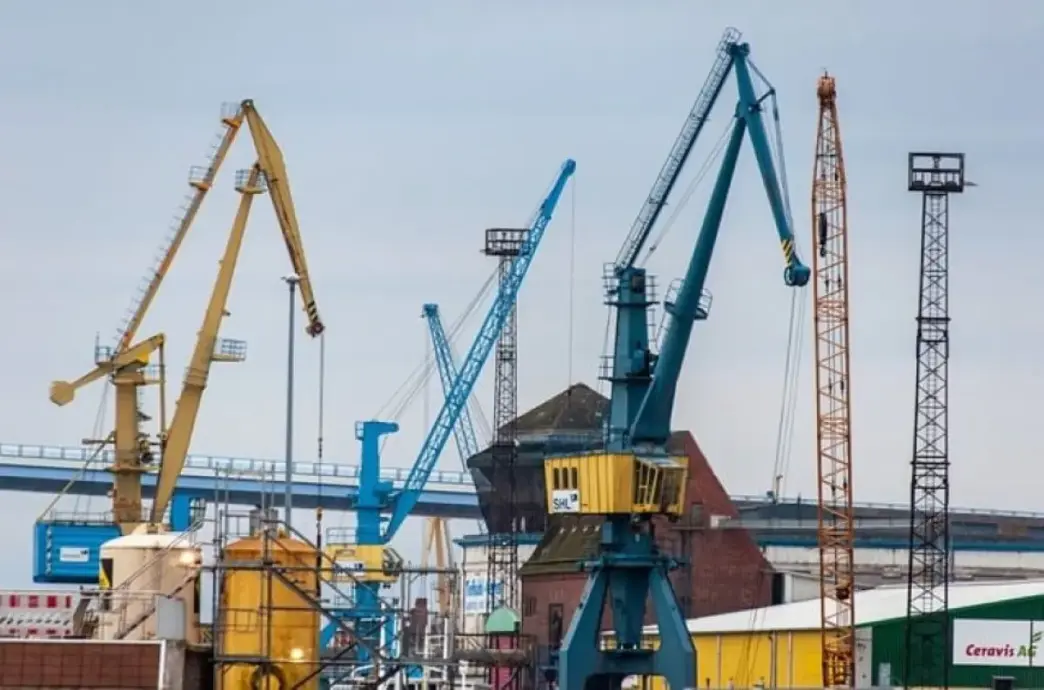
African governments are diversifying how they finance infrastructure and industrialisation, turning to pension funds, private investors, credit guarantees and capital-market instruments. The shift is opening new routes to long-term funding as countries seek to expand productive industries, energy capacity and regional trade.
African governments and development finance institutions are increasingly turning to pension funds, credit guarantees, securitisation and blended finance to mobilise capital for infrastructure and productive industries.
This is opening alternative financing routes for projects that conventional bank lending and public budgets have struggled to support, as countries seek to expand manufacturing, energy capacity and regional trade.
Structured finance specialist Opeyemi Ajetunmobi argues that the problem is not simply the availability of money, but the shortage of investment-ready opportunities.
“The bigger challenge is creating enough bankable, investable and properly structured African assets for that capital to invest in,” he said.
“Africa does not only need more capital. It needs better mechanisms for connecting the capital already within the continent to the businesses and infrastructure that can transform it,” he added.
Africa needs between US$130 billion and US$170 billion in annual infrastructure investment, leaving a financing gap of US$68 billion to US$108 billion, according to African Development Bank (AfDB) President Sidi Ould Tah, who presented the figures at the bank’s 2026 Annual Meetings.
Yet the continent holds more than US$4 trillion in domestic savings and financial assets. The challenge, Ould Tah argued, is “connecting these resources to investments that can generate productive economic value.”
A November 2026 Africa Capital Markets Report by the Organisation for Economic Co-operation and Development (OECD) puts Africa’s domestic capital pools at more than US$4.4 trillion, representing just 0.9% of global financial assets. It identifies deeper capital markets and a broader institutional investor base as routes to expanding long-term financing.
Tanzania offers an example of how risk-sharing can mobilise commercial lenders. The country signed a US$1.2 billion financing facility for the 411-kilometre Tabora–Kigoma section of its Standard Gauge Railway, arranged by AfDB.
The Bank provided a US$800 million partial credit guarantee, helping mobilise a nine-bank syndicate that includes Deutsche Bank, Société Générale, HSBC and South Africa’s Nedbank. The facility comprises US$720 million in guaranteed lending and US$480 million in sovereign-credit lending, while insurance arranged by Texel distributes US$405.5 million of exposure among international insurers.
“By combining development finance, commercial lending and insurance capacity, we have successfully unlocked the scale of financing required,” said Max Ndiaye, AfDB’s senior director.
The financing forms part of a US$2.3 billion railway investment package expected to connect agricultural and mineral production areas with markets, strengthening Tanzania’s Central Corridor and trade links with neighbouring countries, including the Democratic Republic of Congo.
In Nigeria, the Pension Industry Leadership Council and UK-funded FSD Africa signed an agreement on 9 November to develop a proposed US$750 million Nigeria Infrastructure Investment Platform. Nineteen pension funds have expressed interest, although these are not confirmed financial commitments.
The platform is targeting a US$350 million first close in 2027, with approximately US$600 million expected from pension funds and at least US$150 million from development finance institutions. An initial assessment identified 39 potential projects requiring about US$20 billion, with at least 60% of the eventual portfolio expected to support projects in Nigeria.
“The pension industry holds the largest pool of long-term savings capital in the country,” said Omolola Oloworaran, chair of the council and director-general of Nigeria’s National Pension Commission.
Kenya is pursuing a related model through its National Infrastructure Fund, established by law in March 2026 to mobilise private and institutional investment.
The National Treasury’s October 2026 Draft 2027 Budget Policy Statement puts its initial capitalisation at KSh310.6 billion (approximately US$2.4 billion), including KSh106.3 billion (approximately US$820 million) from the Kenya Pipeline Company initial public offering and KSh204.3 billion (approximately US$1.58 billion) from a proposed partial sale of the government’s Safaricom stake.
The Safaricom proceeds, however, remain subject to a legal appeal.
Kenya has also used securitisation to settle KSh80.3 billion (approximately US$621 million) in verified pending bills owed to road contractors, according to the Treasury’s October budget statement. At the manufacturing level, President William Ruto announced on 4 November that Kenya was in the final stages of establishing an Industrialisation Fund to offer manufacturers loans at single-digit interest rates.
“We must now connect more small businesses to larger manufacturers so that our enterprises become suppliers, producers and exporters,” Ruto said. He added that the fund would lend to “enterprises that want to engage in manufacturing.”
Its capitalisation, financing partners and lending timetable have not been disclosed, meaning it remains a government plan rather than an operational lending facility.
Kenya’s Green Investment Fund, launched in January 2026, provides another blended-finance model. The US$200 million vehicle has received a US$40 million commitment from the Kenya Development Corporation, while Britam and Ghanaian partner Wangara Green Ventures are expected to mobilise the remaining US$160 million.
South Africa is also developing a Credit Guarantee Vehicle to reduce investment risks and attract private infrastructure capital.

Finance Minister Enoch Godongwana said in his October 2026 budget statement that development partners, including the World Bank, had made conditional commitments of US$553 million towards its capitalisation.
The vehicle was incorporated in August and has applied for an insurance licence, with operations targeted for 2027. It is linked to the Independent Transmission Projects Programme, through which seven bidders have prequalified to participate in expanding the country’s electricity grid.
At the continental level, AfDB is advancing its New African Financial Architecture for Development and Pan-African Guarantee Platform, which uses the African Trade and Investment Development Insurance Agency to improve access to political risk and credit insurance.
AfDB approved a US$125 million equity investment in the agency in May 2026. Its financial sector development director, Ahmed Attout, described it as “a one-stop shop for guarantees across Africa”.
Another continental initiative, the Africa Energy Bank, was formally established by Afreximbank and the African Petroleum Producers’ Organisation in Abuja on 31 October. It has authorised capital of US$5 billion and a mandate to finance projects across the oil and gas value chain.
Its founders estimate that Africa needs US$200 billion in energy investment as traditional sources of fossil-fuel financing withdraw. The bank is intended to mobilise governments, national oil companies, financial institutions and private investors. However, its US$5 billion authorised capital does not cover funds already raised or available for lending.
On 13 November, AfDB also announced backing for the RAMP Warehouse Facility, a platform established by African Frontier Capital with the International Finance Corporation, Norfund and the Soros Economic Development Fund.
It aims to mobilise up to US$125 million for distributed renewable energy, electric mobility and productive-use equipment by pooling customer receivables and asset-backed cash flows.
“Rather than requiring each company to establish its own expensive and complex financing structure, we can aggregate multiple originators within a common platform,” said Eric De Moudt, chief executive of African Frontier Capital.
The first transaction is expected in the coming weeks, making the US$125 million a target rather than already deployed funding. These initiatives are emerging against a backdrop of limited capital-market financing.
The OECD’s November 2026 report estimates that outstanding corporate debt in Africa reached US$211 billion at the end of 2025, with syndicated bank loans accounting for 81%. Corporate bonds stood at US$35 billion, while only 17% of corporate debt issuance in 2025 was denominated in local currencies.
Credit: Bonface Orucho, Bird Story Agency