Trending
African leaders have called for greater use of the continent’s own financial resources to fund development, arguing that Africa can reduce its reliance on external financing by strengthening trade and investment within the continent.
The call was made on Saturday at the inaugural Alamein Africa Forum in Egypt, a three-day summit that brought together more than 20 heads of state and government representatives, as well as business executives, bankers and development institutions.
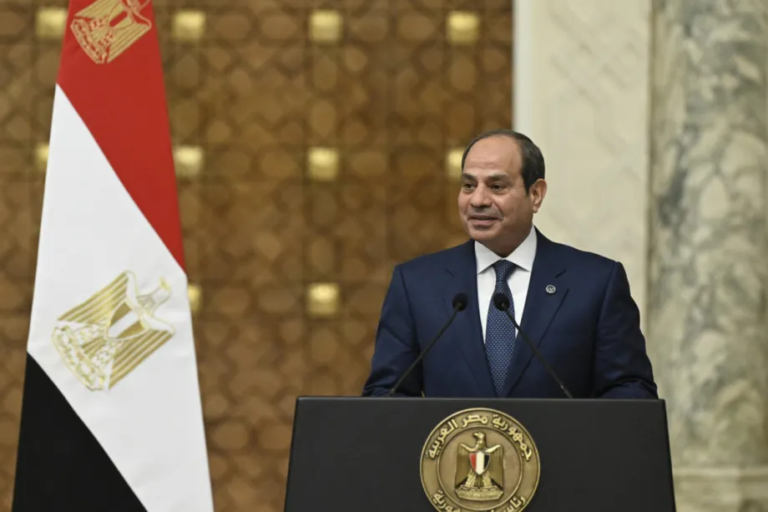
Speaking at the forum in the Mediterranean city of El-Alamein, Egyptian President Abdel Fattah al-Sisi described the private sector as the main driver of Africa’s economy, noting that it accounts for more than 70 per cent of the continent’s gross domestic product.
Read More : Cameroon Authorises $391 Million World Bank Loan
However, he said African businesses remained more closely connected to markets outside the continent than to neighbouring countries.
According to al-Sisi, about 85 per cent of transactions involving African private-sector companies are conducted with businesses outside Africa.
“Around 85 percent of African private-sector transactions are conducted with companies outside the continent,” he said.
He added that the forum was designed to help African companies identify opportunities within the continent and develop stronger cross-border partnerships.
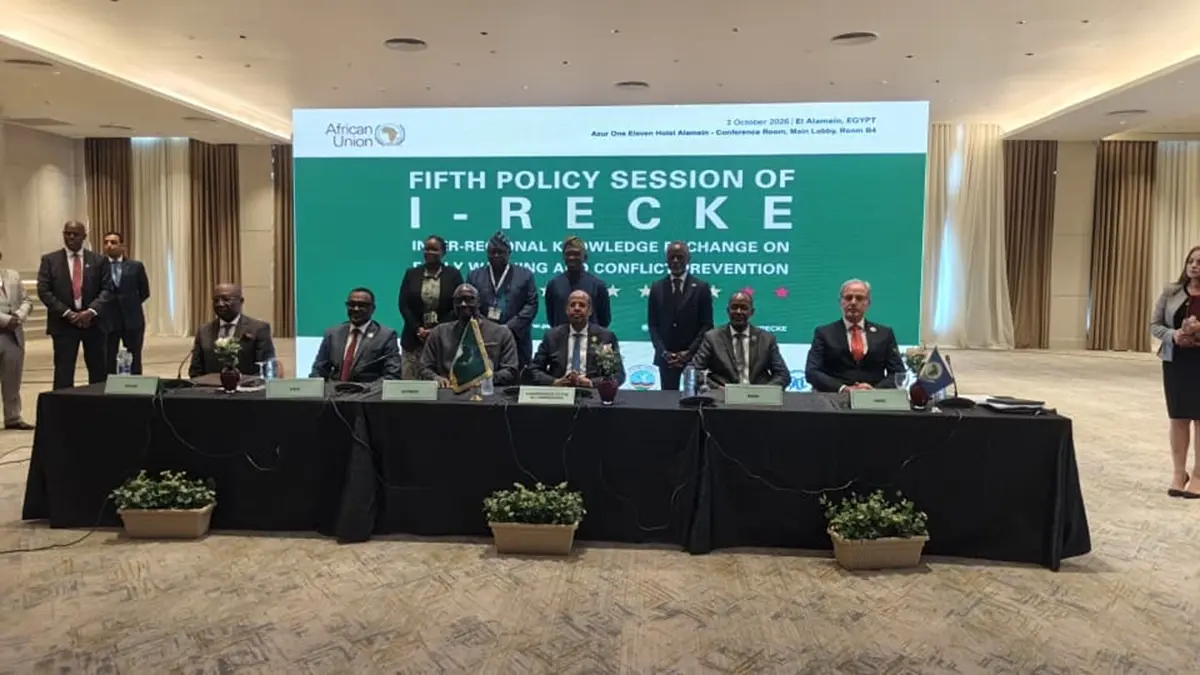
Chairperson of the African Union Commission, Mahmoud Ali Youssouf, said Africa had made progress in strengthening intra-African trade but still had significant economic potential that remained untapped.
Youssouf said intra-African trade reached $220 billion in 2024, representing 14.4 per cent of the continent’s total trade.
He added that intra-African trade grew by 12.4 per cent in 2024 after contracting by 5.9 per cent the previous year.
“In 2024, intra-African trade reached $220 billion, accounting for 14.4 percent of our continent’s trade,” he told delegates.
While describing the growth as encouraging, Youssouf said the continent could achieve significantly more by deepening economic integration and expanding trade among African countries.
The forum is expected to become a biennial event under an African Union mandate, with discussions focused on infrastructure, trade, agriculture, healthcare, mining, technology and renewable energy.
The summit also reflects Egypt’s growing efforts to deepen its engagement with the rest of Africa after years of focusing largely on the Middle East and Mediterranean region.
Cairo is seeking to strengthen its economic and political influence on the continent as China and Gulf states, particularly the United Arab Emirates, expand their own presence across Africa.
Egyptian officials estimate the country’s investments across Africa at about $14 billion. The figure includes its $3 billion investment in Tanzania’s Julius Nyerere Hydropower Project.
The gathering also comes as Egypt seeks greater African backing in its long-running dispute with Ethiopia over the Grand Ethiopian Renaissance Dam.
Cairo considers the dam a threat to its share of Nile waters, while Ethiopia maintains that the project is essential to its economic development.
The dam, which Ethiopia inaugurated last year, remains a major point of disagreement between the two countries, with Egypt insisting that its operation should be governed by a legally binding agreement.