Trending


African climate projects are helping restore degraded farmland, revive coastal mangrove forests and channel loans to smallholder farmers, with the impact now beginning to show in national figures.
At the 81st session of the United Nations General Assembly, which convenes in mid-September, backers are calling for stronger financing that can go beyond donor grants and provide longer-term support.
The UN Office of the Special Adviser on Africa said ahead of UNGA that African countries are seeking greater support for climate adaptation, delivery on loss and damage commitments, and climate finance.
They are also calling for reforms to the global financial system to address debt, high borrowing costs and the flow of finance to developing economies.
The push comes after a report published in July found that a range of climate solutions developed in Africa are delivering results, from restoring degraded land and protecting coastlines to improving access to finance for farmers.
The 2026 Africa Sustainable Development Report, produced by the African Union Commission, the UN Economic Commission for Africa, the African Development Bank and UNDP, found that Africa has made measurable progress in water, energy, industrialisation, sustainable cities and partnerships.
“Africa continues to make measurable gains across many development indicators, and progress is recorded in 12 of the 17 SDGs, mirroring the findings of previous assessments,” the report says in part.
Still, it warns that the pace and scale remain inadequate, held back by financing constraints, infrastructure gaps, climate shocks, conflict, rising debt service costs and institutional capacity limitations.
“Structural constraints including financing shortfalls, limited institutional capacities, and frequent climate and economic shocks have slowed progress and in some areas reversed gains,” the report adds.
The World Meteorological Organisation has warned that the current El Niño is likely to persist into early 2027, raising the risk of drought, floods and displacement across parts of Africa. In the Greater Horn of Africa, WMO and regional forecasters expect warmer and wetter-than-normal conditions in the final quarter of 2026.
Climate change will feature heavily at this year’s UNGA, with a high-level meeting on sea level rise scheduled for 24 September.
Its timing has placed African adaptation work alongside negotiations on finance, technology and development.
Governments and climate finance institutions are under pressure to show that adaptation money can produce practical results, particularly as El Niño threatens to intensify climate shocks across the continent.
But in East Africa, progress is already strong where work on land, water and coasts aligns with gains noted in the 2026 Africa Sustainable Development Report.
In Tanzania’s Mwanza region, inside the Lake Victoria watershed, a 2.9 million dollar grant from a US foundation is being used to expand a system that replaces plots of maize and sunflower alone with mixtures of trees, fruit, vegetables, grain and fodder.
Trees for the Future will support 2,780 smallholder farmers a year between 2026 and 2029. Each plot carries between 2,500 and 4,000 trees. The aim is to rebuild soil, raise yields and help households absorb rainfall that has become harder to predict.
Soil degradation and repeated cropping have worn the region down, and agriculture provides the bulk of rural household income in Mwanza. The project expects to restore about 3,000 acres a year and improve food supplies for 21,900 family members. Savings groups and land use planning are built into the model so that gains hold after the grant ends.
The group has worked in Tanzania since 2016 and has trained more than 12,000 farmers, planting over 36 million trees. The UN Decade on Ecosystem Restoration named it a World Restoration Flagship in 2024 for measurable impact. Its future now turns on whether the model can be financed without grants.
On Kenya’s southern coast, in Gazi Bay, the Aga Khan Foundation and Portugal’s Camões Institute are working to restore 226 hectares of mangrove forest. About 65,000 seedlings have been planted across six hectares.
Deforestation, changes to water flow and coastal erosion have damaged the bay, and rising seas and storms have made matters worse. Fish stocks and the livelihoods that depend on them have suffered. Mangroves shelter young fish, hold soil in place and store carbon, which makes them both an ecological asset and a form of coastal defence.
The project trains residents in conservation, upgrades the Gazi Boardwalk for visitors and supports local businesses run by women and young people. Kenya has adopted a national plan to conserve remaining mangroves and restore most of those that have been lost, with targets to reduce coastal storm damage by 2035 and extend protection to additional sites.
In Zanzibar, a restoration project is rehabilitating 3,300 hectares of mangrove and coral rag forest across 16 areas managed by communities. The work is designed to generate carbon credits that meet strict standards, so that restoration pays for itself rather than depending on a single donor.
A $200 million facility launched this month aims to channel climate adaptation finance to farmers through commercial lending, with Equity Group taking a direct lending role alongside public and concessional capital.
The Africa Rural Climate Adaptation Finance Mechanism was set up by the International Fund for Agricultural Development and Equity Group at the Africa Food Systems Forum in Kigali. It will run for twelve years in Kenya, Uganda, Tanzania and Rwanda.
Of the $180 million it will lend, $90 million comes from Equity Group’s own balance sheet, matching the concessional contribution. International partners cover the first losses, a middle layer of risk is shared with the bank, and the bank carries the senior risk.
The facility targets 260,000 smallholder producers and 500 rural businesses. At least half of the beneficiaries are to be women and 30 per cent young people. It is expected to improve food security for about 1.2 million people.
Gérardine Mukeshimana, vice president of IFAD, said the aim was to make rural climate adaptation a viable and lasting business line for African financial institutions.
Money lent under the facility is meant to keep flowing after concessional capital is spent, which is the point on which most adaptation programmes fail.
Philip Kilonzo, head of policy, advocacy and communication at the Pan African Climate Justice Alliance, said the problem was less a lack of solutions than the failure to get money to communities.
“We are in an acceptable state of global paralysis and inaction, paradoxically at a time when climate change impacts are ravaging Africa’s people’s lives and livelihoods,” he said.
“Adaptation is local, and African communities have demonstrated that they have requisite solutions. The unjustifiable gap is in complex financing models and modalities that are yet to come to reality with what is needed to deliver climate action at the front line.”
He said African communities required “patient, flexible, less complicated, adaptive and accessible grant-based funding” to scale up innovative climate solutions.
Diana Nabiruma, manager of programmes and communications at the Africa Institute for Energy Governance in Uganda, said civil society organisations across the continent were already supporting forest-based enterprises and clean energy entrepreneurship.
“With access to clean energy remaining dismal, especially in Sub-Saharan Africa, clean energy entrepreneurship that includes training and supporting communities to fabricate and sell clean energy solutions provides communities with an opportunity to participate in taking climate action while making a living,” she said.
For forest communities, she said, the emphasis was on beekeeping, sustainable nature based tourism and other initiatives that depend on intact ecosystems. “This way, communities participate in afforestation or forest conservation efforts while making a living.”
Imali Ngusale, strategic lead at the Africa Centre for Health Climate and Gender Justice Alliance, said the priority must be to invest in adaptation that protects livelihoods and strengthens locally led innovation.
“Africa does not lack climate solutions, it lacks the scale, finance and enabling systems needed to take proven African solutions from communities to national and continental levels,” she said.
“When climate impacts exceed the limits of adaptation, Loss and Damage finance must help communities recover and rebuild with dignity.”
The report sets out five priorities for faster action. They include stronger domestic tax collection, more climate and development finance, faster digital rollout, protection of development gains from conflict and climate shocks, and a bigger role for resilience in national planning.
It says upcoming global climate negotiations offer Africa a chance to press for climate finance, adaptation, green industrialisation and sustainable growth.
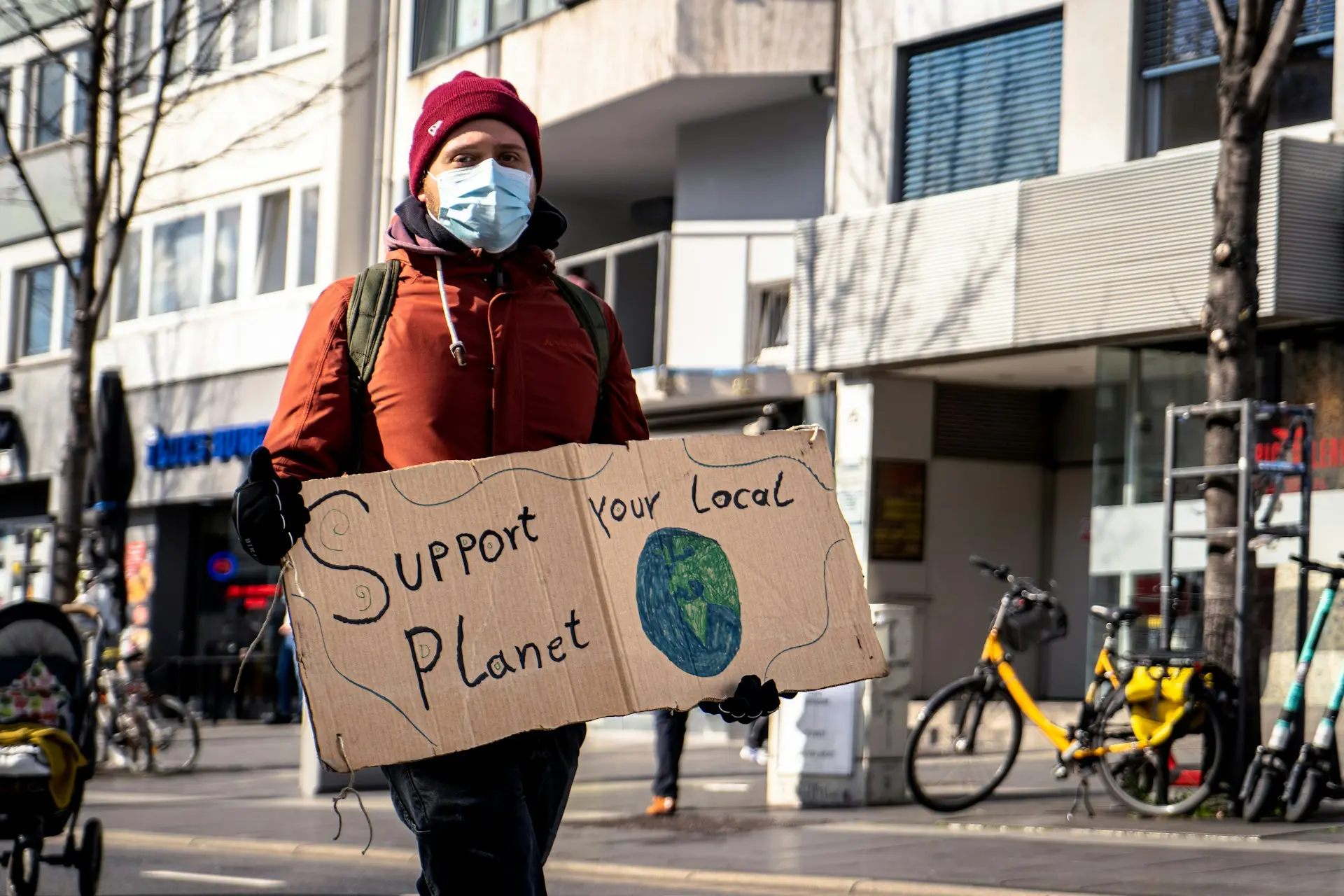
African governments are expected to use the General Debate to press for direct access to adaptation funds for institutions on the continent, including farmer organisations, community groups and local lenders, rather than routing money through intermediaries that slow disbursement and add conditions.
That argument has gained ground as evidence accumulates that money reaching the frontline produces results. The Mwanza project has restored land and raised food supplies.
The Kenyan and Zanzibar work has put coastal communities in charge of the assets they depend on. The Kigali facility has drawn a private bank into lending it would not otherwise have made.
What remains unsettled is whether these efforts stay exceptions or become the norm. Four years remain before the 2030 deadline the goals were built around. The report says progress must accelerate sharply, and that upcoming climate summits offer Africa its best opening to demand the money to do it.
Seth Onyango, Bird Story Agency.