Trending
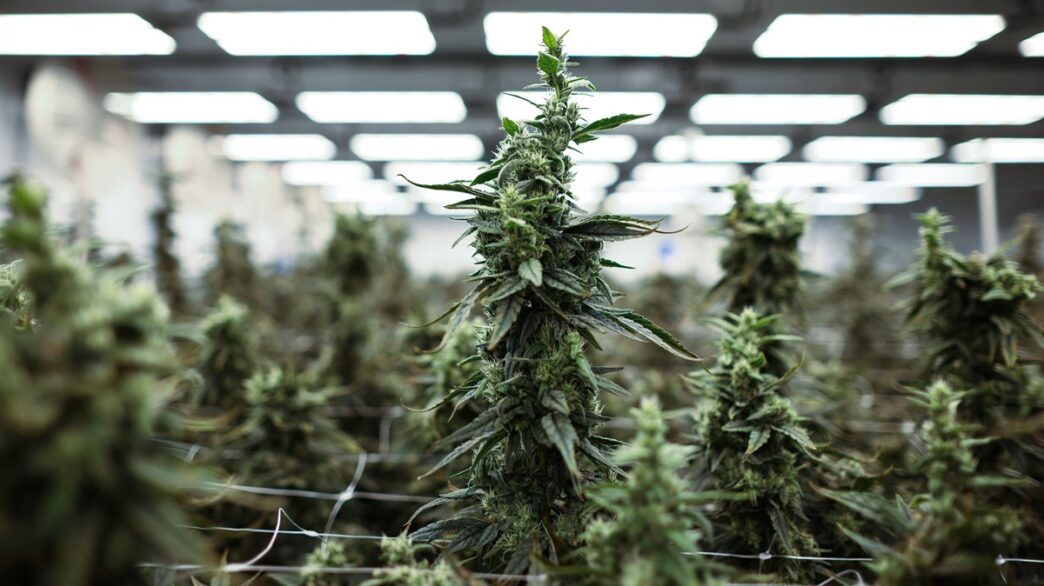
Across Africa, cannabis is an established, widely consumed substance engraved within informal economies, rural production systems, and consumption networks. What remains unclear is how policy systems continue to under-measure and under-structure its economic and public health impact.
Recent global estimates ranked Nigeria among the world’s largest cannabis consumer markets, placing it behind only the United States, China, and India, with an estimated 13.3 million users. While such figures are based on modelling rather than exact census counts, they point to a reality many policymakers have struggled to confront: cannabis use in Africa is no fringe issue. It is mainstream, widespread, and economically significant.
Nigeria: One of the Highest-Prevalence Cannabis Markets in Africa
Nigeria stands out in global drug use datasets as one of the countries with the highest recorded prevalence of illicit drug use in Africa.
According to the United Nations Office on Drugs and Crime (UNODC) National Drug Use Survey (2018), approximately 14.4% of Nigerians aged 15-64 had used at least one illicit drug in the past year, representing an estimated 14.3 million people across all drug categories.
Within that broader category, cannabis is identified as the most widely used illicit drug in the country.
Cannabis use prevalence is reported in studies and UNODC-linked analyses to range between approximately 10% and 19% among adults, depending on demographic groupings
Beyond consumption, cannabis in Nigeria also exists as an informal agricultural commodity.
UNODC reporting notes that cannabis is cultivated domestically and available across all regions of the country, with Nigeria recording significant seizures of cannabis herb in regional enforcement data.
Between 2017 and 2019, Nigeria accounted among the highest cannabis seizure volumes recorded in Africa, alongside countries such as Morocco.
This reflects an important structural reality: cannabis is not only consumed in Nigeria, it is also produced within its agricultural economy.
In several producing regions, cultivation is tied to smallholder farming systems operating outside formal agricultural value chains. This creates a parallel rural economy where cannabis functions as a high-value cash crop in informal markets, particularly in areas with limited access to structured agricultural financing or alternative livelihoods.
Africa: High Prevalence, Fragmented Systems
Nigeria is not an isolated case. Across Africa, cannabis is moving from a law-enforcement issue to an economic and policy debate.
From South Africa’s decriminalization model to Lesotho’s medical cannabis licensing, Morocco’s reform agenda, and Ghana’s industrial hemp push, governments are beginning to ask a difficult question: If demand already exists, should the market remain underground?
The continent’s agricultural potential, favorable climate, and rising investor interest have made Africa one of the most closely watched frontiers in the global cannabis trade.
A meta-analysis of regional studies covering over 50 datasets found that Adult lifetime cannabis use in Sub-Saharan Africa is estimatd at 12.6% while Adolescent lifetime use placed at 7.9%.
These figures place cannabis consumption in Africa at levels comparable to, and in some cases higher than, global averages in certain demographic groups.
However, unlike Europe or North America, Africa lacks continuous national drug surveillance systems in most countries.
The Enforcement Model and Its Structural Limits
Across Nigeria and much of Africa, cannabis policy remains primarily enforcement-driven.
In Nigeria, agencies such as the National Drug Law Enforcement Agency (NDLEA) conduct periodic interdictions targeting cultivation and distribution networks. However, UNODC seizure data and survey evidence suggest that enforcement has not significantly reduced underlying prevalence levels.
This reflects a broader structural constraint that cannabis cultivation and consumption are embedded in informal systems that adapt quickly to enforcement disruption.
Production relocates, networks fragment, and supply chains reconstitute often faster than enforcement cycles can sustainably suppress them.
While enforcement dominates policy responses, public health systems remain comparatively underdeveloped in addressing cannabis use.
The World Health Organization (WHO) identifies cannabis use as associated with:
- Impaired memory and cognitive function
- Reduced coordination and reaction time
- Increased risk of dependence in frequent users
- Potential mental health risks in vulnerable populations.
Yet across much of Africa, structured prevention, treatment, and harm-reduction systems remain limited in scale and funding relative to the level of consumption being recorded.
This creates a policy imbalance: high enforcement visibility, but low health-system visibility.
A Market Bigger Than the Laws Designed to Contain It
Cannabis in Africa is no longer a peripheral issue confined to police raids and seizure statistics. It has evolved into a complex economic, agricultural, and public health reality that cuts across borders.
Read More : Africa Ebola Outbreak Exceeds 10,000 Cases
In Nigeria, millions are linked to the market either as consumers, cultivators, traders, or enforcement targets. Across the continent, governments are beginning to confront the limits of policies built almost entirely on criminalisation, while demand, cultivation, and commercial interest continue to grow.
Without modern public health responses, and coherent economic policy, cannabis will continue to thrive in the shadows, generating income outside formal systems, exposing users to unregulated risks, and leaving governments permanently behind the curve.
The deeper challenge is not simply whether cannabis should remain illegal or be regulated. It is whether African states can build evidence-based systems capable of managing a market that already exists.