Trending
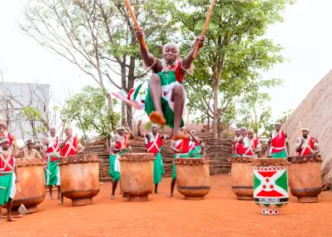
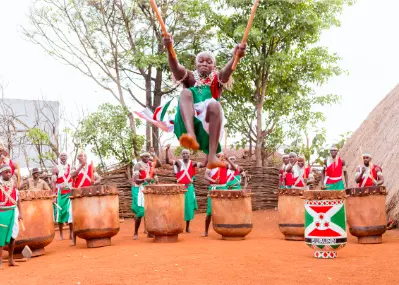
Burundi’s royal drumming tradition has faced new challenges, with masters at Gishora training young apprentices while seeking better support for performers and protecting the trees used to make the drums.
At Gishora, about seven kilometres from Gitega, Burundi’s political capital, 10-year-old Noël Béni Manisengwe is learning from experienced drummers. He watches their hands closely as they guide him through each beat.
Oscar Nshimirimana, who has led the Gishora drummers since 2017, sees his own childhood in the young apprentice.
Read More : Can Kabila’s Rebrand Boost DR Congo Rebels?
“I started learning to play the drum at the age of three,” Nshimirimana says. “I was exactly like Noël Béni when I took my first steps in this art.”
The training takes time. Children first practise on banana trunks known as ibitumbutumbu in Kirundi. Once they master the basic rhythms, their teachers assess them before they move on to small drums.
“When a pupil has mastered playing these trunks, we assess their skills to determine whether they are ready to move on to the next stage,” Nshimirimana explains.
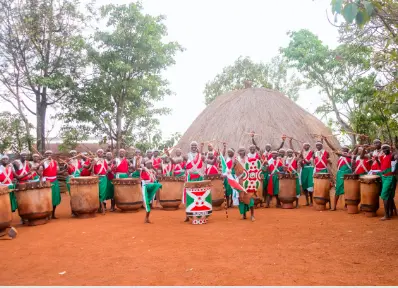
About 40 experienced drummers perform at Gishora, while a similar number of children learn the tradition. Their training covers more than musical skills. It also passes on the history, rituals and responsibilities linked to an instrument that once symbolised royal power.
UNESCO recognition preserves a living tradition
Gishora is part of Burundi’s long history of royal drumming. Nshimirimana took over leadership in 2017 from Antime Baranshakaje, whose family preserves stories linked to the monarchy.
According to oral tradition, Baranshakaje’s grandfather hid King Mwezi Gisabo in a sorghum granary during the Kilima rebellion. Professor Elie Sadiki, an archaeologist and lecturer at the University of Burundi, says Gishora belongs to a wider network of sacred drum sites.
“This site was established by the great drum ritualists of Rwesero, the traditional drum-makers,” Sadiki says.
He explains that King Ntare Rugamba and his successor, Mwezi Gisabo, established sanctuaries at Higiro, Gishora and Butegeye.
“The sites do not arise out of nowhere: they give rise to one another,” he says.
In 2014, UNESCO added Burundi’s ritual dance of the royal drum to its Representative List of the Intangible Cultural Heritage of Humanity. However, Sadiki says the recognition covers the living tradition, not the Gishora site itself.
“It is not the Gishora site that has been inscribed, but the art of drumming, under the 2003 Convention,” he says.
Gishora’s royal residence is separately included on Burundi’s tentative list for World Heritage nomination. Despite the international recognition, the site faces financial challenges. Nshimirimana says visitors include Burundians, diaspora members, researchers, and other guests.
However, the site rarely receives more than ten groups a month. Entrance fees are shared among staff, drummers and the local council, but the site has no dedicated budget.
“We do not have a specific budget,” Nshimirimana says.
Sadiki estimates that a 30-minute group performance costs between 300,000 Burundian francs (about $100) and 500,000 francs (about $165). However, the fee does not show how much individual drummers earn or how often they receive payment.
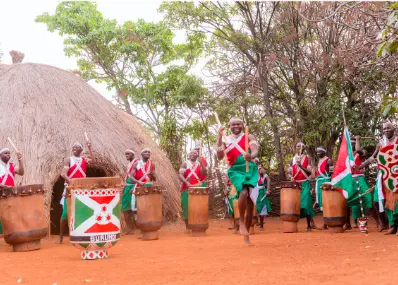
Women’s role prompts debate
Women also take part in Gishora’s performances, although they are not allowed to play the drums. Salomé Congera performs graceful dance steps during the shows. A presidential decree signed in 2017 prohibits women from playing the instrument. Some at Gishora view the restriction as part of the tradition’s sacred rules.
Sadiki says the drum carries symbols linked to the human body and royal power. In the traditional interpretation he describes, playing it is symbolically associated with impregnating the instrument. Christella-Mariza Kwizera, a sociologist and lecturer at the University of Burundi, has called for a wider discussion about women’s place in the tradition.
“Even within the women’s emancipation movement, certain symbols must be respected,” she says.
However, Kwizera also points to women’s historical influence in Burundi.
“Before colonisation, Burundian women held genuine positions of political, spiritual and economic power,” she says.
She cites Inandabunga, a daughter of King Mwezi Gisabo who governed a region before colonial administrative changes removed her, as well as the historical figure Inamujandi.
Kwizera argues that women should have more opportunities to benefit economically from the cultural heritage they help preserve. She says local businesses should draw on traditional skills and knowledge.
“Selling a few bananas or avocados on the street is not true entrepreneurship. We need to focus on projects rooted in the local area, history and ancestral women’s knowledge, such as specialised basketry (inkoko) or pottery,” she says.
Drummers seek fairer economic returns
The debate also extends to how Burundian drumming earns money beyond the country’s borders. Kwizera argues that international performances and the tradition’s global spread do not always bring enough income to the communities that preserve it.
“This is a form of cultural extractivism: people are profiting from a community’s expertise without ensuring that the original source benefits,” she says.
She supports a royalty system that would provide direct financial returns to Gishora. The funds could help support the tradition’s custodians and strengthen Burundi’s cultural presence abroad. However, creating such a system would require a way to ensure that income reaches the people who teach, perform and protect the tradition.
Protecting the trees behind the drums
The future of royal drumming also depends on the trees used to make the instruments. Cordia africana, known in Kirundi as umuvugangoma, is closely linked to Burundi’s royal drums. However, environmental scientist Célestin Havyarimana says suitable trees are becoming harder to find.
Population growth, forest clearing for farmland, and demand for firewood are pressuring the species. A 2024 study published in the University of Burundi’s Journal of Exact and Natural Sciences recorded 86 Cordia africana trees in the surveyed area of Kirimiro. More than half had trunks measuring less than 20 centimetres in diameter.
The study also found that drum-makers were turning to other tree species. These alternatives, however, produced less effective and less durable drums.
“Safeguarding this immaterial tradition now depends on preserving the tree that brings it to life,” Havyarimana says.
He recommends setting up specialised tree nurseries with international environmental funding. He also wants local communities to plant the species within agroforestry systems, which combine trees with farming.
A tradition passed to the next generation
At Gishora, the training continues as young apprentices learn the beats, rituals and responsibilities that come with the royal drum.
“There is what we call something in the blood, a gift that certain people possess, a legacy passed down by parents and ancestors,” Nshimirimana says.
Read More : AI Helps Nigerian Drivers Fix Car Problems
For children such as Noël Béni, learning the drum is therefore about more than music. It is a way to carry Burundi’s history into the future.
But keeping the tradition alive will require more than teaching the next generation. The community must also find ways to support its performers, ensure fairer economic returns and protect the trees needed to make the drums.
Credit: Ferdinand Mbonihankuye by Bird Story Agency.