Trending
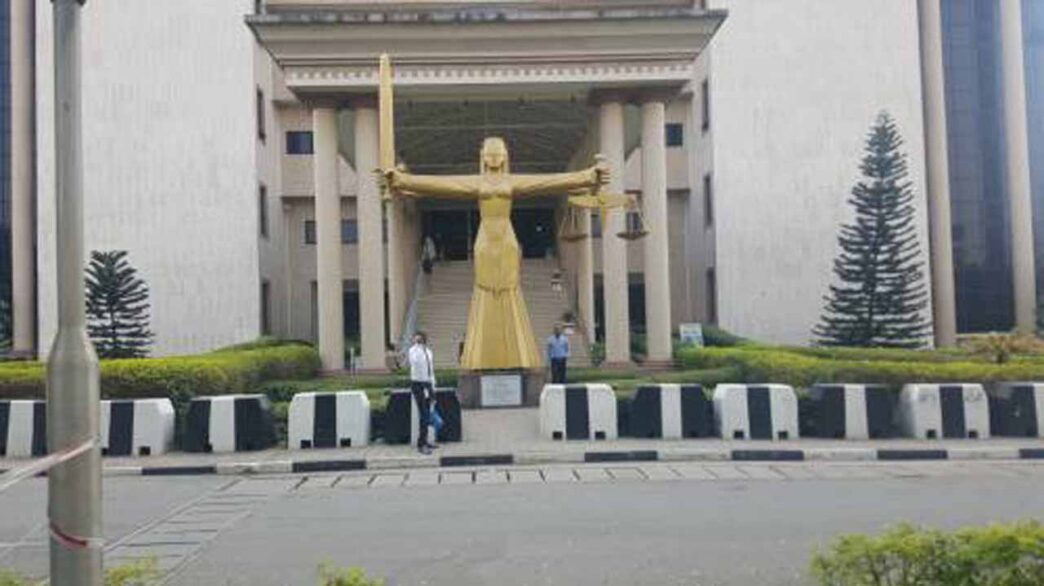
The Federal High Court in Abuja has barred the Nigeria Police Force and the Federal Road Safety Corps (FRSC) from imposing fines on motorists for failing to obtain third-party motor vehicle insurance without first obtaining a court order.
The decision followed a suit filed by activist-lawyer Deji Adeyanju against the Inspector General of Police, the Attorney General of the Federation and the FRSC.
Delivering judgement on Friday, Justice Hauwa Yilwa held that although the police and FRSC have powers to enforce compliance with third-party insurance laws, they do not have legal authority to impose penalties directly on alleged offenders.
Read More : Abia Arrests 86 Over Sanitation Violations
The suit was initiated through an originating summons, brought pursuant to Section 17 of the Motor Vehicles (Third Party Insurance) Act, 1950, Sections 68(3) and (4) of the Insurance Act, 2003, as well as provisions of the Federal Road Safety Commission (Establishment) Act, 2007.
The case sought clarification on whether the police could enforce third-party insurance requirements, impose fines without judicial approval, and whether such enforcement during stop-and-search operations violated constitutional rights.
Adeyanju also asked the court to determine whether enforcement powers belonged solely to the FRSC and sought injunctions restraining the police from carrying out such actions.

In its ruling, the court distinguished between the power to enforce compliance and the authority to punish offenders.
Counsel to the applicant, Marvin Omorogbe, said the court affirmed that both agencies may check compliance with insurance laws but ruled that neither can impose fines on motorists or vehicle owners during enforcement operations.
He said the court further restrained the IGP, police officers and FRSC officials from issuing such fines to Nigerians.
Reacting to the judgment, Adeyanju said the main objective of the suit had been achieved, noting that the ruling confirms enforcement agencies cannot arbitrarily fine motorists over insurance matters.
“The sole reason why we came to court is that we wanted the court to make a positive declaration that the police and the road safety do not have the right to impose fines on any Nigerian over motor vehicle insurance. And we have succeeded,” he said.
He added that the judgement could help curb alleged extortion and encourage citizens to assert their rights through lawful means.
Counsel to the defendants, Victor Okoye, however, said the ruling was only partly favourable to the police and indicated that an appeal was being considered.
He said the defence had challenged the court’s jurisdiction, arguing that the suit was improperly filed through an originating summons and that contentious matters should not have been determined through that procedure.
Read More : Gbajabiamila Denies PFIPC Allegations
“We envisage that we will likely challenge the proceedings at the Court of Appeal to determine if the court ought to have determined a case where the originating summons is incompetent,” he said.
Okoye also argued that the Inspector-General of Police was incorrectly named as a party, rather than the Nigeria Police Force, as a legal entity.
Despite the objections, he acknowledged that the judgement upheld the joint powers of the police and FRSC to stop vehicles, conduct checks and verify compliance with third-party insurance requirements.