Trending
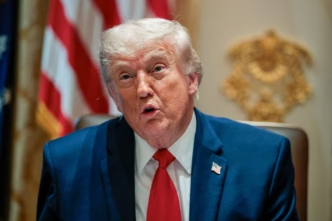
The United States has imposed sanctions on three individuals and six entities across Europe, the Middle East and West Africa for facilitating financial transactions on behalf of the Islamic State (ISIS), the Treasury Department announced on Monday.
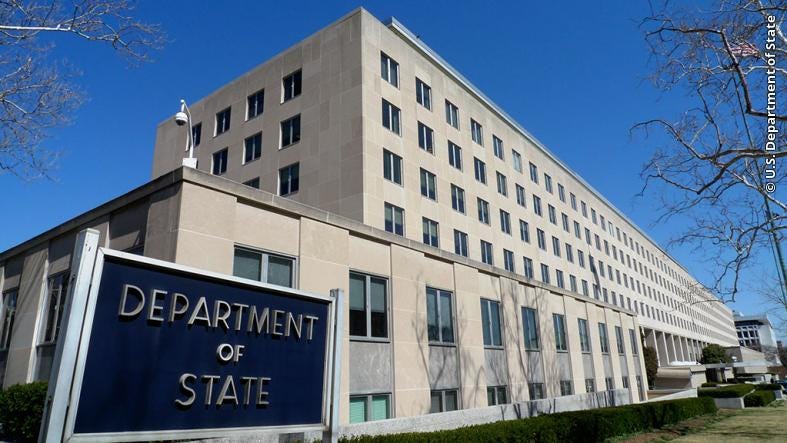
The action targets a network spanning from France and Syria to Türkiye and Nigeria, including a Nigeria-based facilitator whose money-exchange businesses served as conduits for ISIS financing, according to a statement from the State Department.
“Under the leadership of President Trump, the United States is dismantling ISIS’s ability to finance terrorism around the world,” said State Department Spokesperson Thomas “Tommy” Pigott.
Read More : Tinubu Hosts Otedola at Private Paris Dinner
“We are cutting off the financial lifelines from around the world that enable ISIS to fund attacks, support its regional affiliates, and threaten civilians, including religious minorities.”
“ISIS continues to seek new methods and tools to finance terrorist attacks,” said Secretary of the Treasury Scott Bessent.
“The United States will leverage every tool at its disposal to crush ISIS’s remaining capabilities and protect American lives.”
The designations, taken pursuant to Executive Order 13224, target “three individuals and six entities operating across Europe, the Middle East, and West Africa who have enabled ISIS to move money across borders – exposing a network that spans from France and Syria to Türkiye and Nigeria.”
Nigeria connection
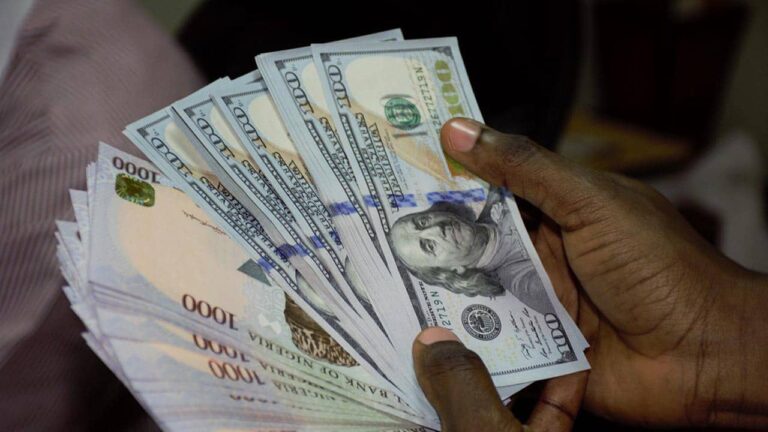
Nigeria-based Mukhtar Adamu Muhammad was designated as an ISIS in West Africa (ISIS-WA) financial facilitator who conducted money transfers on behalf of the group.
Three Nigeria-based money service businesses, Nine to Nine Exchange Bureau de Change Limited, Manhattan Bureau de Change Limited, and Generation Currency Bureau de Change Limited, were also sanctioned for being owned or controlled by Muhammad.
The action follows the May 16 killing of Abu-Bilal al-Minuki, the number two official in ISIS, in a coordinated operation involving the United States and Nigeria.
The Treasury Department statement reads, “As demonstrated by the May 16, 2026 killing of al-Minuki, the United States and Nigeria stand together in relentlessly pursuing and eliminating ISIS.
“This includes cooperation in countering the financing of terrorism and protecting the rights of religious minorities. Nigeria-based Mukhtar Adamu Muhammad (Muhammad) is an ISIS in West Africa (ISIS-WA) financial facilitator that has conducted money transfers on behalf of ISIS-WA.
“Nine to Nine Exchange Bureau de Change Limited (Nine Exchange), Manhattan Bureau de Change Limited (Manhattan Bureau), and Generation Currency Bureau de Change Limited (Generation Currency) are Nigeria-based MSBs that are owned, controlled, or directed by Muhammad.
“Muhammad is being designated pursuant to E.O. 13224, as amended, for having materially assisted, sponsored, or provided financial, material, or technological support for, or goods and services to or in support of, ISIS-WA.
“Nine Exchange, Manhattan Bureau, and Generation Currency are being designated pursuant to E.O. 13224, as amended, for being owned, controlled, or directed by, or having acted or purported to act on behalf of, directly or indirectly, Mukhtar Adamu Muhammad.”
Other targets across Europe, Middle East
The sanctions also designated Miloud Abderrahmane, a France-based facilitator who provided instructional and manufacturing information on explosives to ISIS supporters and conducted transactions with known ISIS-affiliates in Syria.
“Miloud Abderrahmane, based in France, has conducted transactions with known ISIS-affiliates, including some who were based in Syria. He has also provided instructional and manufacturing information on explosives to ISIS supporters,” the Treasury Department said in its press release.
Abdelhakim Boukich, formerly a Dutch national and an extremist financial facilitator, controls and directs Bitcoin Xchange, a Syria-based money service business established in late 2020. Boukich and Bitcoin Xchange have transferred money on behalf of ISIS associates originating from multiple countries, including Norway, Belgium, the Netherlands, South Africa, and the United States.
“Abdelhakim Boukich, formerly a Dutch national and an extremist financial facilitator, controls and directs Bitcoin Xchange, a Syria-based money service business (MSB). Bitcoin Xchange was established in late 2020 by Boukich and his Syria-based associates. Boukich and Bitcoin Xchange have transferred money on behalf of ISIS associates originating from multiple countries, including Norway, Belgium, the Netherlands, South Africa, and the United States,” the Treasury Department said.
Mohamad Alhmidan, previously designated by OFAC in March 2016 for facilitating logistical and financial support for ISIS, owns and controls Spider Gayrimenkul Ve Genel Ticaret Limited Sirketi, a Türkiye-based money service business. Alkaram Danismanlik Gayrimenkul Ic Ve Dis Genel Ticaret Limited Sirketi, also a Türkiye-based MSB, further does business on behalf of Spider. Originating as a hawala that operated in Syria, Spider was used to transfer money from parts of Syria under ISIS control to other regions not controlled by ISIS.
“Alhmidan, an individual sanctioned in 2016 for facilitating logistical and financial support for ISIS, as well as helping support foreign terrorist fighters, also owns and controls Spider Gayrimenkul Ve Genel Ticaret Limited Sirketi, a Turkiye-based MSB. Alkaram Danismanlik Gayrimenkul Ic Ve Dis Genel Ticaret Limited Sirketi, also a Turkiye-based MSB, further does business as, and operates on behalf of Spider. Originating as a hawala that operated in Syria, Spider was used to transfer money from parts of Syria under ISIS control to other regions not controlled by ISIS,” the Treasury Department said.
Abderrahmane, Boukich, Bitcoin Xchange, Spider, and Alkaram are being designated for having materially assisted, sponsored, or provided financial, material, or technological support to ISIS.
Decentralised financing network
The Treasury Department said the action reflects sustained counterterrorism pressure that has forced ISIS to become “much more decentralised and reliant on more autonomous cells and affiliates throughout the world,” as outlined in Treasury’s 2026 National Terrorist Financing Risk Assessment.
Financial facilitators provide “critical connectivity” between these nodes and ISIS’s General Directorate of Provinces, which provides operational guidance and funding to regional offices.
“These actions reflect the United States’ unrelenting pressure on ISIS, which continues to decentralise its operations and rely on financial intermediaries to connect its global network,” Pigott said in the State Department statement.
Sanctions implications
As a result of the action, all property and interests in property of the designated persons that are in the United States or under the control of U.S. persons are blocked and must be reported to OFAC. U.S. persons are generally barred from transactions involving blocked persons unless authorised or exempt, the Treasury Department said.
It added that foreign financial institutions that knowingly facilitate significant transactions for sanctioned persons may face secondary sanctions and restrictions on correspondent accounts in the United States.
The sanction read, “As a result of today’s action, all property and interests in property of the designated or blocked persons described above that are in the United States or in the possession or control of U.S. persons are blocked and must be reported to OFAC. In addition, any entities that are owned, directly or indirectly, individually or in the aggregate, 50 percent or more by one or more blocked persons are also blocked. Unless authorised by OFAC, or exempt, OFAC’s regulations generally prohibit all transactions by U.S. persons or within (or transiting) the United States that involve any property or interests in property of blocked persons.
“Violations of U.S. sanctions may result in the imposition of civil or criminal penalties on U.S. and foreign persons. OFAC may impose civil penalties for sanctions violations on a strict liability basis. OFAC’s Economic Sanctions Enforcement Guidelines provide more information regarding OFAC’s enforcement of U.S. economic sanctions.
“In addition, financial institutions and other persons may risk exposure to sanctions for engaging in certain transactions or activities involving designated or otherwise blocked persons. The prohibitions include the making of any contribution or provision of funds, goods, or services by, to, or for the benefit of any designated or blocked person, or the receipt of any contribution or provision of funds, goods, or services from any such person.
“Non-U.S. persons are also prohibited from causing or conspiring to cause U.S. persons to wittingly or unwittingly violate U.S. sanctions, as well as engaging in conduct that evades U.S. sanctions. Individuals located in the U.S. or abroad who provide information about sanctions violations to FinCEN’s whistleblower incentive program may be eligible for awards if the information they provide leads to a successful enforcement action that results in monetary penalties exceeding $1,000,000.
Read More : Turkey Football Refereeing Chief Arrested
“Furthermore, engaging in certain transactions involving the persons designated today may risk the imposition of secondary sanctions on participating foreign financial institutions. OFAC can prohibit or impose strict conditions on opening or maintaining, in the United States, a correspondent account or a payable-through account of a foreign financial institution that knowingly conducts or facilitates any significant transaction on behalf of a person who is designated pursuant to the relevant authority.
“The power and integrity of OFAC sanctions derive not only from OFAC’s ability to designate and add persons to the SDN List, but also from its willingness to remove persons from the SDN List consistent with the law. The ultimate goal of sanctions is not to punish, but to bring about a positive change in behavior. For information concerning the process for seeking removal from an OFAC list, including the SDN List, or to submit a request, please refer to OFAC’s guidance on Filing a Petition for Removal from an OFAC List.”