Trending
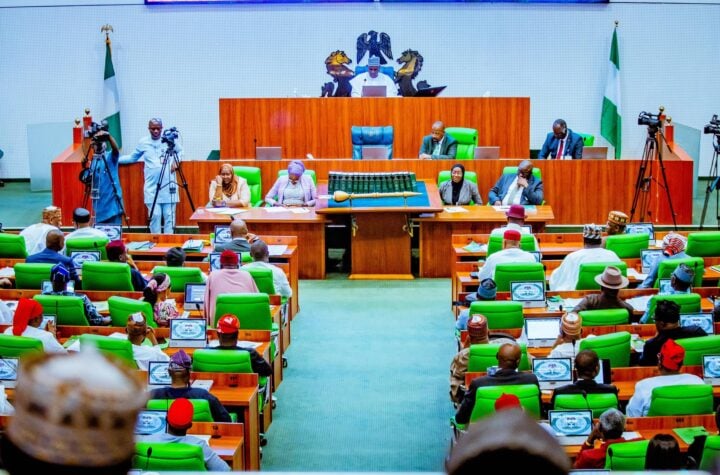
The House of Representatives has passed a landmark constitutional amendment bill on Thursday to establish state police nationwide, marking a major leap in Nigeria’s decades-long debate over decentralising policing and strengthening internal security.
The bill, titled “A Bill for an Act to Alter the Constitution of the Federal Republic of Nigeria, 1999 to Provide for the Establishment of State Police and for Related Matters (Sixth Alteration) Bill, 2026,” was approved during consideration at the Committee of the Whole, presided over by the Speaker of the House, Rt. Hon. Tajudeen Abbas.
The voting kicked off after the Deputy Speaker and Chairman of the House Committee on Constitution Review, Hon. Benjamin Kalu, presented the report on the proposal and solicited lawmakers‘ support, stressing the need for a more decentralised policing framework to effectively address the country’s growing security challenges.
Read More : Niger Governor Demands Mining Ban In Some Areas
The exercise was done manually, with members raising their hands to show their positions.
At the end of the vote, 289 lawmakers supported the bill, one member declined, and none voted against it, reflecting overwhelming bipartisan support for the far-reaching reform.

The proposed amendment seeks to fundamentally restructure Nigeria’s policing architecture by creating both Nigerian and State Police formations.
One of the bill’s key provisions amends Section 214 of the 1999 Constitution to formally establish the Nigerian Police and the State Police.
Under the proposal, the National Assembly will be empowered to prescribe the structure, organisation, administration, and powers of the Nigerian Police, and to provide the legal framework and minimum standards for the establishment and operation of state police services.
The bill states that no state police formation shall begin operations unless it is established by a law enacted by the relevant State House of Assembly and certified as complying with national minimum standards prescribed by an Act of the National Assembly.
Read More : Shettima To Lead Nigeria’s UNGA Delegation
It further provides that until a state police force becomes operational, the Nigerian Police shall continue to exercise policing powers and responsibilities within such states.
To preserve the autonomy of state police formations and prevent undue national interference, the bill limits national intervention in states’ internal security affairs.
Under the proposal, the Nigerian Police may intervene only where there is a complete breakdown of law and order, upon the request of a governor or where a state police force becomes unable to function due to administrative, financial or other operational challenges.