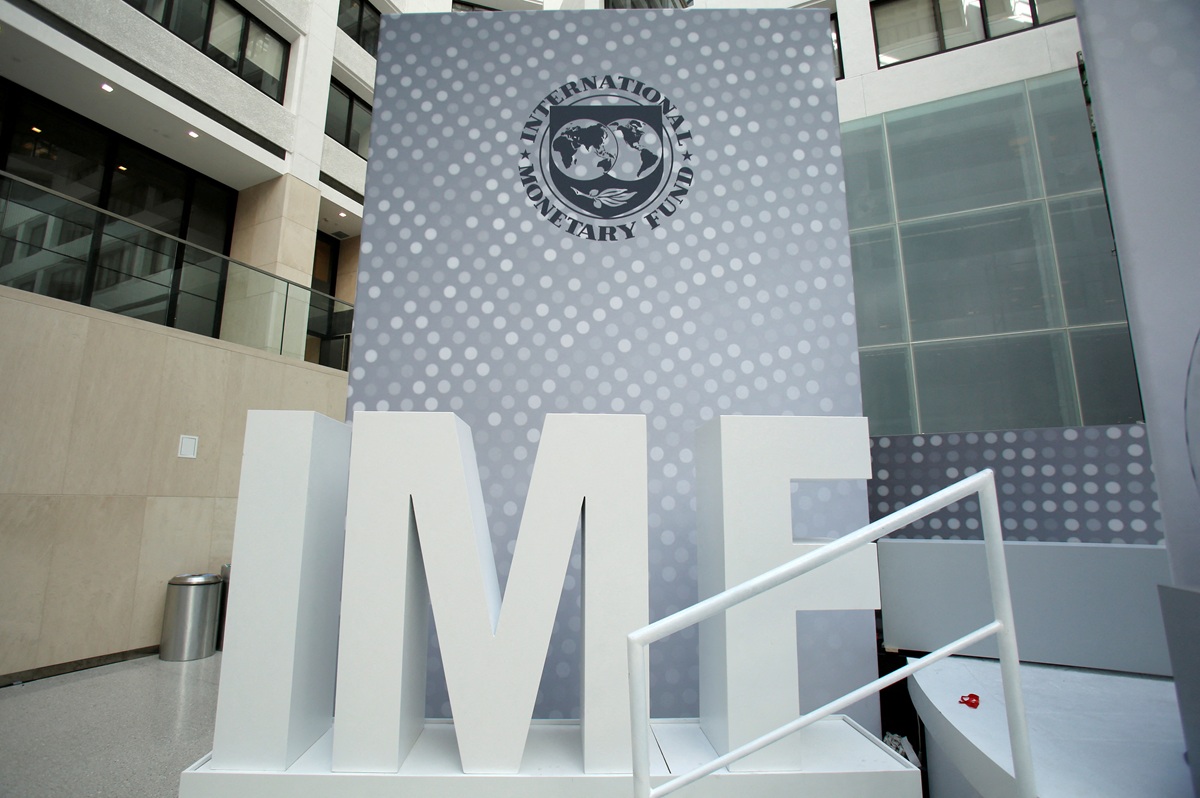
FILE PHOTO: International Monetary Fund logo is seen inside the headquarters at the end of the IMF/World Bank annual meetings in Washington, U.S., October 9, 2016. REUTERS/Yuri Gripas/File Photo
The International Monetary Fund (IMF) has lowered its 2026 global economic growth forecast to 3.0 per cent, citing the impact of the Middle East conflict despite continued momentum in artificial intelligence-driven industries.
In its latest outlook released on Wednesday, the IMF revised its projection down from the 3.1 per cent forecast issued in April, marking the second downgrade this year. The estimate was compiled before the latest exchange of attacks between the United States and Iran.
The fund also projected global inflation to rise to 4.7 per cent in 2026, higher than previously anticipated.
According to the IMF, while investment and demand linked to artificial intelligence continue to support economic activity, they have not been sufficient to offset the disruption caused by the conflict in the Middle East.
IMF Headquarters Credit: NewsCentral TV
The organisation expects global growth to recover to 3.4 per cent in 2027.
Deniz Igan, Division Chief at the IMF’s Research Department, described the outlook as broadly unchanged over the next two years and characterised the expected rebound as a “V-shaped recovery.”
She said the prolonged effects of the conflict involving Iran, extended supply disruptions and elevated commodity prices would weigh more heavily on the global economy this year.
The IMF noted that the impact of the crisis differs across regions. Energy-exporting countries outside the conflict zone have benefited from stronger terms of trade, while economies linked to the technology supply chain have continued to record solid growth despite being energy importers.
However, energy-importing economies with limited participation in the technology sector are expected to experience weaker economic performance.
The conflict, which began after US-Israeli strikes on Iran on February 28, disrupted shipping through the Strait of Hormuz, a vital route for global energy supplies, causing oil prices to surge and placing additional pressure on many economies.
Although energy shipments resumed after a temporary US-Iran agreement eased hostilities, renewed tensions have raised concerns about further disruptions.
The IMF said it expects normal shipping activity through the Strait of Hormuz to resume by 2027.
The report emphasised significant regional differences in the economic impact of the conflict. Retail petrol prices rose by about 30 per cent in emerging Asian economies compared with 15 per cent in Latin America following the outbreak of hostilities.
The United States economy is projected to grow by 2.3 per cent this year, while growth in the Middle East and Central Asia has been downgraded by 1.2 percentage points to 0.7 per cent.
The eurozone’s economy is now expected to expand by 0.9 per cent, while France’s growth forecast was reduced by 0.3 percentage points to 0.6 per cent.
China, however, received a slight upward revision, with its economy projected to grow by 4.6 per cent.
Despite some easing in energy market pressures through the release of strategic reserves, the IMF warned that renewed conflict in the Middle East could prolong commodity price volatility, disrupt supply chains, increase inflationary pressures and tighten global financial conditions.
The fund also cautioned that increasing trade fragmentation could push prices higher.
Nevertheless, it identified resilience among major exporters of AI-related hardware, including Taiwan, South Korea, Thailand and Malaysia, whose economies have continued to perform strongly despite exposure to the geopolitical crisis.
Igan added that while inflation is expected to rise this year, it represents only a temporary pause in the broader trend of slowing global inflation.
Toyibat is a highly motivated Mass Communication major and results-oriented professional with a robust foundation in media, education, and communication. Leveraging years of hands-on experience in journalism, she has honed her ability to craft compelling narratives, conduct thorough research, and deliver accurate and engaging content that resonates with diverse audiences.
Weekly roundups. Sharp analysis. Zero noise. The NewsCentral TV Newsletter delivers the headlines that matter—straight to your inbox, keeping you updated regularly.
 Trending