


 Trending

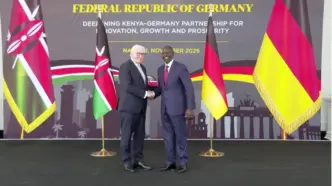
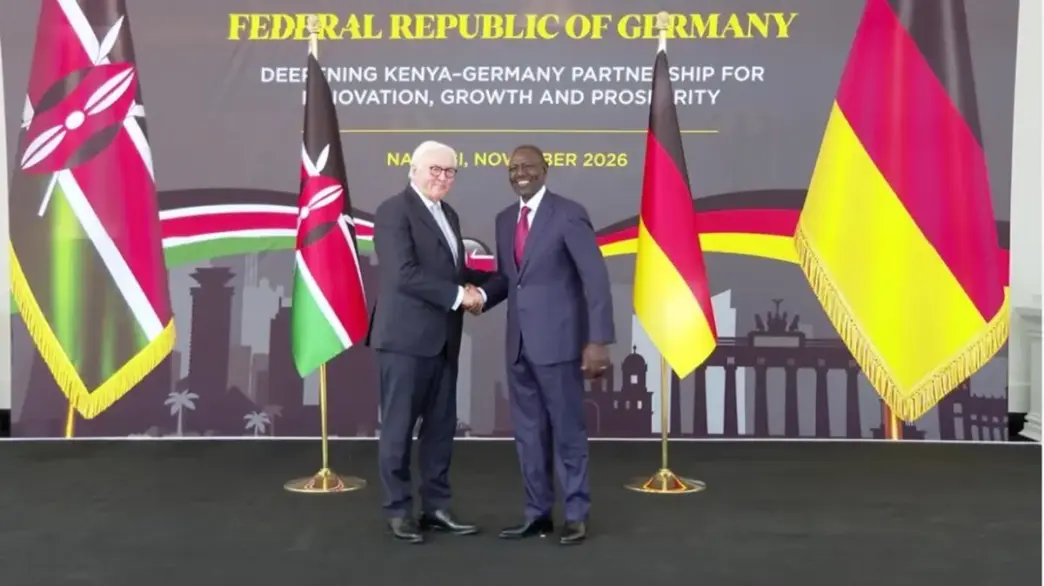
Kenya and Germany have signed an agreement to ease access to job opportunities in Germany for Kenyan workers through locally administered German-language examinations, training, and internationally recognised certification.
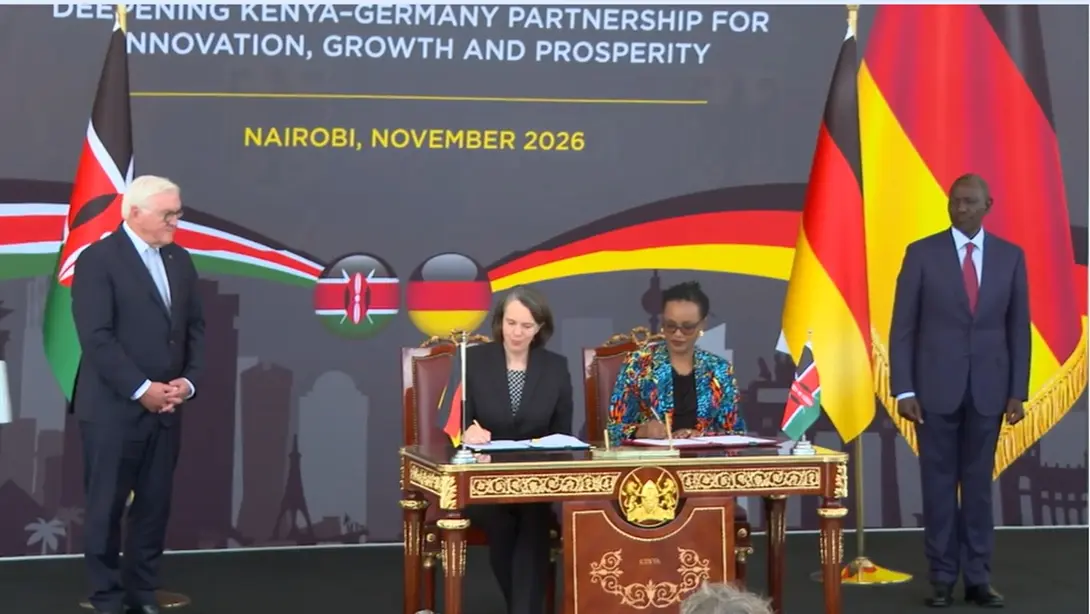
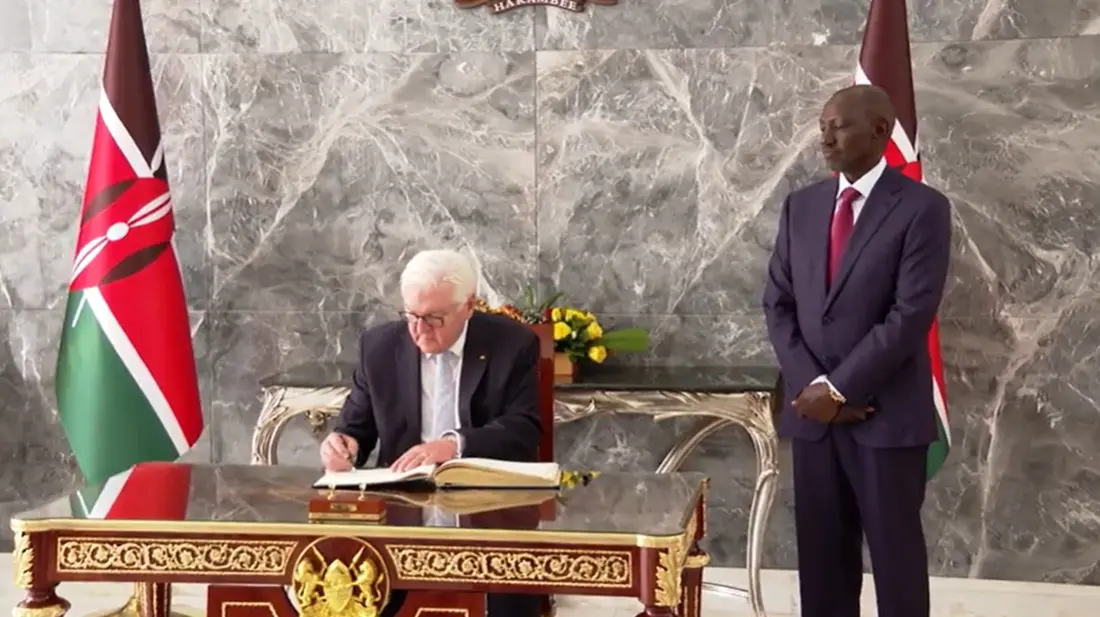
The deal was witnessed by Kenyan President William Ruto and German President Frank-Walter Steinmeier at the State House in Nairobi on Wednesday during Steinmeier’s official visit.
The memorandum of understanding was signed by Kenya and Telc, a German language testing and certification institution, to help prospective Kenyan workers meet language requirements for employment in Germany.
Under the agreement, Kenyans will be able to take German language examinations locally, while learning institutions will receive German-language textbooks, vocational training resources and support for curriculum development.
The partnership also provides for affordable language training, improved capacity for German language instructors in Kenya and measures to ensure examinations are conducted fairly and transparently.
Speaking at a joint press conference, Ruto said the agreement builds on the Comprehensive Migration and Mobility Partnership signed by the two countries in September 2024 to expand employment opportunities for Kenyans abroad.
He said the number of Kenyans working in Germany rose from 7,170 in March 2024 to 9,500 in March 2026, while Kenyan trainees contributing to Germany’s social security system increased from 820 to 1,260 over the same period.
The two leaders also discussed simplifying visa and recruitment processes, expanding language training and speeding up the recognition of professional qualifications to facilitate further employment.
Ruto said Kenya was seeking to secure as many as possible of the 200,000 job openings available in Germany for its citizens, arguing that the opportunities could be filled if the country organised its recruitment and deployment efforts effectively.
“These 200,000 opportunities are not just for Kenyans but we can take all of them if we are organised,” he said.
The two countries also explored partnerships between Kenyan technical and vocational education institutions and German industries to train young people in skills required by German employers.
They further discussed employment opportunities for Kenyan seafarers through structured training programmes, sea-time placements and partnerships with German shipping companies.
The discussions also covered port development, sustainable shipping and maritime logistics, with Kenya seeking to leverage Germany’s expertise and the strategic importance of the ports of Mombasa and Lamu.
“We explored further employment opportunities for Kenyan seafarers through structured training, sea-time placements and partnerships with German shipping companies,” he added.
Ruto also called for increased German investment in manufacturing, agro-processing, infrastructure, healthcare, renewable energy and digital technology, positioning Kenya as a gateway to the wider African market through the African Continental Free Trade Area.
He noted that more than 120 German companies were already operating in Kenya, saying the countries could expand commercial ties through joint ventures, local manufacturing and partnerships involving small and medium-sized businesses.
The Kenyan president said his government was committed to maintaining an investment-friendly environment and had developed policies and infrastructure to attract foreign businesses, adding that the National Infrastructure Fund would also help mobilise capital for development projects.
“Kenya remains committed to fostering a favourable business environment for German enterprises,” he said.
“Kenya is a safe destination for investment and presents them with good returns,” he added.
On trade, Ruto welcomed the Economic Partnership Agreement between Kenya and the European Union, which he said offered opportunities to expand exports of products such as flowers, avocados and fresh vegetables to Germany and other European markets.
He said discussions also focused on removing trade barriers, meeting international quality requirements and expanding exports of processed and value-added goods.
“We discussed the need to address market access barriers, facilitate compliance with international quality standards and promote value-added exports,” he said.
Germany has committed €52.5 million, equivalent to about KSh7.8 billion, in development assistance to Kenya for 2026 to 2028 following bilateral negotiations in Berlin in June 2026.
The two governments also identified areas for cooperation in agricultural mechanisation, irrigation, climate-smart farming, post-harvest management and cold-chain infrastructure, with the aim of improving farmers’ earnings, creating employment and strengthening food security.
“Our objective is to build competitive agricultural value chains that raise farmers’ incomes, create jobs and strengthen food security,” he said.
Beyond employment, Ruto said Kenya was seeking to expand access to international opportunities through the digital economy.
He welcomed the conclusion of technical negotiations on a mutual data adequacy arrangement with the European Union and called for Germany’s support in implementing the agreement to facilitate secure cross-border data exchange, digital trade and exports of business process outsourcing and digital services.
Ruto said Kenya was the first country to conclude the technical negotiations on the arrangement with the EU and the only East African country to have signed an Economic Partnership Agreement with the bloc.
Kenya and Germany are also exploring partnerships in digital public infrastructure, artificial intelligence, cybersecurity, scientific research, data centres and cloud computing.
The president said collaborations between universities, research institutions and technology companies in both countries could help drive innovation and strengthen Kenya’s position as a regional technology hub.
Ruto also thanked Germany for supporting the Shirika Plan, Kenya’s initiative to move refugees away from prolonged camp-based dependency towards integrated settlements and greater self-reliance.
He said the two countries would continue working to create sustainable economic opportunities for refugees and communities hosting them.
“We look forward to continued cooperation in creating sustainable economic opportunities for refugees and host communities,” he said.
On security, Ruto acknowledged Germany’s contribution to peace efforts across Africa and expressed hope that a Defence Cooperation Agreement between the two countries would be concluded soon to strengthen collaboration in counter-terrorism, maritime security, military training and peace support operations.
The two leaders also discussed international affairs, reaffirming their support for a rules-based global order and the principle that international relations should be guided by law rather than the dominance of powerful states.
Ruto said they agreed on the need to reform the United Nations Security Council to address Africa’s limited representation and restructure the international financial system to provide countries with more equitable access to credit.
Steinmeier, in his remarks, said Germany was interested in deepening its relationship with Kenya, particularly through business investment, technology transfer and the training of skilled workers.
He said German businesses had considerable opportunities in Kenya and could support its economic growth through investment and expertise, while Germany also sought structured labour migration pathways to provide opportunities for young people.
“We want to offer young people opportunities and want to have orderly pathways of labour migration,” he said.
The German president also highlighted renewable energy as an area of interest for his country, noting its importance for energy security and climate action.
Read More : Israeli Strikes Kill Hamas Security Chief
At a business forum attended by delegations from both countries, Ruto and Steinmeier proposed the establishment of a Kenya-Germany Business Forum to promote trade and investment.
Ruto said Africa’s growing population of young people and expanding consumer market offered opportunities for German companies in energy, pharmaceuticals, agriculture, manufacturing and services.
He reiterated Kenya’s position as a gateway to the African market and called for stronger partnerships between businesses in both countries to support investment and economic growth.