Trending

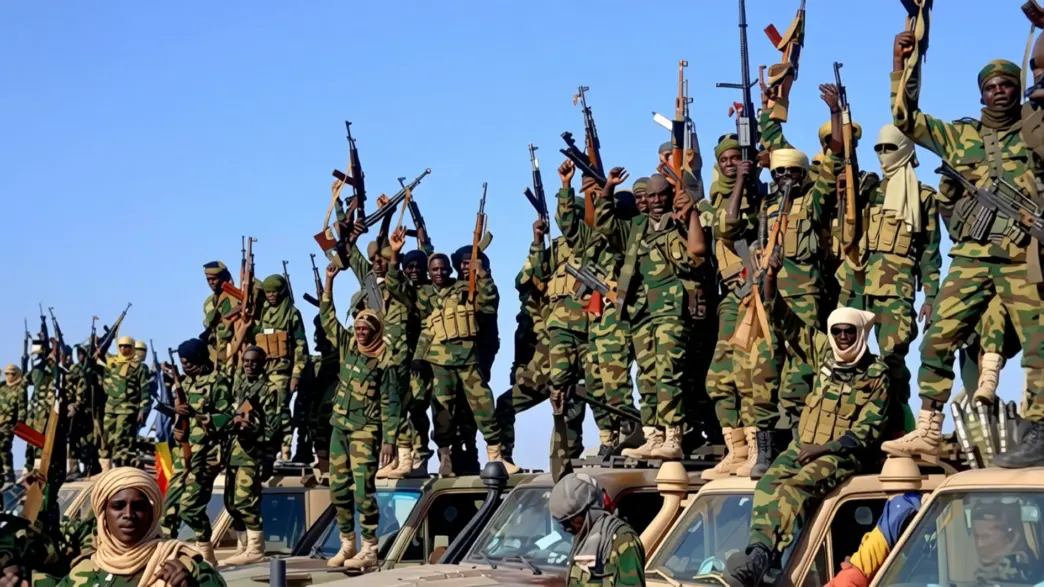
The All Progressives Congress Presidential Campaign Council has claimed that the Nigerian military killed more than 15,000 terrorists and bandits in the past three years, while over 130,000 Boko Haram fighters and their dependants surrendered under the Nigerian Government’s rehabilitation programme.
The council attributed the reported gains to sustained military operations and non-military interventions under President Bola Tinubu’s administration.
It also said Tinubu had developed a Five-Year Strategic Defence Operations Plan to strengthen Nigeria’s security system, improve military effectiveness and ensure a coordinated response to emerging threats.
Read More : Disu Redeploys 13 AIGs, Two Commissioners
The council’s spokesperson and Minister of Solid Minerals, Dele Alake, disclosed this in a statement issued on Sunday.

The statement said the plan was designed to tackle terrorism, banditry, kidnapping and other security threats across the country.
It read, “President Bola Tinubu is determined to end the 17-year scourge of insecurity ravaging parts of Nigeria through a comprehensive Five-Year Strategic Defence Operations Plan designed to strengthen the country’s security architecture, improve military effectiveness and ensure a coordinated response to emerging threats.
“The plan provides a long-term framework for aligning defence priorities, operational requirements, capability development and expenditure with Nigeria’s current and anticipated security challenges.
“The initiative is a major component of President Tinubu’s determination to reposition the nation’s security architecture towards a more coordinated, intelligence-led, technology-enabled and prevention-oriented system capable of addressing terrorism, banditry, kidnapping and other forms of criminality.
“In the last three years, the scale of the administration’s ongoing military operations across the country has led to the elimination of more than 15,000 Boko Haram terrorists and bandits, with more than 130,000 Boko Haram fighters and dependants having surrendered through Operation Safe Corridor, the Federal Government’s rehabilitation programme for repentant insurgents.”
The campaign council said the figures reflected the administration’s approach of combining military offensives with non-military interventions to tackle insecurity.
It added that Tinubu had established four new Army divisions and restructured existing military formations to improve the Nigerian Army’s operational capacity and response to security threats.
According to the statement, the changes were aimed at expanding operational coverage, decentralising military operations and helping troops respond more quickly to security threats.
The council also said the President had approved the establishment of two additional Army depots in Osogbo, Osun State, and Amasiri-Edda, Ebonyi State, to expand military training capacity and speed up the recruitment of soldiers.
It said each depot could accommodate 6,000 recruits at a time, giving the two facilities a combined capacity of 12,000 soldiers.
The statement added that 5,210 recruits were already undergoing training at the Osogbo facility.
It said the expansion was expected to reduce training time and increase the number of soldiers available for deployment.
The council further disclosed that Tinubu had approved the recruitment of 28,000 additional soldiers to strengthen the military’s manpower and improve its operational capacity.
It added that the President had also authorised the recruitment of 50,000 additional police officers to reinforce internal security and expand policing capacity.
The statement said the administration was investing in military accommodation and operational infrastructure, including a 700-unit barracks project in Ikere-Ekiti, Ekiti State.
It said the project was expected to improve the welfare and working conditions of military personnel while providing the accommodation and operational support needed to maintain an effective presence in the area.
The council added that the measures were intended to address manpower and infrastructure gaps and ensure that security personnel were adequately trained, equipped and deployed to areas facing security challenges.
It said the Five-Year Strategic Defence Operations Plan would guide government spending on defence by linking investments to identified threats, operational needs and national priorities.
According to the statement, the plan was expected to improve combat readiness, address critical capability gaps, make better use of available resources and reduce unnecessary spending.
The council’s claims come as insecurity remains a major issue in discussions ahead of the 2027 presidential election, with Tinubu seeking re-election and opposition leaders continuing to question his administration’s handling of the country’s security challenges.