



 Trending



The Independent National Electoral Commission (INEC) has clarified that ballot papers for Saturday’s nationwide mock accreditation exercise will not carry the names of registered political parties, describing the materials as dummy papers designed for testing purposes.
INEC Chairman, Joash Amupitan, gave the clarification on Wednesday during a meeting with Resident Electoral Commissioners from the 36 states and the Federal Capital Territory in Abuja, following concerns about the use of ballot papers ahead of the 2027 general elections.
Amupitan assured the public that the papers would not feature any registered political party’s name, adding that the arrangement would be visible to participants during the exercise.
“The ballot papers to be used are pseudo-ballot papers and not containing the name of the registered political parties.
“People have started asking questions: ‘Hope this is not another opportunity for INEC to rig the election ahead of the election?’
“So, no registered name of any political party is going to appear and they will see it; it’s going to be visible to everybody,’’ he added.
The commission plans to conduct the simulation in two polling units per ward nationwide, using it to assess its election technology and operational processes rather than as a ceremonial exercise.
The INEC chairman said the test would focus on upgraded Bimodal Voter Accreditation System devices, logistics arrangements and the commission’s Result Viewing Portal, IReV, particularly the processes for verifying and transmitting election results.
“We want to use the mock accreditation to especially test these three strains of transmission, verification and transmission of results,” he stated.
He explained that the commission had also strengthened its IReV procedures to include automated checks on figures recorded on Form EC8A, the polling unit result sheet, to detect arithmetic inconsistencies and possible over-voting before results are uploaded.
According to him, the checks are intended to help presiding officers ensure that figures transmitted to IReV reflect results verified at the polling units, reducing discrepancies and uncertainties during manual collation.
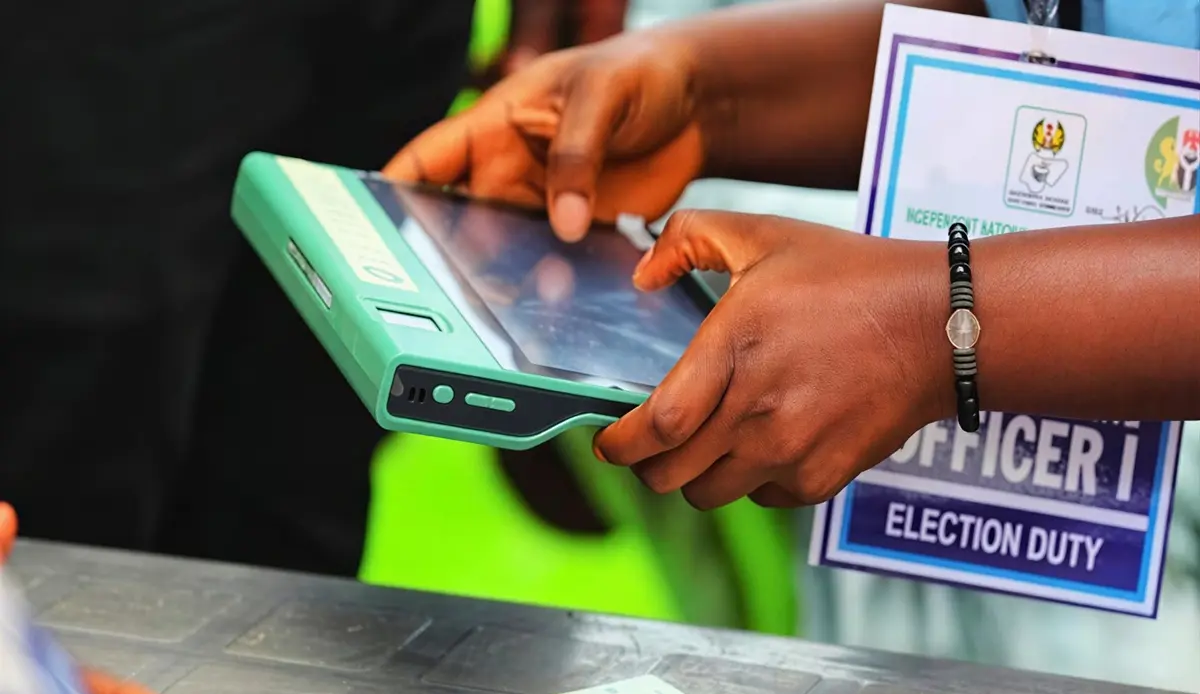
“So, the EC8A is meant to help the presiding officers at the polling units to ensure that what they are uploading to the IReV is the authentic and accurate result verified by all at the polling unit. This will reduce manual collation ambiguity,’’ he said.
Amupitan directed the Resident Electoral Commissioners to supervise the exercise closely, disclosing that national commissioners had been assigned to monitor activities across their respective zones, while he would also conduct field monitoring.
He further instructed each REC to personally oversee preparations in their state and submit a detailed technical assessment of the exercise by Monday.
Addressing preparations for the 2027 general elections, the INEC chairman urged the RECs to implement the commission’s plans without delays, noting that the election timetable required prompt decisions and execution.
He described the RECs as the commission’s operational leaders at the state level, whose supervision, neutrality and administrative discipline would be critical to the credibility of the elections.
“As resident electoral commissioners, you are the commission’s chief operational commanders in the field, who stand at the intersection of national policy and grassroots reality.
“The credibility, smoothness and public legitimacy of the 2027 general elections rest squarely on the precision, vigilance, institutional neutrality and administrative rigour with which you lead your respective state offices over the next 51 days,” he said.
Amupitan said INEC had already acted on some recommendations from its recent zonal readiness assessments and urged the RECs to build on lessons from the off-cycle elections, while recognising that nationwide polls would involve significantly greater operational demands.
He said the commission would manage a voter register of more than 100 million people, deploy BVAS devices and coordinate over 1.4 million ad-hoc personnel across different locations, including urban centres, remote riverine areas, communities affected by insurgency and settlements hosting internally displaced persons.
He warned that lapses in election administration, even in individual states, could attract national scrutiny and undermine public confidence in the commission’s preparations.
“Across the country, we are managing a verified register of over 100 million voters, deploying our Bimodal Voter Accreditation System (BVAS) devices and coordinating over 1.4 million ad-hoc election personnel across diverse terrains.
“This is from dense urban centres to remote riverine communities, insurgency-affected corridors and locations hosting internally displaced persons.
“An exercise of that scale—even minor administrative lapses in one state can trigger national headlines and cast doubt on our preparations.
Read More : NDC Vows to Resist Attempts to Intimidate Obi
“It is important, therefore, for all of us to ensure that our work is taking its stride,” he said.
Amupitan also disclosed that INEC had begun distributing sensitive and non-sensitive election materials to states, urging the RECs to resolve operational difficulties, communication shortcomings and logistical challenges identified during reviews of recent elections.
He stressed that preparations should also account for inclusivity and the need for clear, verifiable election records.