Trending

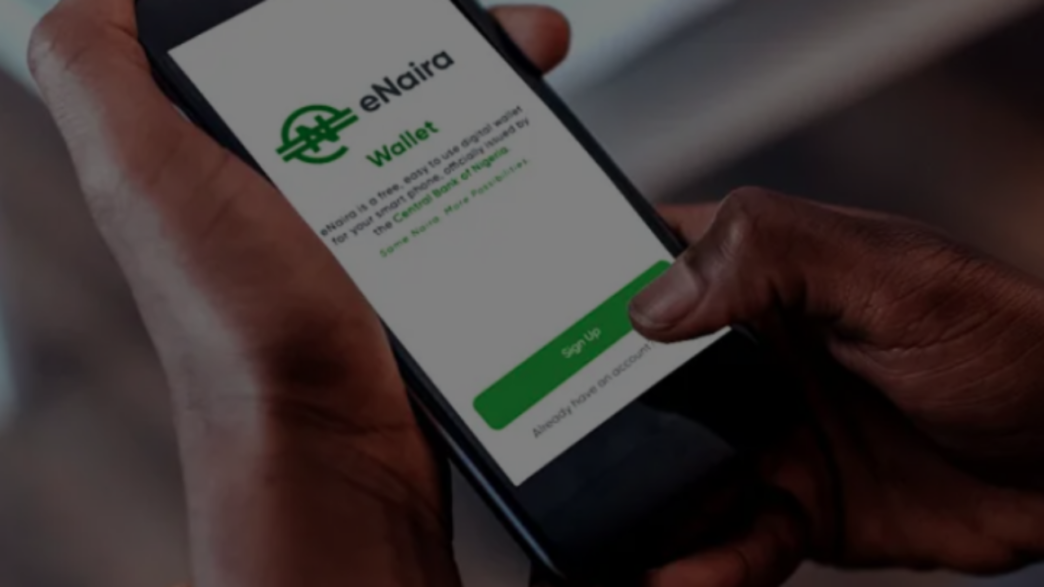
Nigerian workers, retirees, and social welfare beneficiaries may soon receive their payments through the eNaira, as the Central Bank introduces a roadmap to make the digital currency a mainstream payment channel.
The proposal, contained in the Nigeria Payments System Vision 2028, aims to shift the eNaira from a pilot project to a core payment rail for both government and private-sector transactions.
Launched in October 2021 as Africa’s first central bank digital currency, the eNaira was designed to boost financial inclusion, cut transaction costs and promote a cashless economy. But adoption has remained slow despite years of official backing.
Read More : Abia Arrests 86 Over Sanitation Violations
Under the new plan, the CBN says it will revisit the existing digital currency framework to better reflect market realities and operational needs.
“Transition CBDC from pilot to core payment rail through defined use cases,” the bank stated.
Key domestic applications identified include government-to-person payments, payroll processing, offline payments and support for micro-enterprises.
The proposal suggests that salaries, pensions, conditional cash transfers and other public-sector payments could eventually flow through the eNaira platform, a move designed to accelerate adoption and improve payment efficiency.
The document also focuses on the currency’s programmable-money features, which could enable time-limited spending, purpose-specific payments, payment splitting and sub-wallet creation.

The CBN added that the digital currency could enhance financial market infrastructure by supporting settlement systems, banks and tokenised assets such as bonds and securities, while making transactions faster and cheaper.
In the foreword, CBN Governor Olayemi Cardoso said the payments system vision aims to cement Nigeria’s status as a leading digital payments market.
“PSV2028 sets clear strategic priorities: modernising payments infrastructure, strengthening regulatory and supervisory frameworks, accelerating the adoption of digital financial services, and fostering deeper collaboration across stakeholders,” Cardoso said.
Despite millions of wallet registrations and transactions worth roughly 22 billion naira, the eNaira has not achieved widespread everyday use, the document admits.
The bank points to limited merchant acceptance, weak integration with banking and fintech apps, and a lack of live cross-border CBDC corridors as major obstacles.
To tackle these challenges, the CBN plans to reposition the eNaira for government payments, remittances and trade settlements, while opening application programming interfaces for fintech integration.
The bank will also pursue bilateral CBDC corridor pilots with key trade and remittance partners to facilitate cross-border transactions.
Read More : Gbajabiamila Denies PFIPC Allegations
“Reposition eNaira for G2P, remittances, trade settlement; open APIs for Fintech integration; launch bilateral CBDC corridor pilots with priority trade/remittance partners,” the CBN said.
The initiative comes as central banks worldwide explore digital currencies as alternatives to cash and private crypto assets.
More than 130 countries are currently researching, piloting or developing central bank digital currencies, according to industry estimates.