Trending
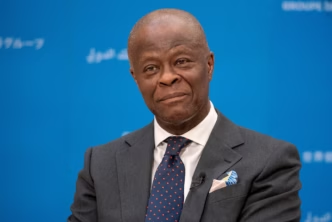
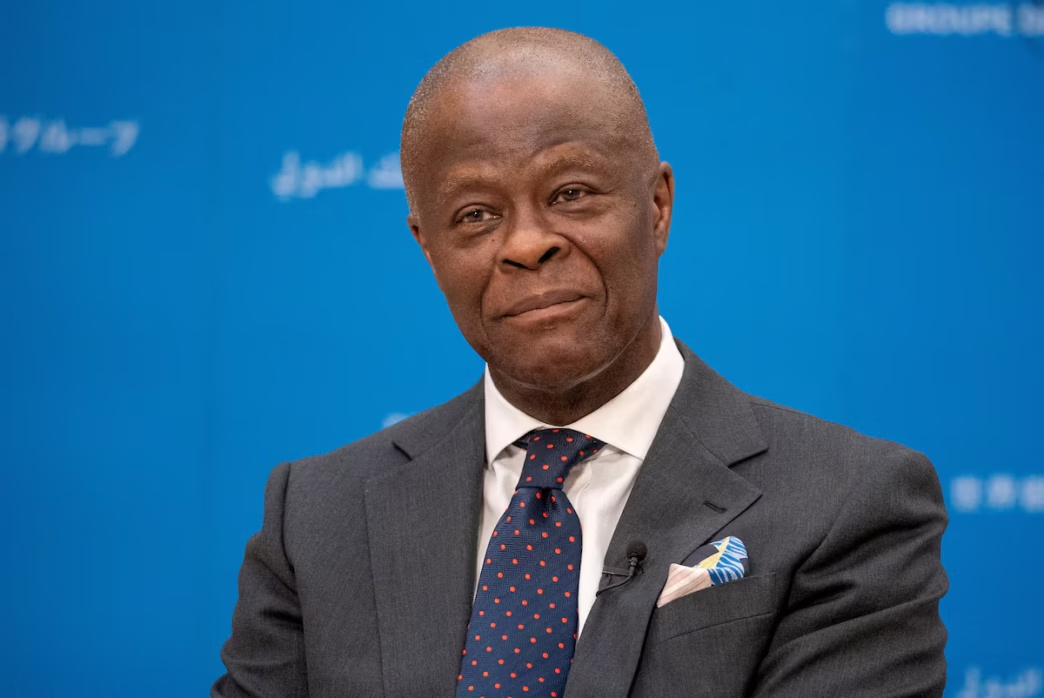
Nigeria has no intention of seeking a loan from the International Monetary Fund as the global lender prepares to make between $20 billion and $50 billion available to support struggling economies, most of them in Africa, the finance minister said Thursday.
Wale Edun, Nigeria’s Minister of Finance and Coordinating Minister for the Economy, made the declaration at a press briefing during the World Bank/IMF Spring Meetings in Washington DC.
“Nigeria has no plan at the moment to approach the IMF for any other such burden,” Edun said when asked whether the government would seek to borrow from the planned fund.
Read More : Umahi: Lagos-Calabar Highway Lacks Master Design
His remarks came one day after IMF Managing Director Kristalina Georgieva advised countries facing economic pressures to act swiftly in seeking financial support, warning that delays could worsen conditions.
“My advice is that when you need help financially, don’t hesitate to move fast, because the sooner we act, the more we protect the economy,” Georgieva said on Wednesday.
Georgieva revealed that the IMF is committed to providing financial support to member countries given their current challenges, with a particular focus on Sub-Saharan Africa.
“We anticipate financial demand for IMF support to range between $20bn and $50bn, which represents augmentation of some existing problems and prospective demands from new problems from at least a dozen countries, a number of them in Sub-Saharan Africa,” she said.
The IMF chief noted that during a meeting with African central bank governors and finance ministers the previous day, officials did not request immediate financial assistance but instead sought policy guidance.
“But, of course, there could be a need for financial support,” she said.
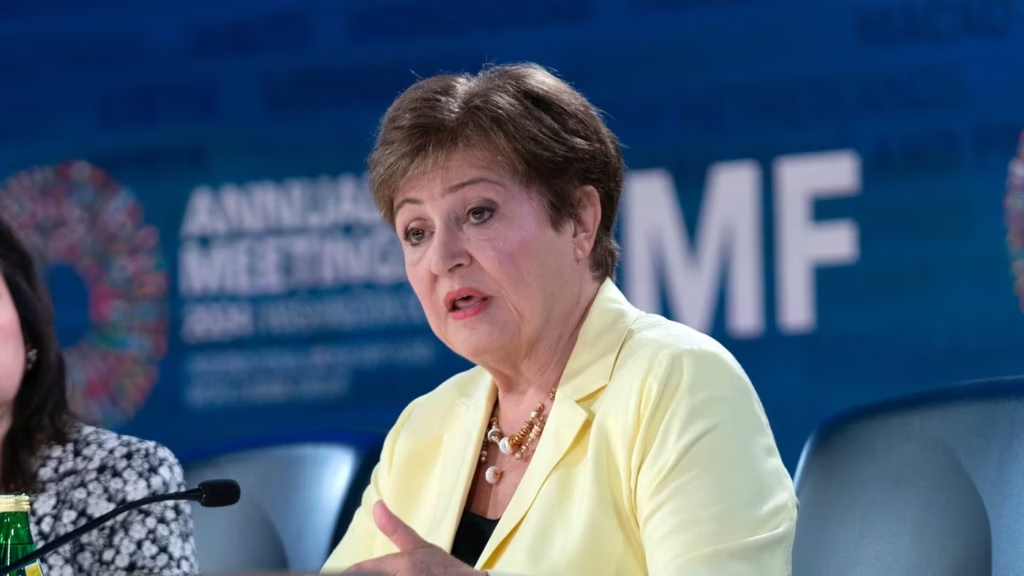
“And my advice is that when you need help financially, don’t hesitate to move fast, because the sooner we act, the more we protect the economy.”
Edun told the meeting that African nations require additional support at this moment, pointing to the Middle East crisis as a factor that disproportionately affects the continent.
He said African countries “are not creators in any way of this situation” but “stand to command greater pressure than perhaps any other region.”
“This is in terms of the threat to macroeconomic stability, growth trajectories, and their ability to create jobs and reduce poverty in their countries,” the minister said.
He added, “And I think that is a clear statement, particularly to those identified as the most vulnerable oil-importing countries. They need and deserve extra help at this time.”