Trending


Nigeria’s headline inflation rate declined to 14.06 per cent in October 2026, from 14.63 per cent recorded in September, according to the Consumer Price Index report for October.
The report, which was released in November, showed that inflation also fell from 18.97 per cent recorded in October 2025.
However, on a month-on-month basis, headline inflation rose to 0.43 per cent in October from 0.06 per cent in September, indicating that the pace of increase in average prices was higher during the month.
The Consumer Price Index, which measures changes in the prices of goods and services, increased to 147.0 points in October from 146.4 points in September.
The report showed that food inflation stood at 19.13 per cent year-on-year in October, compared with 16.30 per cent in the corresponding month of 2025.
On a month-on-month basis, food inflation was -0.75 per cent in October, compared with -1.55 per cent in September.
The report attributed the movement in food prices to changes in the average prices of items including vegetable oil, sardines, green peas, frozen mackerel, local rice, fresh catfish, beef tripe, palm oil and millet flour.
Core inflation, which excludes farm produce and energy prices, stood at 10.78 per cent year-on-year in October, down from 21.25 per cent in October 2025.
On a month-on-month basis, core inflation declined to -0.53 per cent in October from 1.11 per cent in September.
The report also showed that food and non-alcoholic beverages made the largest contribution to annual headline inflation, accounting for 5.63 percentage points.
Restaurants and accommodation services contributed 1.82 percentage points, while transport accounted for 1.50 percentage points. Housing, water, electricity, gas and other fuels contributed 1.18 percentage points.
A breakdown of inflation across locations showed that urban inflation stood at 14.84 per cent year-on-year in October, while rural inflation was 12.17 per cent.
On a month-on-month basis, urban inflation was 0.43 per cent, while rural inflation stood at 0.18 per cent.
At the state level, Imo recorded the highest year-on-year all-items inflation rate at 28.66 per cent, followed by Enugu with 22.81 per cent and Kaduna with 21.55 per cent.
Taraba recorded the lowest rate at 6.12 per cent, followed by Sokoto at 6.68 per cent and Ekiti at 7.64 per cent.
For food inflation, Ondo recorded the highest year-on-year rate at 31.74 per cent, followed by Lagos at 31.43 per cent and Imo at 29.75 per cent.
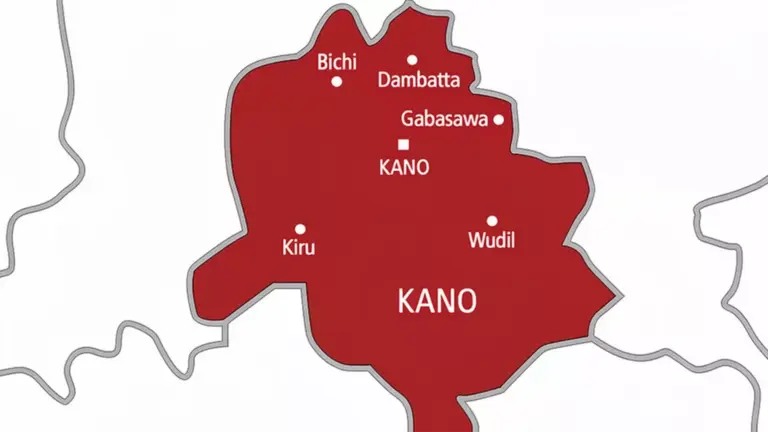
Nasarawa had the lowest food inflation rate at 3.70 per cent, while Bayelsa and Kano recorded 7.11 per cent and 7.13 per cent, respectively.
In October 2026, the Headline inflation rate stood at 14.06%.
On a month-on-month basis, the Headline inflation rate in October 2026 was 0.43%.
The Food inflation rate in October 2026 was 19.13% YoY and -0.75% MoM.
Read the October 2026 CPI Report here: https://t.co/so6qTYLs0a https://t.co/Bu8J1anZl9
— NBS Nigeria (@NBS_Nigeria) November 16, 2026