Trending
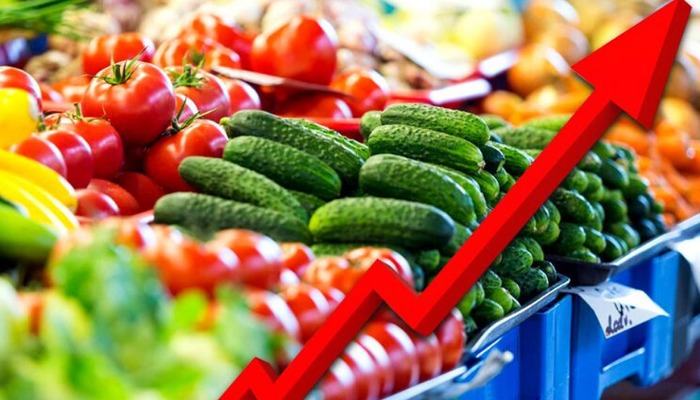
Many residents and food vendors in the Federal Capital Territory (FCT) have expressed concern over the persistent rise in the cost of vegetables and other food items, with many saying feeding and operating restaurants have become increasingly difficult in Nigeria’s capital city.
The residents and business owners, who spoke with the News Agency of Nigeria (NAN), said they are considering alternatives and adjusting their strategies as prices continue to rise.
A restaurant owner in the capital, Mary Augustine, said the prices of tomatoes, pepper, and leafy vegetables have increased significantly in recent months.
According to her, a large basket of tomatoes, which previously sold for between N45,000 and N48,000, now sells for between N85,000 and N90,000.
She added that a 50kg bag of pepper, which used to cost between N20,000 and N30,000, now sells for between N120,000 and N150,000.
Augustine said the rising prices have forced many food vendors to increase meal prices or reduce portion sizes.
“We use vegetables every day for cooking soups, stews and salads, but the prices keep increasing almost every week,” she said.
“Sometimes, we spend more than twice what we used to spend in the market, yet customers still expect food prices and portions to remain the same.
“To cope with this situation, I now buy vegetables in bulk directly from farmers and preserve them to reduce frequent market visits.”
Another food vendor in the FCT, Fatima Muhammad, said the rising cost of cooking ingredients, especially tomatoes, tatashe, shombo, and pepper, has greatly affected her business, forcing her to adjust her cooking patterns.
“Whenever I prepare food, I usually combine tomatoes, tatashe, shombo and pepper, but the continuous increase in prices has made me change my cooking pattern,” she said.
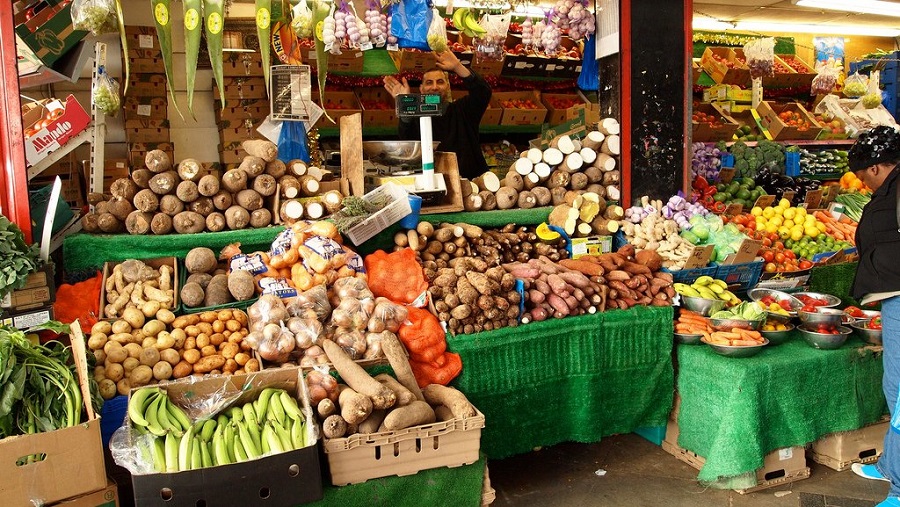
Credit: Naira Metric.
“I now buy smaller quantities of tatashe and rely more on shombo, although it is also expensive. Pepper has also become more costly and difficult to afford in large quantities.
“Onions are the cheapest vegetables now, but while they are important for improving the taste of food, they can cause food spoilage when used excessively without proper preservation, especially due to poor electricity supply.”
She added that many food vendors now rely on packaged cooking pastes and sachet pepper mixes as cheaper alternatives to fresh ingredients due to high market prices.
According to her, using small amounts of natural ingredients when available still helps produce good cooking results.
“Constant price increases or reducing food quantity can drive customers away. Business owners need to adopt different strategies to cope with the current situation while maintaining customer loyalty,” she said.
A caterer in the FCT, Lateefat Yusuf, said the rising cost of peppers has forced her to adjust her operations to remain in business and satisfy customers.
She said she now relies on alternatives such as sachet tomato paste.
“I have resorted to using alternatives such as sachet tomato paste due to the continuous increase in the prices of cooking ingredients,” Yusuf said.
“The amount of money I usually spend in the market can no longer buy half of what it used to.
“Sometimes, I have to go to the market with double or even triple the amount because of the high prices of vegetables, which are also difficult to find these days.
“The only ingredient that has not increased significantly in price is onion, but it cannot be used alone for cooking.
“In spite of the challenges, we still try our best to ensure that customers are satisfied whenever we handle catering jobs.”
Isah Sagir, another eatery owner, said he and other small business owners are caught between maintaining quality service and providing affordable meals for customers.
“So, we now use our ingredients carefully and try to avoid waste in the kitchen,” Sagir said.
Some residents, however, expressed concern about the rising cost of food at eateries, saying it is affecting their eating habits.
“If we increase food prices too much, customers will stop coming. But if we keep prices low, we may not make any profit,” one respondent said.
The high cost of food items is also affecting households in the capital city.
A housewife, Maman Zainab, said the rising cost of cooking ingredients is seriously affecting her, especially during the festive season.
“Now, we are forced to either use dried vegetables or cooking paste because fresh vegetables have become too expensive,” she said.
A civil servant, Benjamin Amos, said he now spends more on meals outside his home because food vendors have increased prices.
He urged government authorities to support farmers with incentives and improve transportation systems to help reduce the cost of food items.
A vegetable farmer, Abdulwahab Ishaq, attributed the rising cost of vegetables to economic challenges, insecurity in farming areas, high transportation costs, and weather-related challenges.
He called for better support for farmers, improved storage facilities, and measures to reduce post-harvest losses across the country.