Trending

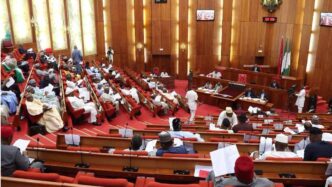
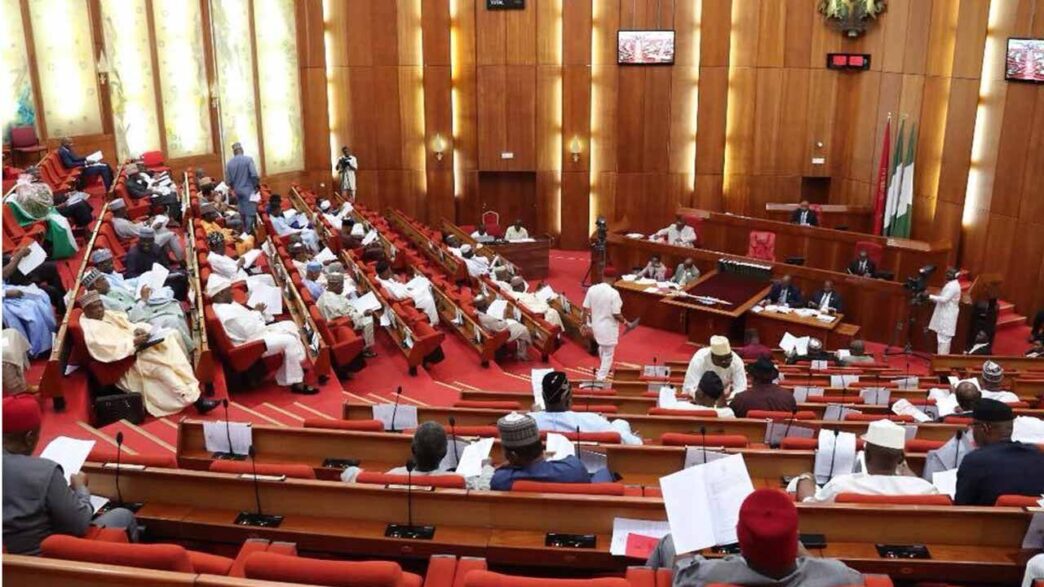
The National Assembly is expected to proceed with the proposed constitutional amendment for state police after receiving reports from four outstanding state Houses of Assembly, Senate Leader Opeyemi Bamidele has said.
Bamidele said 32 state assemblies had approved the State Police (Constitution Alteration) Bill, 2026, while the remaining four had until Tuesday, November 17, to submit their reports.
He made the disclosure in a statement on Sunday after receiving The Sun Senator of the Year Award in Abuja, saying the National Assembly had met the approval threshold required under Section 9(2) of the 1999 Constitution.
Read More : Troops Foil Attacks on Two Zamfara Communities
“We are now expecting four State Houses of Assembly to turn in their reports on or before the National Assembly reconvenes on November 17, 2026,” Bamidele said.
“This suggests that next week is going to be decisive and defining in the National Assembly.
“Whether the remaining states turn in their reports or not, we must move forward and fulfil the aspiration of our people.”
He added that the bill would have to be transmitted to President Bola Tinubu for assent as part of the constitutional amendment process.
The proposed legislation seeks to establish a Federal Police Service alongside state police services, changing Nigeria’s centralised policing arrangement.

Support for decentralised policing has grown amid persistent cases of banditry, kidnapping, terrorism and communal violence. However, the proposal has also raised concerns about possible political interference, abuse of authority and the use of state police against political opponents.
Bamidele said the proposed arrangement was intended to create community-based policing structures under constitutional safeguards, not ethnic or state armies.
The Senate Leader also defended the National Assembly‘s approach to lawmaking, saying legislation should be assessed by its effect on citizens rather than the number of bills passed.
As examples, he cited the Student Loan (Access to Higher Education) Act, 2024, and the National Social Investment Programmes Act, 2023. He said the Nigerian Education Loan Fund had disbursed more than N204bn to applicants across 89 colleges, 108 polytechnics and 126 universities.
Other laws he listed included the Minimum Wage (Amendment) Act, 2024; Tax Reform Acts, 2025; Investments and Securities Act, 2025; Electoral Act, 2026; Nigerian Insurance Industry Reform Act, 2024; and Regional Development Commissions Acts.
Bamidele also called on media organisations to address the spread of misinformation and online attacks on individuals and public institutions.
He said the Newspaper Proprietors’ Association of Nigeria, Broadcasting Organisations of Nigeria, Nigerian Guild of Editors and Nigeria Union of Journalists should consider the implications of leaving the online information space unregulated.
“We have seen characters assassinated. We have seen public institutions blackmailed. We have watched people deliberately distort facts,” he said.
“We have seen people unjustifiably peddling lies. We cannot fold our hands and allow this illegality to continue.”