Trending
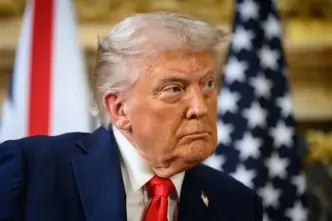

“Ultimately, one hopes this crisis will not end in mutual global destruction, but in a managed transition—where an old world order gives way to a new one without catastrophe. President Donald Trump has previously retreated from hardline positions. Hopefully, this moment will prove no different, as the United States and the European Union find common ground to avert danger.”
The foregoing concluded my column last week, “Trump, Greenland and Viking Ideology,” published on the eve of President Trump’s address to global leaders at the World Economic Forum (WEF) in Davos, Switzerland.
Reassuringly, the anticipated de-escalation of tensions between President Trump and America’s European allies has since materialised, following his renewed interest in acquiring Greenland, a Danish territory and fellow NATO member. Yet it bears emphasis that the world stood uncomfortably close to a crisis of monumental proportions before cooler heads prevailed.
Speculation about an imminent Third World War had intensified, feeding global anxiety that was reflected in surging commodity prices—particularly oil and gold—and heightened volatility in international stock markets. Governments and citizens alike watched nervously amid incendiary rhetoric and reports of military posturing on both sides of the Atlantic.
It was against this backdrop that President Trump took the podium in Davos, amid widespread uncertainty over whether his remarks would further inflame tensions or help calm them.
Clarity came swiftly. In words that resonated across the packed auditorium, President Trump declared:
“I don’t want to use force. I won’t use force.”
That unequivocal assurance triggered an audible sense of relief among political and business leaders in attendance.
By explicitly ruling out the use of military force to acquire Greenland, President Trump eased fears that had rippled through the global system. The statement defused a moment of acute tension and once again underscored his unconventional—but consequential—approach to international diplomacy.
Some of President Donald Trump’s critics have interpreted his decision to abandon the use of force in pursuing Greenland and to instead opt for negotiations as a sign of weakness. They have even coined a derisive label for this shift: “Trump Always Chickens Out” (TACO). In their telling, Trump’s retreat triggered triumphalism among opponents of his disruptive—though not destructive—style of leadership.
This interpretation rests on the claim that Trump was intimidated by European counter-pressure. Several NATO countries—including the UK, France, Germany, Sweden, Norway, and the Netherlands—reportedly deployed limited military contingents to Greenland under Article 5 of the NATO treaty, while the European Union hinted at weaponising its estimated $93 billion trade leverage—the so-called “Bazooka”—to punish the United States economically.
That reading, however, is flawed. The European military deployments were largely symbolic and posed no credible threat to the United States or its armed forces. To argue that Trump abandoned the military option because Europe flexed counter-power is, at best, a hasty conclusion.
By publicly ruling out force, Trump signalled not capitulation but a tactical recalibration. Negotiations with NATO Secretary-General Mark Rutte and Danish President Jens-Frederik Nielsen appear to have defused a crisis that had pushed the international system to the brink, without foreclosing alternative pathways for advancing U.S. strategic interests.
As Roger Fisher and William Ury argue in Getting to Yes, successful negotiations are those in which all parties leave with something of value. The Greenland imbroglio—centred on a strategically vital Arctic territory—can still be resolved within that framework, even as Denmark maintains its public “red line” against any transfer of sovereignty. Such posturing is often less about rejection of compromise than about projecting strength and preserving national morale under pressure.
Trump’s sustained interest in Greenland, first expressed during his initial term and revived early in his second, reflects a long-standing strategic ambition rather than a passing impulse. History offers parallels: Margaret Thatcher’s determination to reclaim the Falklands and Vladimir Putin’s campaign in Ukraine both illustrate how major powers pursue distant territories they deem vital—often through war.
What sets Trump apart is restraint. Unlike those earlier cases, he has removed military force from the equation and opted for negotiation. Far from weakness, this represents a deliberate choice to avoid bloodshed and global instability.
Yet instead of recognising this restraint, critics have framed it as “chickening out.” That narrative misreads Trump’s method. By drawing Europe and NATO to the negotiating table, then shifting from brinkmanship to bargaining, he has simply moved to the next phase of leverage—an approach consistent with the deal-making ethos he has long championed.
In short, Trump’s Greenland pivot is not a retreat. It is a strategy.
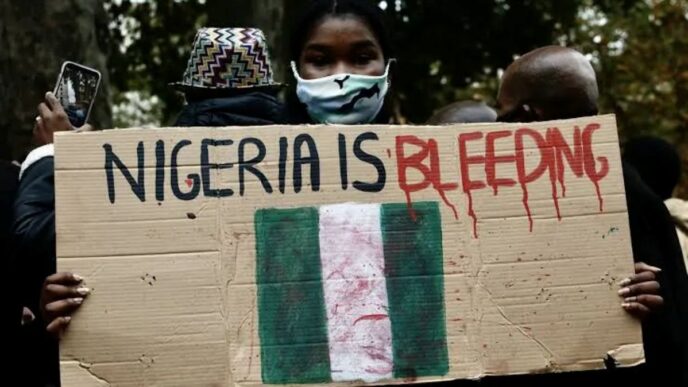
In a similar vein, President Donald Trump has repeatedly demonstrated that his threats are not empty rhetoric. He once warned that the U.S. military would go “guns blazing” into Nigeria to halt what he described as Islamic fundamentalists killing Christians. On Christmas Day 2025, he acted on that warning when U.S. forces struck suspected terrorist camps in Sokoto State using Tomahawk cruise missiles.
Likewise, the arrest of Venezuelan President Nicolás Maduro and his wife, Cilia Flores, on January 3—carried out on Trump’s orders and followed by narcotics-related prosecutions—further underscores a pattern of follow-through. The United States’ withdrawal from 66 international institutions, including the World Health Organisation, and the suspension of USAID, Washington’s principal soft-power agency, reinforce the same point.
These actions, all taken in pursuit of Trump’s America First agenda, make it difficult to square reality with the attempt by his critics to label him “Trump Always Chickens Out” (TACO). Still, demarketing and defamation are familiar weapons in politics.
This raises a fundamental question: on what basis do Trump’s critics sustain the claim that he routinely backs down? Do they prefer a president who executes every threat without regard for diplomatic interventions or the broader socio-economic consequences? If he did, would he not instead be condemned as reckless or tyrannical?
What appears to restrain Trump in certain situations is not fear, but calculation. He has consistently shown reluctance to pursue actions likely to spike crude oil prices, fuel inflation, destabilise global markets, or worsen the cost-of-living crisis. Such restraint aligns with one of his central 2024 campaign promises—to reduce economic pressure on ordinary citizens—a pledge that helped propel his return to the White House on November 5, 2024, as America’s 47th president.
Market volatility is another red line. Trump’s background as a businessman has made him acutely sensitive to shocks in U.S. and global stock markets. These constraints do not suggest weakness; rather, they reflect a deliberate effort to disrupt what he views as a broken global order without inflicting systemic damage.
Against this backdrop, the Greenland controversy invites a deeper question: why would a frozen landmass of roughly 836,000 square miles, with fewer than 60,000 inhabitants, nearly push the world to the brink of a major international crisis?
The answer lies in history and resources. Greenland came under U.S. control in 1941 after Nazi Germany occupied Denmark, before being returned under a 1951 treaty that granted Washington permanent military basing rights. Today, despite its tiny population and vast ice cover, Greenland possesses significant rare-earth mineral deposits critical to modern industries—from renewable energy and electronics to transportation and defence.
In short, Greenland punches far above its demographic weight. And Trump’s interest in it, far from being impulsive or unprecedented, reflects long-standing strategic calculations—handled, this time, through negotiation rather than war.
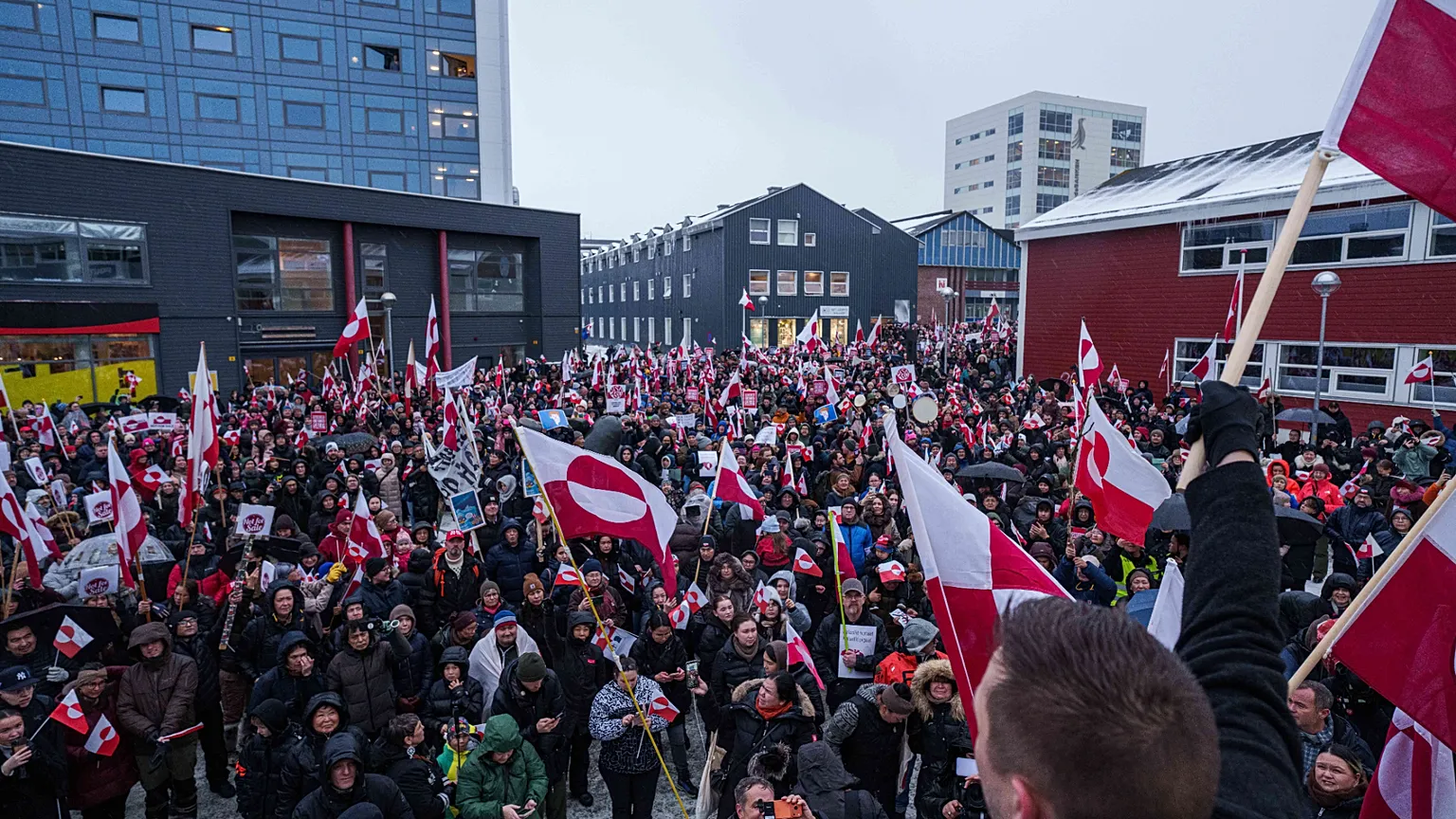
Greenland’s vast reserves of rare earth minerals—including neodymium, praseodymium, dysprosium, lithium, cobalt, uranium, gold, and platinum—underscore its strategic importance to modern industry, from renewable energy and electronics to defence and transportation. Yet resource wealth alone does not fully explain President Donald Trump’s determination to acquire the territory.
History suggests that the assertion of power over distant lands is often driven less by material gain than by strategic dominance. The Falklands offer a telling example. Despite their limited economic value, Britain under Prime Minister Margaret Thatcher waged a ten-week war against Argentina in 1982 to reclaim the islands—a conflict Britain won and whose outcome it maintains to this day. Power projection, not mineral wealth, was the central motive.
Indeed, Britain—now a nation of roughly 60 million—once ruled nearly a third of the world, spanning Africa, India, the Caribbean, Canada, and Australia. The United States alone broke free through war; the rest became what are today known as the Commonwealth of Nations. Against that backdrop, contemporary outrage over America’s interest in Greenland appears selective.
At the World Economic Forum in Davos, Canadian Prime Minister Mark Carney delivered a speech that captured this moment of global transition. Declaring the effective death of multilateralism and the globalisation project that took shape in the 1980s, Carney outlined plans to pivot Canada’s trade toward China, India, and Europe in response to what he described as anti-multilateral U.S. policies.
Drawing on his experience as former Governor of the Bank of England, Carney urged other countries affected by President Trump’s tariffs to follow Canada’s lead. He illustrated his argument with Václav Havel’s The Power of the Powerless, invoking the concept of “living within a lie”—a system sustained by collective pretence until challenged.
Ironically, Carney’s thesis aligns with Trump’s own argument: that the old global order is broken and ripe for renegotiation. Canada’s attempt to reduce dependence on the United States is itself an acknowledgement that the rules-based system is no longer immutable.
This raises a practical question: beyond higher U.S. tariffs—justified by Trump as a correction to decades of trade imbalances—what has materially changed between Canada and the United States? Geography has not shifted. The distance between Canada and China, India, or Europe has not shrunk. The pivot, while rhetorically appealing, may prove harder to execute than advertised.
Much of the world’s reaction to Trump’s policies reflects a nostalgia for an old order rather than an openness to change. This nostalgia is especially striking given the history. Europe did not protest when Africa was partitioned at the 1884–85 Berlin Conference without African representation. Britain was not condemned for fighting Argentina over the Falklands. Nor was there sustained outrage when China effectively took control of Djibouti’s strategic port after the country struggled to service Chinese loans.
Africa today, with a population of about 1.3 billion and control of roughly 30 per cent of the world’s critical minerals needed for the green economy, should draw its own lessons. Rather than echoing narratives crafted elsewhere, the continent should assert its interests in shaping a new global order—one in which it moves beyond being a supplier of raw materials and becomes an active, equitable participant in global trade.
The real question, then, is not whether the world order is changing—but who will adapt, and who will be left behind.
As Africans, we must begin to think independently and stop serving as echo chambers for European dogma. Is it not the very old world order—now being challenged by President Donald Trump—that has kept Africa in a state of perpetual subordination, confined to the role of raw-material supplier? Despite comprising 54 countries and holding at least 30 per cent of the world’s rare earth minerals—such as lithium and cobalt, which are critical to the 21st-century green economy—Africa accounts for barely three per cent of global trade.
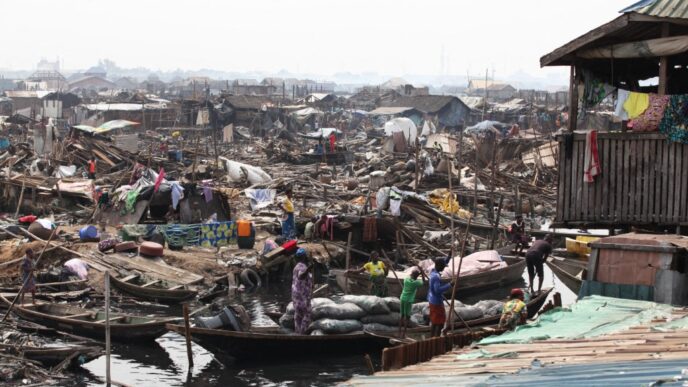
These minerals are essential to the transition to electric vehicles and clean energy systems aimed at reducing dependence on fossil fuels, whose unchecked use has contributed to ozone depletion and climate change. The consequences are already evident, threatening to submerge low-lying nations in the Caribbean and even communities such as Ilaje in Ogun State, worsened by land reclamation projects like Eko Atlantic in Lagos.
It is therefore perplexing that many of Trump’s critics remain beholden to this old world order, appearing comfortable with a United Nations system in which just five countries—the United States, the United Kingdom, France, Russia, and China—sit permanently on the Security Council and exercise decisive authority over nearly 194 member states. Despite persistent calls for reform, the expansion of the Security Council to include other regions has been consistently resisted.
An Italian friend once joked to me: “Spaghetti strong, spaghetti break.” The lesson is simple—rigidity invites collapse. A system that refuses to adapt will eventually fracture.
Given the UN’s longstanding failure to reform and become more inclusive—particularly by accommodating regions such as Africa, the Arab world, and South America—its forced transformation, or even gradual irrelevance, may be inevitable. This raises an unavoidable question: who represents Africa, the Arab world, or South America in the all-powerful Security Council today?
In my view, the underlying driver of the current global turbulence—including Trump’s use of sweeping tariffs and a “might-is-right” posture—is the decay and inertia of an 80-year-old multilateral system that has outlived its effectiveness. Europe, rather than clinging to the status quo, should have championed UN reform as a remedy to the creeping collapse of multilateralism. That would have been far more constructive than the symbolic deployment of small European military contingents to Greenland—actions that could neither deter nor repel a U.S. military move.
Similarly, Europe’s threat to deploy a so-called $93 billion trade “bazooka,” never tested and possibly illusory, amounts to little more than posturing. If Europe can defend itself against Russia—a country now being courted by some Western voices—why was NATO created in the first place with the United States as its principal guarantor? If Canada believes it can replace the United States, why has it not offered to assume that responsibility should Washington withdraw from the transatlantic defence arrangement?
It is on record that many European NATO members failed for years to meet their financial obligations until President Trump, during his first term, insisted they do so and threatened U.S. withdrawal. NATO’s former Secretary-General, Jens Stoltenberg, acknowledged that Trump’s pressure directly resulted in increased compliance. Remarkably, during Trump’s second term, all NATO members have significantly ramped up their defence spending.
Instead of engaging in original thinking about how Africa can benefit from the emerging global order, sections of the continent’s intelligentsia have chosen to recycle European talking points. This intellectual complacency is mirrored in the media, where gatekeepers compete to repackage secondhand narratives sourced online rather than to offer rigorous analysis rooted in Africa’s interests.
The result is a continent trapped in debt and underdevelopment, unable to fully benefit from its abundant natural resources. Africa’s rare earth minerals are routinely underpriced by European, Asian, and Indian intermediaries, exported cheaply, processed abroad, and re-imported at exorbitant prices—while Africa suffers from de-industrialisation and mass youth unemployment.
Some may argue that corruption alone explains Africa’s predicament. That argument is convenient but incomplete. Unfair global trade structures remain a central driver of poverty in Africa—a reality often obscured by the West.
Notably, the U.S. House of Representatives has recently approved the renewal of the African Growth and Opportunity Act (AGOA), first enacted in 2000 under President Bill Clinton, and now awaiting Senate passage. Yet one must ask: have African intellectuals, policymakers, and entrepreneurs adequately interrogated AGOA’s 25-year record and proposed ways to make it more beneficial—mutually and sustainably?
This is why serious analysis must look beyond fleeting headlines to the deeper structural forces reshaping the world.
Some critics have mischievously suggested that my alignment with certain Trump policies is personal. That is false. My views are grounded in scholarship, historical comparison, and policy analysis—not emotion. I approach these issues wearing the cap of an international public policy scholar, seeking options that others may have overlooked.
Have the major powers, unsettled by Trump’s actions, honestly examined the structural failures of the current UN system—a system that arguably fuels the very disruptions they now decry?
In conclusion, while this may be America’s moment under Trump, it could also be Africa’s—if we think critically and position ourselves strategically. Africa must stop sinking. That is the central theme of my forthcoming book, Africa: Exporting Wealth, Importing Poverty—Is Africa Sinking or Thinking?, to be launched in the first quarter of 2026.
This consciousness must become our creed, our mantra, and our burden to bear until Africa is finally emancipated from poverty and stagnation.