Trending
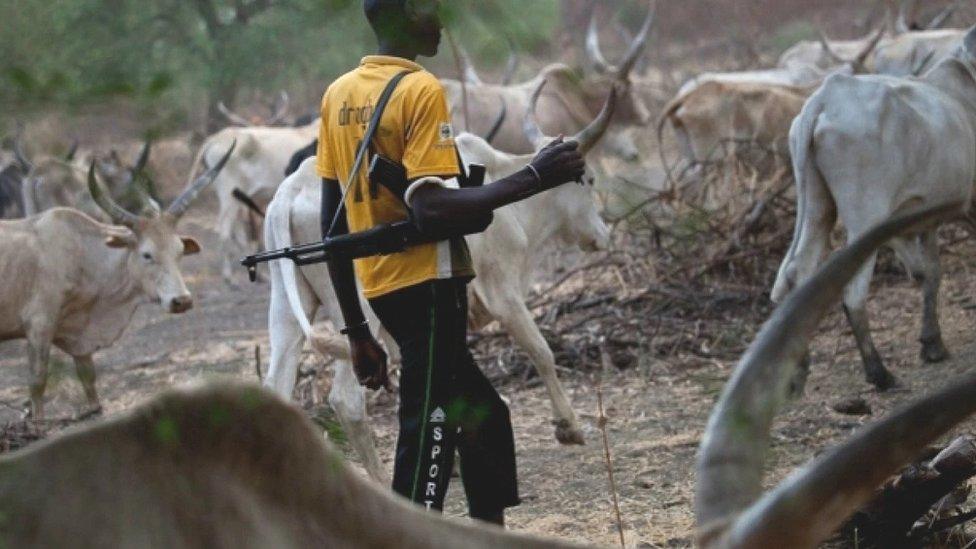
Armed Fulani militants have caused more deaths among religious communities in Nigeria than attacks by organised insurgent groups and criminal gangs, according to a report released by the United States Commission on International Religious Freedom.
“Violence by Fulani militants caused the highest number of deaths among all religious communities in Nigeria over the last year as compared to attacks by organized insurgent groups and criminal gangs,” the report titled “Nonstate Violators of Religious Freedom in Nigeria: Fulani Militants” said.
An estimated 30,000 Fulani militants operate across Nigeria, traditionally concentrating in the northwest before migrating down through the Middle Belt and becoming increasingly active in the south, the report stated.
Attacks on Christians, Muslims
The report noted that Fulani assailants “have not spared Muslims, raiding herders’ cattle and violently attacking non-Fulani Muslim communities.”
It added that “many militants have targeted Christian communities in the Middle Belt and, increasingly, the South, burning homes and churches as well as kidnapping, raping, and murdering.”
Fulani militants often coordinate via radio and utilise motorcycles and automatic weapons, rapidly hitting several targets at once in rural, isolated areas, according to the report.
Massacres documented
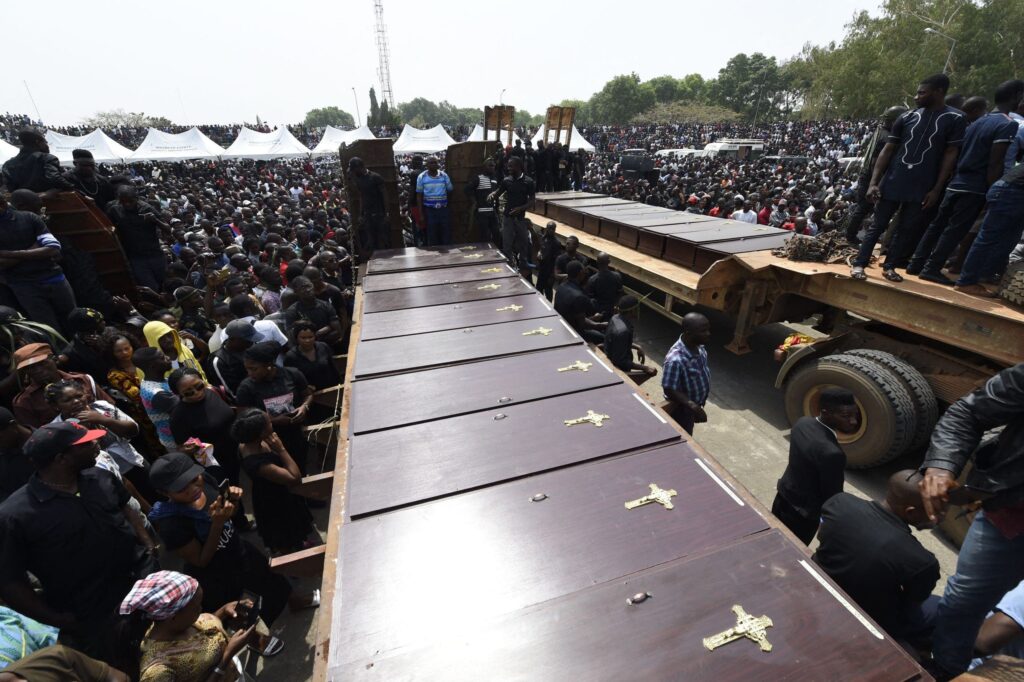
The report cited an attack in Benue State in June 2025 that killed at least 200 people, including internally displaced persons living in a Catholic mission. A massacre the same month in Yelwata, Benue, killed over 200 Christians, “mostly sleeping women and children.”
In February 2026, suspected Fulani militants killed at least 32 in the Borgu area of Niger State and attacked a parish in Kaduna, killing three people and abducting 11 others, including the parish priest.
On Easter Sunday 2026, Fulani militants reportedly killed five worshippers at two churches in Kaduna State while abducting 31 others.
Government response
President Bola Tinubu designated kidnappers and violent armed groups, such as Fulani militants, as “terrorists” in December 2025, the report noted.
“Under this new architecture, any armed group or gun-wielding non-state actors operating outside state authority will be regarded as terrorists,” Tinubu said.
In January 2026, police rescued 309 hostages and apprehended 129 suspected Fulani militants, killing 55 others.
MACBAN faces criticism
The report highlighted the controversial role of the Miyetti Allah Cattle Breeders Association of Nigeria, which has faced longstanding criticism from Christian leaders who claim it has been ineffective in reducing militant violence.
“MACBAN promotes agricultural interests across Nigeria and maintains close ties with the Fulani community. The organization has faced longstanding criticism from Christian leaders who claim that it has been ineffective at best in reducing militant violence and Fulani herder incursions onto farmlands—and, at worst, possibly even foments land invasions, according to some.
“In turn, MACBAN has argued that violent Fulani militants represent only a minority of the greater Fulani population but perpetrate the majority of the violence against all religious communities, including Muslims.
“In 2025, the organisation demanded a presidential directive for security agencies to protect herding communities, citing that they, too, face threats from violent militants and criminal gangs and insisting that they do not “support, condone, harbour, finance, or protect any form of criminality, extremism or violence.”
“MACBAN and government representatives from Agatu, Benue State, have since engaged in more conciliatory negotiations, agreeing to set aside decades-old tensions and direct their joint efforts toward resisting criminal gangs that target both Christians and Muslims.”
In February 2026, the US Congress introduced a bill that included MACBAN as an entity on which the US should impose targeted sanctions for its alleged role in religious freedom violations.
The same month, a congressional report to the White House outlined actions that the U.S. and Nigerian governments can take to end the persecution of Christian communities and address persistent security challenges in Nigeria.
‘Perpetual crisis’
“Central Nigeria remains entrenched in an intense, daily, and seemingly perpetual crisis of insecurity,” the report concluded, warning that the crisis is “likely to persist until the federal and several state governments create broader underlying conditions that are more conducive to the safe practice of religious freedom.”
The report was released by the US Commission on International Religious Freedom, an independent, bipartisan federal government commission. US President Donald Trump designated Nigeria as a Country of Particular Concern for religious freedom violations in October 2025.
Commenting on the report, Open Doors CEO Henrietta Blyth said: “My heart has been broken as I have heard stories from women and men who have seen their beloved family members butchered in front of them or carried off into a life of slavery.”