Trending
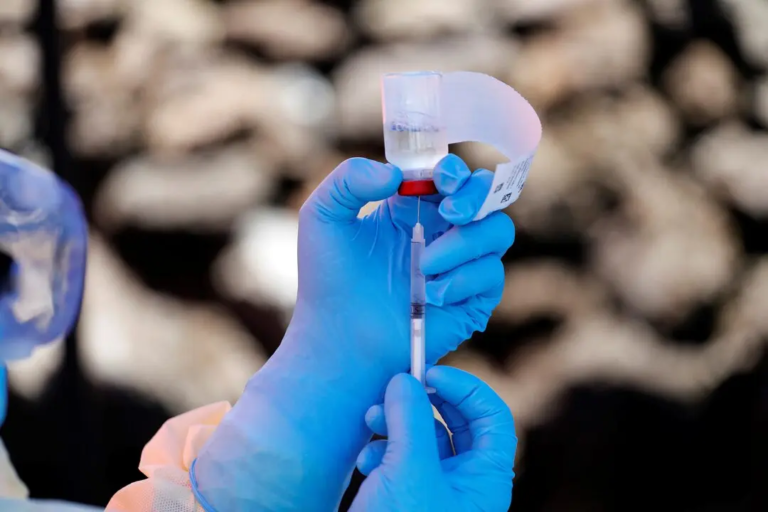
The United States is shipping doses of an experimental Ebola treatment to the Democratic Republic of the Congo and Uganda to help contain a worsening outbreak of the Bundibugyo ebolavirus, health officials announced on Friday.
Led by the Administration for Strategic Preparedness and Response (ASPR) and its Biomedical Advanced Research and Development Authority (BARDA), the emergency response deploys critical countermeasures to the frontline, including 2,500 rapid diagnostic tests.
Health agencies must rely on these unapproved interventions to slow transmission because there are currently no approved vaccines or standard therapies for the active Bundibugyo strain.
Read More : Surging Ebola Outbreak Overwhelms Congo
As a primary medical response, ASPR is transferring MBP134, an experimental monoclonal antibody therapy developed with Mapp Biopharmaceutical, for immediate compassionate use in the affected nations.
The agency is also supplying doses to a randomised clinical trial managed by the University of Oxford to evaluate the drug’s efficacy.
While preclinical studies show that MBP134 counteracts multiple Ebola species and has passed early safety trials, data gathered from this worsening outbreak will heavily inform future regulatory approval decisions.
Read More : DR Congo Plane Crash Kills 17

Simultaneously, BARDA has pre-positioned 2,500 rapid diagnostic tests for deployment across Africa to accelerate infection detection and guide public health choices.
Alongside these testing measures, BARDA is fast-tracking vaccine development for the Bundibugyo strain.
The authority issued a request for proposals seeking vaccine candidates that utilise the same manufacturing platform as Merck’s Ervebo, which previously became the first US-approved vaccine to successfully target the Zaire Ebola strain.