Trending
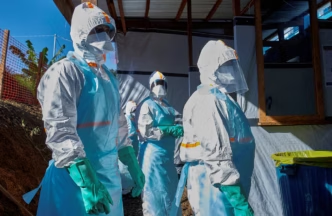
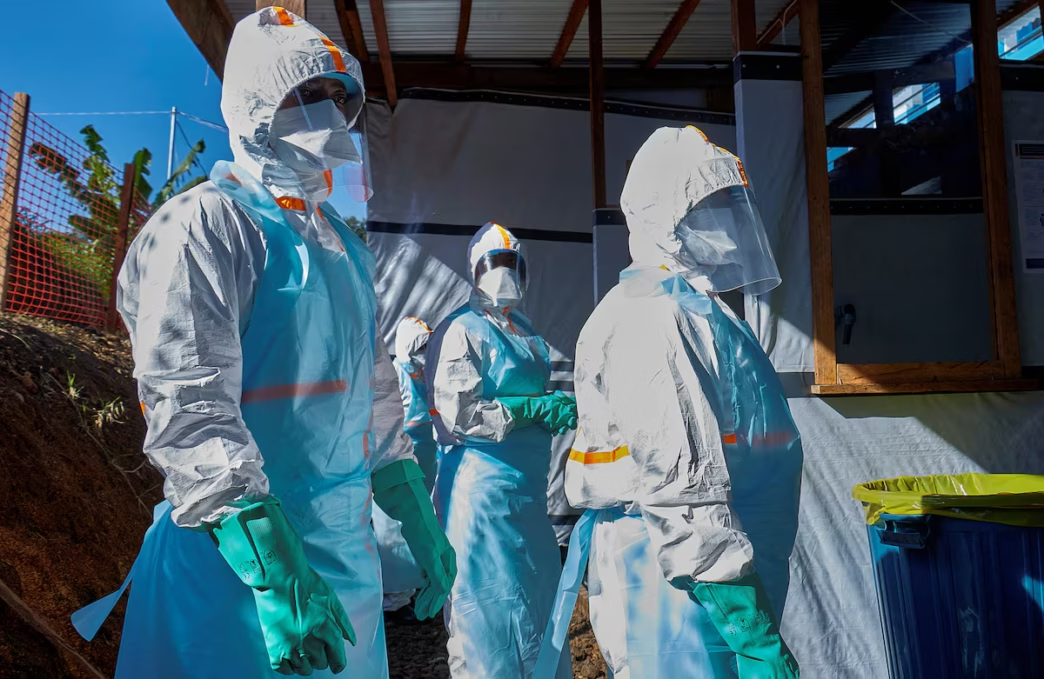
The Ebola outbreak in northeastern Democratic Republic of Congo (DRC) is expanding into new areas, the World Health Organisation (WHO) has warned, highlighting the urgent need for increased containment measures.
Since the outbreak was declared on May 15, there have been 676 confirmed cases, including 136 deaths, with a further 119 suspected infections and 32 patients reported as recovered, according to the WHO.
The outbreak, caused by the rare Bundibugyo strain of the virus, is centred on Ituri province, with cases also reported in North Kivu and South Kivu.
Read More : DR Congo Launches Ebola Vaccine Trial
Olivier le Polain, WHO head of epidemiology and analytics for response, said the spread is both increasing in numbers and geographic reach.
“The outbreak continues to expand both in terms of case numbers but also in terms of geographic spread,” he said.
Speaking from Beni in North Kivu, he added that new cases are being identified in health zones across the three affected provinces almost daily, reflecting “the scale of this outbreak: a scale that is much bigger than what is being detected, and the high mobility of the population.”
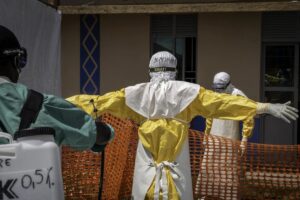
Le Polain noted that while recent cases could be linked to travel from hotspot areas, there is now evidence of “local community spread in new areas,” and many high-risk zones remain “blind spots” for surveillance. He stressed that the current capacity of 250 isolation beds is insufficient to handle the outbreak, saying it must be scaled up “quite rapidly.”
Contact tracing has improved to just over 70 per cent, but Le Polain cautioned that more work is required.
Read More : 15 Arrested Over Ondo Concoction Deaths
“There’s a lot more that needs to be done across the board: more supplies to ensure that we’ve got safe spaces to isolate patients,” he said.
The outbreak has also crossed into Uganda, where 19 cases, including two deaths, have been confirmed.
The African Union’s health agency has said the situation in Uganda is “under control,” but the WHO continues to monitor the region closely as efforts to contain the virus intensify.