Trending
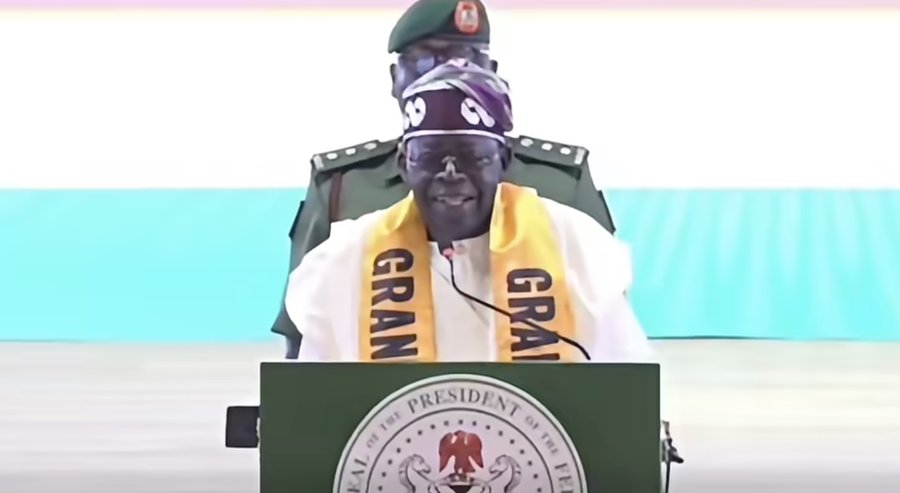
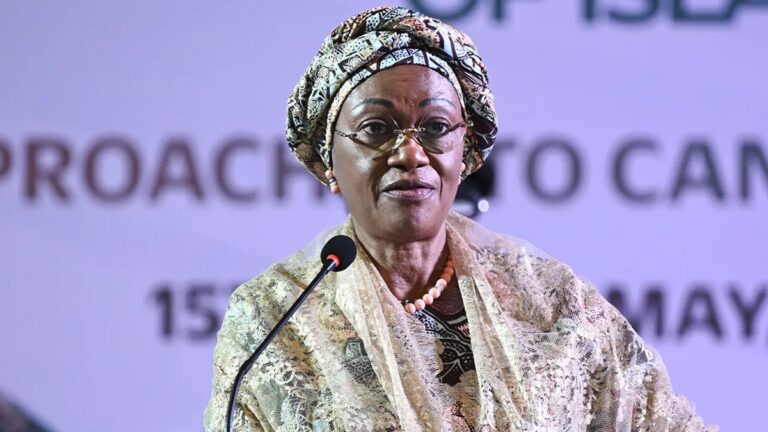
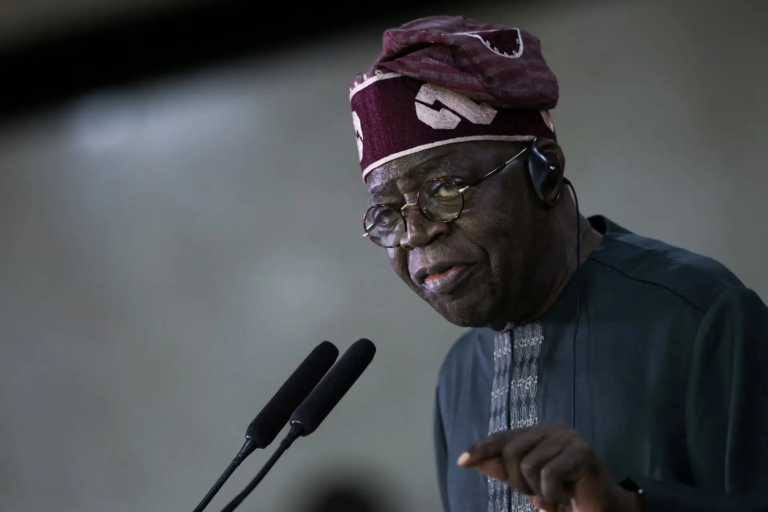
President Bola Tinubu affectionately referred to his wife, First Lady Senator Oluremi Tinubu, as “Iya Alakara” during the inaugural Annual Presidential Press Corps Dinner on Thursday.
The president made the remark while addressing attendees in the capital. Speaking from the podium, he noted his wife’s presence in a light-hearted manner.
“My dear wife, First Lady, Iya Alakara,” Tinubu said, using a Yoruba colloquial term meaning “mother of the akara seller,” referencing the popular Nigerian street food made from beans.
The comment followed the First Lady’s recent advice to Nigerians on small-scale businesses.
In late June, Senator Tinubu told journalists that starting a business, such as selling akara (fried bean cakes), roasting corn, or making kuli-kuli, did not require significant capital.
“We’re trying to give hope, and to start Akara business doesn’t take a lot of money. To start roasting corn, or somebody even said kuli kuli doesn’t take much. We didn’t give them a loan; we gave it to them as a grant,” she said while discussing grants under the Renewed Hope Initiative.
The comments drew both support and criticism on social media, with some viewing them as encouraging self-reliance and others arguing they downplayed broader economic challenges.
The First Lady later defended the remarks, clarifying that the empowerment programmes extend to various petty traders, including sellers of tomatoes, pepper, vegetables, and roasted plantain.
“My dear wife, the first Lady, Iya Alakara.”
— President Tinubu acknowledges his wife at the Presidential Press Corps Dinner pic.twitter.com/HbpHss0u4T
— TallJohn🌍 (@JohnFanimokun) July 2, 2026
Tinubu’s comment has since circulated widely on social media, with many users praising the president’s sense of humour.
The dinner, organised by the Presidential Press Corps, marked its inaugural edition aimed at fostering relations between the presidency and media professionals.
Tinubu urged Nigerian journalists to choose “substance over sensation” and “credibility over clickbait,” as he addressed the maiden State House Media Corps Presidential Dinner on Thursday.
“The media must choose fact over falsehood. The media must choose substance over sensation. The media must choose credibility over clickbait and the endless race for followers, likes, and viral outrage,” Tinubu said.
Tinubu acknowledged the tension inherent in the relationship between government and the media, describing them as “adversaries only in the democratic sense.”
“Government exists to serve the people through leadership, policy, and public service. The media exists to serve society by watching those entrusted with power, asking difficult questions, and holding government accountable,” he said.
“Democracy is stymied without a free press. The fourth estate of the realm must be a free estate, and not a fief. However, where there is enormous power, there should be accountability and responsibility.”
Tinubu described himself as “an apostle of a free press,” adding that he had defended and advocated for the rights of the media throughout his public life.
He also cautioned against the spread of misinformation, disinformation and deepfakes, which he described as “drawbacks of the social media age.”
“The recurring incidents of misinformation, disinformation, fake news, voice and facial cloning and deep fakes are concerning. These are the drawbacks of the social media age. Media practitioners should not be willing couriers of falsehood or unverified information injurious to national security and the nation,” he said.
Tinubu said the Nigerian people had deliberately assigned the government and the media their respective roles.
“The Nigerian people have deliberately assigned us these roles. Government must act. The media must watch. Government must explain. The media must question. That arrangement guarantees a certain level of tension. It ensures that we are constantly at each other’s throats—not because we dislike one another, but because democracy demands it.”
President Tinubu’s advice to Nigeria’s media: Choose between substance or sensation, credibility or clickbait
REMARKS BY PRESIDENT BOLA AHMED TINUBU, GCFR, AT THE MAIDEN STATE HOUSE MEDIA DINNER (SHMD), STATE HOUSE, ABUJA, on Thursday, 2 July 2026
PROTOCOLS
Good evening,… pic.twitter.com/hgFJZyjdwr
— Bayo Onanuga, OON, CON (@aonanuga1956) July 2, 2026