Trending
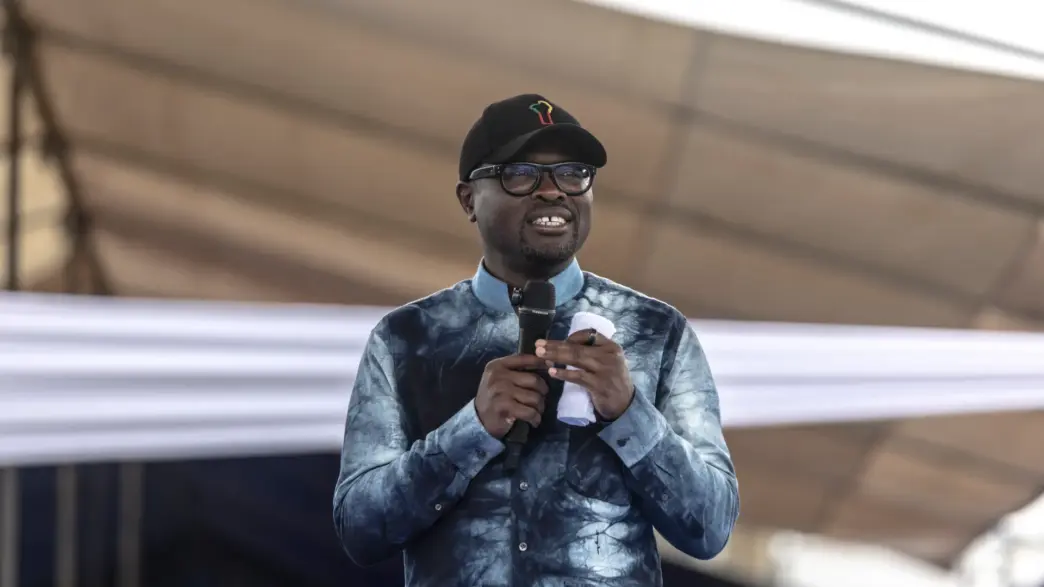
Benin Republic is ready to debut a distinct brand of corporate-style technocratic leadership as former finance minister Romuald Wadagni prepares to assume the presidency.
The incoming leader represents one of the most unconventional figures to take power in modern West Africa, signalling a deep shift toward administrative execution over standard political manoeuvring.
Reporting live from Cotonou ahead of the transition, News Central TV’s senior correspondent Kathleen Ndongmo profiled the incoming head of state for viewers across the African continent and beyond.
Read More : Video: Musk Launches New Tesla Flying Car
Ndongmo highlighted that political analysts view Wadagni fundamentally as a builder rather than a traditional politician, emphasising that his arrival could completely reshape the nation’s governance model.
Romuald Wadagni steps into power as one of West Africa’s most unconventional leaders. He is expected to maintain economic continuity; however, his presidency will likely be judged more on his approach to civil liberties than on economic growth. @KathleenNdongmo reports. pic.twitter.com/tdJn9LHcMM
— News Central TV (@NewsCentralTV) May 23, 2026
Born in southwestern Benin in 1976, Wadagni entered the presidency having never held an elected public office prior to the election.
Ndongmo detailed an elite financial background that includes studying corporate finance in Grenoble, France, attending Harvard University, and rising to become a partner at a “Big Four” global consulting firm directing African operations.
While supporters hail his corporate efficiency, critics remain cautious of his politically private persona.
Despite his lack of elective experience, Wadagni spent the last decade serving as the Minister of Economy and Finance under outgoing President Patrice Talon, acting as the primary architect of Benin’s economic transformation.
His fiscal stewardship successfully cut the national deficit by one-third, structured Benin’s first sovereign Eurobond, and sustained an average annual growth rate over 6 per cent—gaining strong backing from the IMF, the World Bank, and international investors.
According to Ndongmo, experts expect the Wadagni administration to prioritise strict economic continuity, focusing on infrastructure development, stable investment frameworks, and rigorous fiscal discipline.
However, he faces immediate hurdles beyond economics, including managing escalating terrorist threats in Benin’s northern territories and navigating delicate diplomatic efforts to reopen bilateral dialogue with the military junta ruling neighbouring Niger.
Ultimately, Ndongmo emphasised that Wadagni’s legacy will be heavily weighed by his approach to civil governance.
A central open question remains over whether the new administration will ease or maintain the strict limitations on political freedoms and civil liberties that characterised the Talon era.
Analysts agree that how Wadagni resolves this internal political tension will define his presidency just as profoundly as any economic milestone.