Trending
The United States Africa Command has said it is not seeking to impose American models on African nations, as military religious leaders from 10 West African countries convened in Ghana for a landmark three-day symposium to strengthen spiritual resilience across the region.
Chaplain Colonel Kevin Forrester, Command Chaplain at AFRICOM, told a virtual news conference on Wednesday that the West Africa Religious Affairs Symposium (WARAS), co-hosted with the Ghanaian Armed Forces, was grounded in respect for the diverse religious and cultural traditions of participating nations.
“We aren’t here to impose the U.S. model. We are here because we deeply respect the diverse, pluralistic nature of these nations,” Forrester said.
The symposium, which runs from July 14 to 16 in Accra, brings together chaplains from Benin, Burkina Faso, Cote d’Ivoire, Gabon, Gambia, Ghana, Liberia, Nigeria, Sierra Leone and Togo.
Forrester said the gathering marked the first time these nations had come together specifically around religious support for their armed forces.
“The 10 West African nations gathered here this week are completely united in their commitment to provide for and protect the spiritual well-being of their forces,” he said.
Forrester described the symposium as “pluralism in action,” emphasising that the United States was not seeking to impose American ways of doing things on its African partners.
He said religion remained deeply influential across African societies, making chaplains uniquely positioned to foster ethical leadership and institutional resilience.
“Across Africa, there is not a single country where religion is not a significant factor influencing the people and the culture. In the military, we call this a center of gravity,” Forrester said.
“Regional stability and prosperity requires institutional strength, ethical practice, and the moral foundation that religious traditions provide. Chaplains possess a unique and strategic advantage of being able to instill those virtues and values in their respective military communities.”
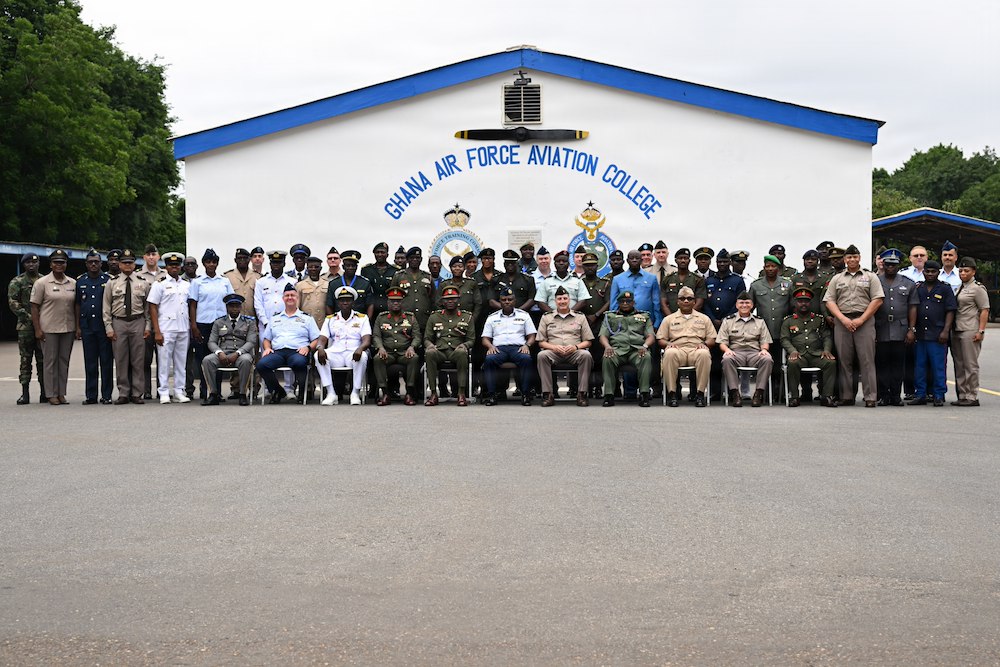
He said collaboration between chaplains of different faiths represented “operational strength” rather than mere religious tolerance.
“When you see a Muslim chaplain and a Catholic priest collaborating side by side to support a unit, that isn’t just religious tolerance, it’s operational strength,” Forrester said.
“Our shared mission is building resilience for our troops.”
Sergeant Major Herinah Asaah, Senior Enlisted Leader for the AFRICOM Office of the Command Chaplain, said the symposium was about learning from each other rather than imposing one model on others.
“We don’t know it all. With all the other chaplaincies coming, they are very young, obviously, but this is an exchange. It is where we learn together and we grow,” said Asaah, who was born in Cameroon.
She said her personal background had deepened her understanding of the role of faith across West Africa, where religion is interwoven into daily life, culture and identity.
“Religion and spirituality isn’t just a weekend practice. It is interwoven into the very fabric of daily life, culture, and identity,” she said.
“You cannot build resilience in a West African military force without deeply understanding that cultural reality.”
Forrester said the gathering would help build enduring institutional partnerships and shared frameworks for spiritual readiness across the region.
“The true victory here is that we are doing this together. This is the first time that these nations have gathered around the cause of religious support,” he said.
“Stability in this region is going to require all the nations working together, and this only reinforces that we can do it militarily; we can do it culturally; we can do it economically; and we can do it spiritually – and that’s the huge win.”
The symposium will conclude on Thursday with a peace walk and prayer across a street in Accra featuring a row of chapels and a mosque representing different denominations.