Trending
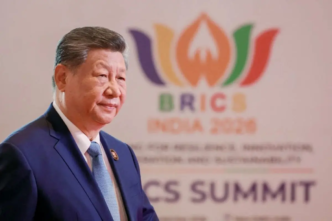
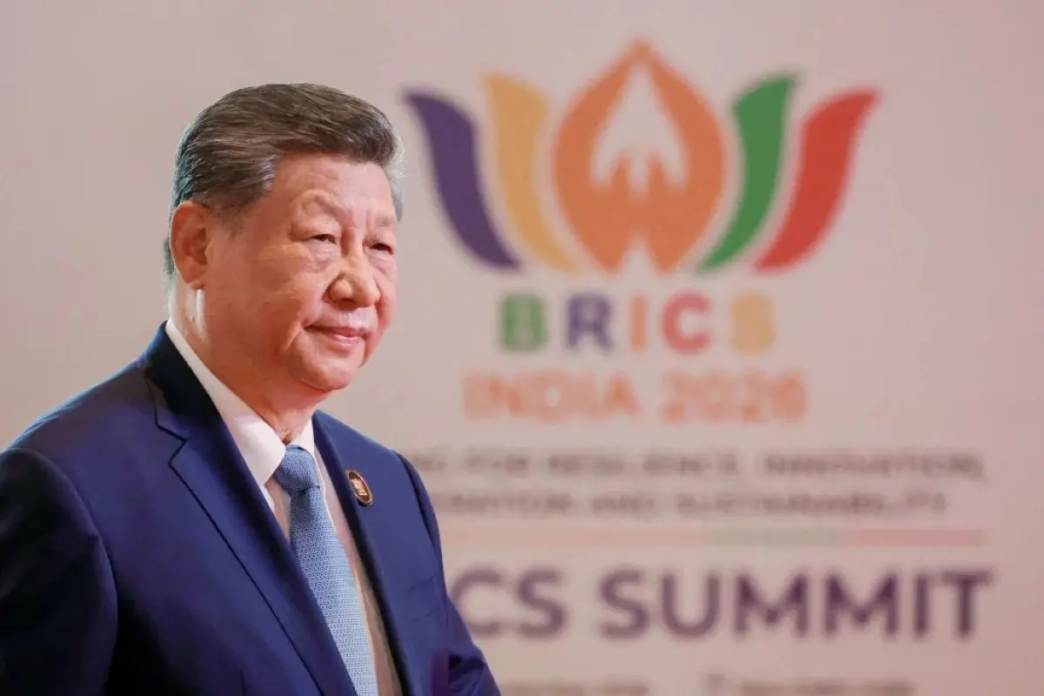
Chinese President Xi Jinping has urged BRICS member states to play a bigger role in resolving conflicts and restoring peace in the Middle East.
Speaking at the 18th BRICS Summit in New Delhi, India, on Saturday, Xi said the ongoing war in the region runs counter to the international community’s interests. The Chinese President urged the expanded bloc to become a stronger force for peace, development and reform of the global governance system.
“The situation in the Middle East remains complex and fluid,” Xi said.
“This war has inflicted serious losses on the people of all countries in the region, and it is against the common interests of the international community.”
He said BRICS should “stand firm, uphold justice, and strive to put an end to conflicts and defend peace.”
Xi urged members to oppose what he described as a Cold War mentality and bloc confrontation, while respecting countries’ sovereignty and refraining from interference in their internal affairs. He also called for BRICS to participate constructively in resolving conflicts and addressing what he described as their “symptoms and root causes.”
According to Xi, the Middle East crisis requires a political solution, a permanent and comprehensive ceasefire, renewed trust among regional countries and the establishment of a new security architecture.
“The Palestinian question is always at the core of the Middle East issue,” he said, adding that “the fundamental way forward is to implement the two-state solution and realize peaceful coexistence between Palestine and Israel.”
“China will work with fellow BRICS members to play a due role in bringing peace and tranquility to the Middle East,” Xi added.
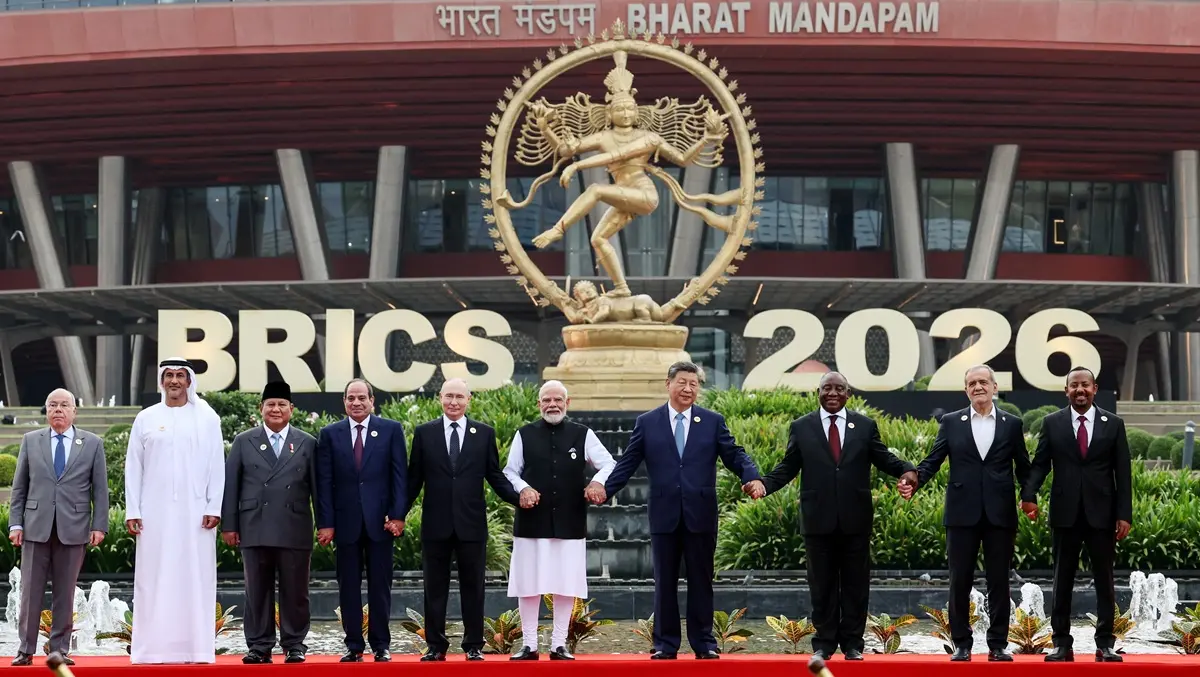
Beyond the Middle East, Xi called on BRICS to take a more prominent role in reshaping the international order, saying the bloc must “stand firmly on the right side of history” and “steer the international order in a direction that is more just and equitable.”
He said the world was undergoing profound changes, with the Global South gaining strength and the trend towards a multipolar world becoming increasingly prominent.
“At the same time, unilateralism and power politics are surging against the tide, lashing at multilateralism and the international order,” Xi said.
He identified growing deficits in peace, development, security and governance as challenges that BRICS should help address.
Xi also proposed that BRICS countries deepen cooperation in artificial intelligence and use the technology to support industrial development.
“BRICS should be a pioneer in advancing innovation-driven development,” he said, describing AI as part of a new wave of scientific and technological transformation that is reshaping the global development landscape.
He proposed a BRICS initiative on “AI-empowered new industrialization”, saying China was ready to work with other members on research and development, applications, and industrial and supply-chain cooperation.
Xi also criticised efforts to restrict technology and trade through what he called “small yard, high fences.”
“Facts will prove that decoupling and cutting off supply chains will not hold back our development process,” he said, adding that “espousing ‘small yard, high fences’ will only box oneself in and divide the world.”
On global governance, Xi urged BRICS to support the United Nations and the multilateral trading system centred on the World Trade Organisation (WTO). He called for WTO reform, opposed what he described as tariff abuse, and rejected protectionist measures.
“BRICS should align with the trend toward greater democracy in international relations, work toward a more just and equitable global governance system, uphold the authority of the U.N.,” Xi said.
Xi’s speech came as BRICS marked 20 years of cooperation. He described the bloc as “the most influential cooperation platform in today’s world for emerging markets and developing countries.”
BRICS, originally comprising Brazil, Russia, India, China and South Africa, has expanded to include Egypt, Ethiopia, Indonesia, Iran and the United Arab Emirates. The bloc now represents more than 40 per cent of the world’s population and nearly a quarter of the global economy.
Xi said the bloc’s expansion had created a broader platform for cooperation in trade, investment, finance and technology. He urged members to preserve unity despite their differences, saying they should “respect each other’s core concerns” and remain committed to communication and dialogue.
“Solidarity and cooperation have always been the source of strength for the cause of BRICS,” Xi said.
He also announced that China will assume the BRICS chairship next year and host the 19th BRICS Summit.
Xi’s appearance at the summit also marked his first visit to India in seven years, against the backdrop of efforts by Beijing and New Delhi to improve relations following years of tensions, including the deadly 2020 border clash.