Trending



The Independent National Electoral Commission (INEC) has warned that artificial intelligence could be used to create fake audio and video announcements falsely declaring the postponement of the 2027 general elections.
The commission said such fabricated content could be released shortly before voting to exploit delays in verifying and correcting information, potentially confusing voters and disrupting the electoral process.
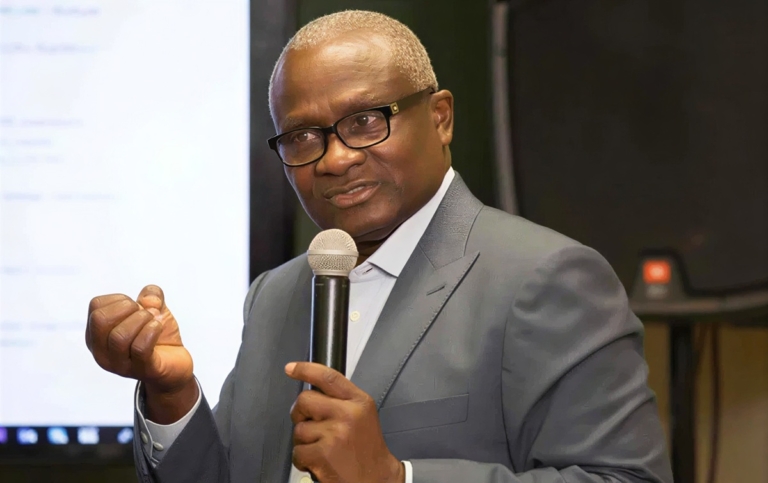
INEC Chairman, Joash Amupitan, raised the concern on Monday in Abuja at the opening of the National Summit on Electoral Information Integrity, themed “Beyond the Ballot: AI, FIMI, and the Integrity of Nigeria’s 2027 Elections.”
Amupitan identified the period immediately before elections as particularly vulnerable to digital manipulation, warning that perpetrators could deliberately spread false announcements when there was little time for authorities to respond.
He cited the 2023 Slovak parliamentary election, when an AI-generated audio recording allegedly featuring a party leader discussing vote-buying circulated two days before voting, during the election silence period.
According to him, fact-checkers, election authorities and media organisations could not respond quickly enough to the recording, demonstrating the limitations of public awareness campaigns against sophisticated digital manipulation.
The INEC chairman cautioned that official responses issued hours after fabricated content had gained widespread circulation might fail to reverse the damage.
“When a manipulated video achieves viral saturation within thirty minutes of release, a formal text rebuttal issued three hours later struggles to undo the cognitive damage,” he said.
He said the commission was therefore developing internal mechanisms to identify and debunk viral misinformation within minutes of its emergence.
Amupitan listed rapid response mechanisms, technological safeguards and voter education as key priorities in INEC’s preparations for the 2027 elections.
He said voter education would extend beyond teaching citizens how to vote to helping them verify information, recognise authentic commission communications and identify reliable channels for confirmation.
The commission is also strengthening its digital infrastructure and engaging major social media platforms, including TikTok, Facebook, Instagram, WhatsApp, YouTube, Facebook Messenger, Telegram and X, formerly Twitter.
Amupitan disclosed that INEC already had a memorandum of understanding with TikTok as part of its efforts to address the spread of misleading electoral content.
“We already have an MOU with TikTok,” he said.
He called for closer collaboration among social media companies, telecommunications providers, media organisations, journalists, fact-checkers and security agencies.
He urged digital platforms to establish expedited procedures for reviewing and flagging or removing verified manipulated content, while telecommunications providers and media organisations should maintain clear channels for distributing authenticated alerts.
The chairman also called for fact-checkers and independent journalists to have direct access to designated INEC communication desks to verify claims within minutes.
Amupitan said the summit was expected to deliver three key outcomes: clearly defined inter-agency escalation procedures, institutionalised fact-checking desks, and simulation exercises to test responses to AI-driven electoral crises.
He disclosed that INEC and a development partner had recently concluded a strategic communications workshop where some of the scenarios were simulated and addressed.
The chairman also highlighted the “Liar’s Dividend”, a phenomenon in which the growing prevalence of AI-generated falsehoods makes people question even genuine information.
He stressed that the proposed safeguards were not intended to regulate political debate or restrict freedom of expression, but to protect the credibility of operational election information.
According to him, the objective is to ensure voters make decisions based on verified facts rather than deliberately engineered deception.
“The goal is not to police opinion, regulate political debate, or restrict citizens’ freedom of expression. The sole objective is to protect the authenticity of operational election information so that when a citizen makes a choice at the ballot box, that choice is based on genuine facts rather than engineered deception,” he said.
Amupitan said INEC was counting down to January 16, 2027, when voting is scheduled to begin in the presidential and National Assembly elections.
Under Section 98(1) of the Electoral Act 2026, campaigns are required to end 24 hours before election day. Campaigns for the presidential and National Assembly elections are scheduled to close on January 14, while those for the governorship and state Houses of Assembly elections will end on February 4, 2027.
The summit is supported under the European Union Support to Democratic Governance in Nigeria III framework.
Amupitan urged participants to ensure the meeting produces actionable measures rather than recommendations that would remain unimplemented, saying the ultimate goal was to equip voters with reliable information rather than leave them overwhelmed by misinformation.
“Let our goal be certain: to ensure that by 2027, the Nigerian voter is empowered by information, not paralysed by it,” he said.