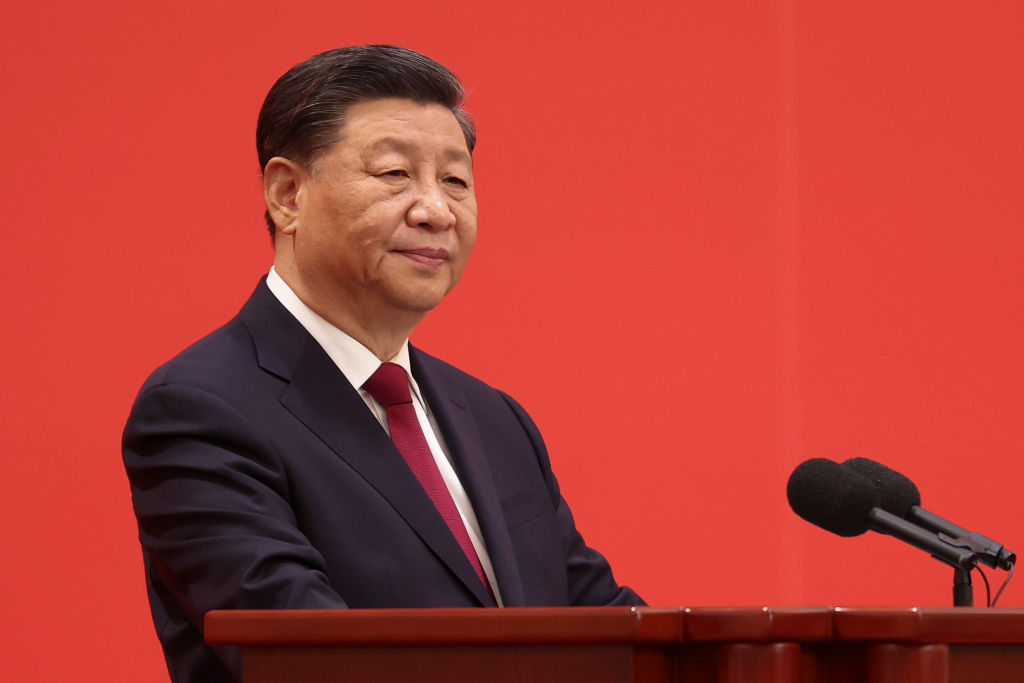
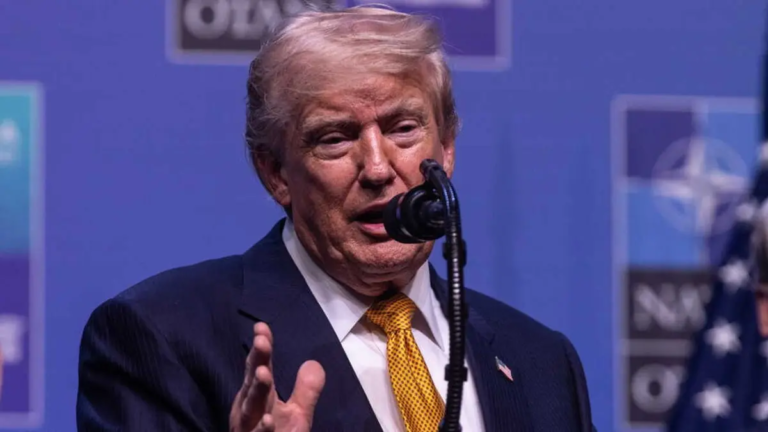
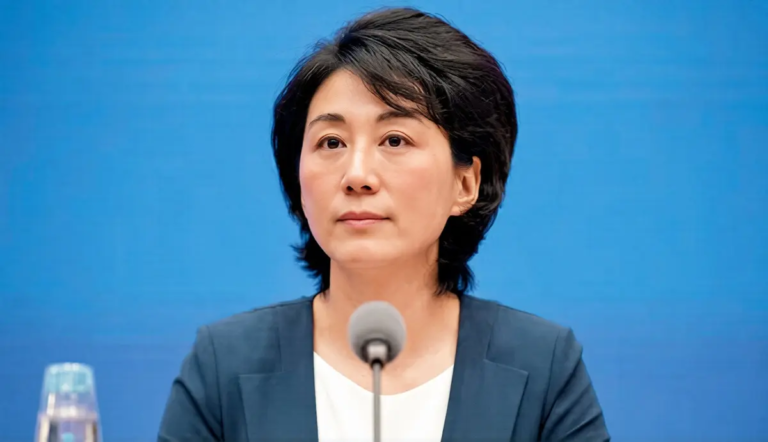
BEIJING, CHINA - OCTOBER 23: Chinese President Xi Jinping speaks at the podium during the meeting between members of the standing committee of the Political Bureau of the 20th CPC Central Committee and Chinese and foreign journalists at The Great Hall of People on October 23, 2022 in Beijing, China. China's ruling Communist Party today revealed the new Politburo Standing Committee after its 20th congress. (Photo by Lintao Zhang/Getty Images)
China has reduced its annual economic growth target to between 4.5 per cent and five per cent, marking the country’s lowest expansion goal since 1991 as it grapples with growing economic challenges both domestically and internationally.
The revision represents the first reduction since the target was set at “around 5%” in 2023. No official growth target was announced in 2020 due to the global disruption caused by the COVID-19 pandemic.
The updated figures were presented during the country’s major annual political gathering, commonly referred to as the “two sessions”, where officials also outlined preliminary details of the 15th Five-Year Plan for the world’s second-largest economy.
Beijing is attempting to restructure its economic model while confronting several difficulties, including subdued consumer spending, a declining population, a prolonged property market crisis, global trade tensions, and energy disruptions linked to the ongoing Iran war.
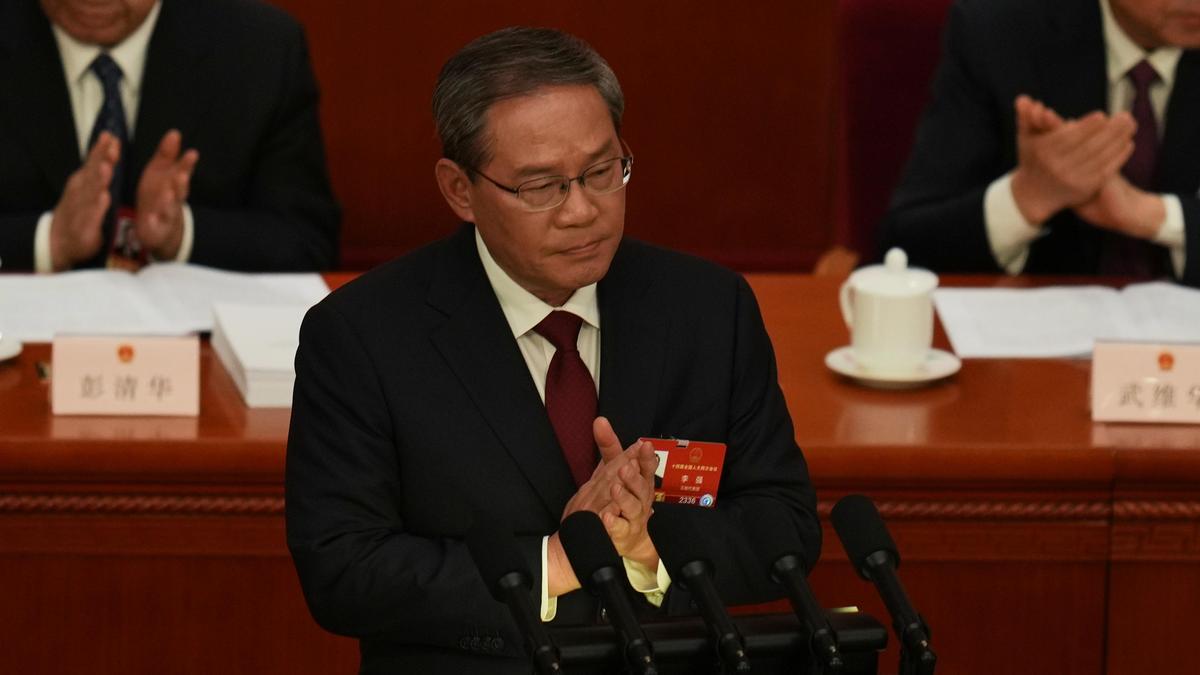
Chinese Premier Li Qiang gestures as he speaks during the opening session of the National People’s Congress (NPC) in Beijing | Photo Credit: AP
Economic analysts suggest that the reduced growth range offers policymakers greater room to manoeuvre.
The “two sessions” meeting, which began on Wednesday and usually lasts more than a week, brings together the country’s top leadership for extensive policy discussions.
In a 46-page report presented to delegates, Premier Li Qiang outlined priorities for the forthcoming five-year development plan, which will shape the country’s economic strategy until 2030. The full plan will be put to a vote before the sessions conclude and is expected to be released by state media shortly afterwards.
According to Li, the strategy will prioritise innovation, high-technology industries, scientific research and stronger household consumption, reflecting Beijing’s concern that the economy remains overly dependent on exports. The plan also proposes more than 100 large-scale projects aimed at expanding China’s industrial capacity in sectors including science and technology, transportation and energy.
Authorities have further highlighted their ambition to transform China into a global technology powerhouse, with plans to expand the application of artificial intelligence across key industries and accelerate the country’s transition towards green energy.
Alongside economic reforms, the government says it will promote the development of a “childbirth-friendly society” to tackle declining birth rates and the challenges associated with an ageing population.
Despite these initiatives, economists remain cautious about the outlook. Some analysts argue that China’s official growth statistics should be viewed “with a grain of salt”, citing weak consumer spending and the persistent crisis in the property sector as ongoing risks to the country’s economic stability.
Toyibat is a highly motivated Mass Communication major and results-oriented professional with a robust foundation in media, education, and communication. Leveraging years of hands-on experience in journalism, she has honed her ability to craft compelling narratives, conduct thorough research, and deliver accurate and engaging content that resonates with diverse audiences.
Weekly roundups. Sharp analysis. Zero noise. The NewsCentral TV Newsletter delivers the headlines that matter—straight to your inbox, keeping you updated regularly.
 Trending