Trending
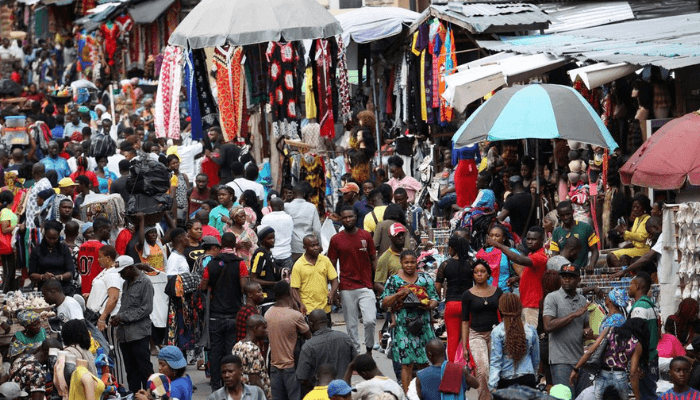
The conflict between the United States, Israel and Iran since February 28, 2026, has triggered far-reaching consequences well beyond the Middle East, with Nigeria’s economy emerging as one of the hardest-hit among oil-producing nations. Within weeks, petrol prices surged, transport costs spiked, and market traders across the country faced a wave of inflation that has disrupted livelihoods and deepened economic vulnerability.
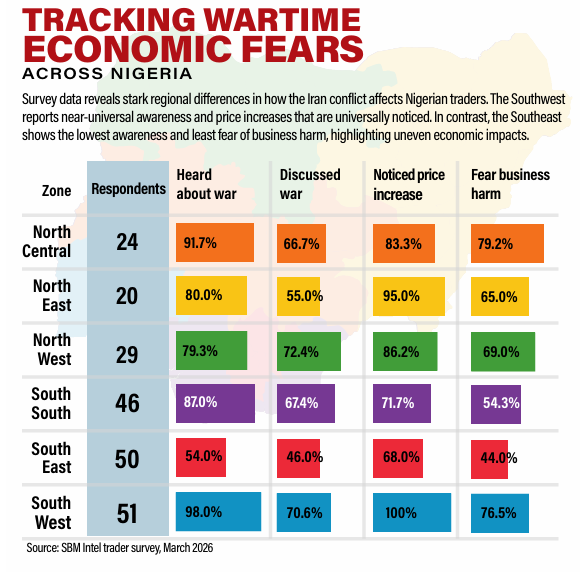
A nationwide survey of 220 traders across nine major markets carried out by SMB intelligence reveals the scale of the shock: 82.7% reported price increases directly linked to the conflict, while nearly two-thirds expect their businesses to suffer in the coming months. The crisis has once again exposed the structural weaknesses in Nigeria’s economic framework, particularly its dependence on imported refined fuel and global supply chains.
Read More : EFCC Returns $104,950 to US-Based Businesswoman
A Global Conflict, Local Consequences
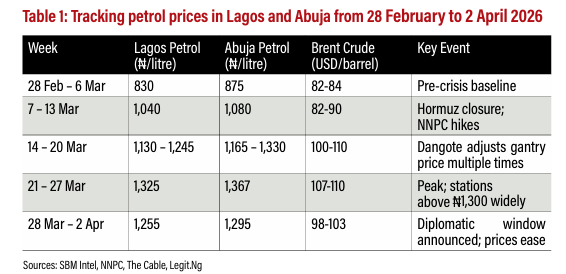
The conflict, triggered by coordinated US-Israeli strikes in Iran and the killing of Ayatollah Ali Khamenei, sent global oil markets into turmoil. Brent crude prices climbed sharply from about $82 per barrel in late February to over $110 by mid-March, driven by disruptions in the Strait of Hormuz, a critical artery for global oil supply.
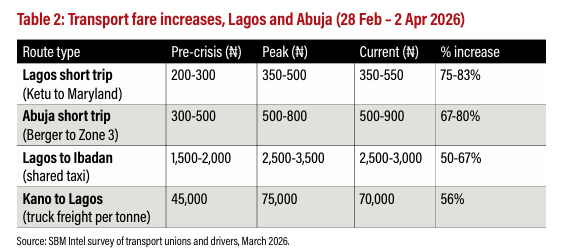
For Nigeria, the immediate impact was severe. Petrol prices in Lagos jumped from N830 to over N1,300 per litre within weeks, while diesel prices surged past N1,500. Transport fares followed suit, with commuters in cities like Lagos and Abuja facing increases of up to 80%.
Despite being a crude oil producer, Nigeria was unable to shield itself from the shock. Limited refining capacity, reliance on imports, and pricing structures tied to international benchmarks meant that global volatility translated directly into domestic hardship.
Traders at the Frontline
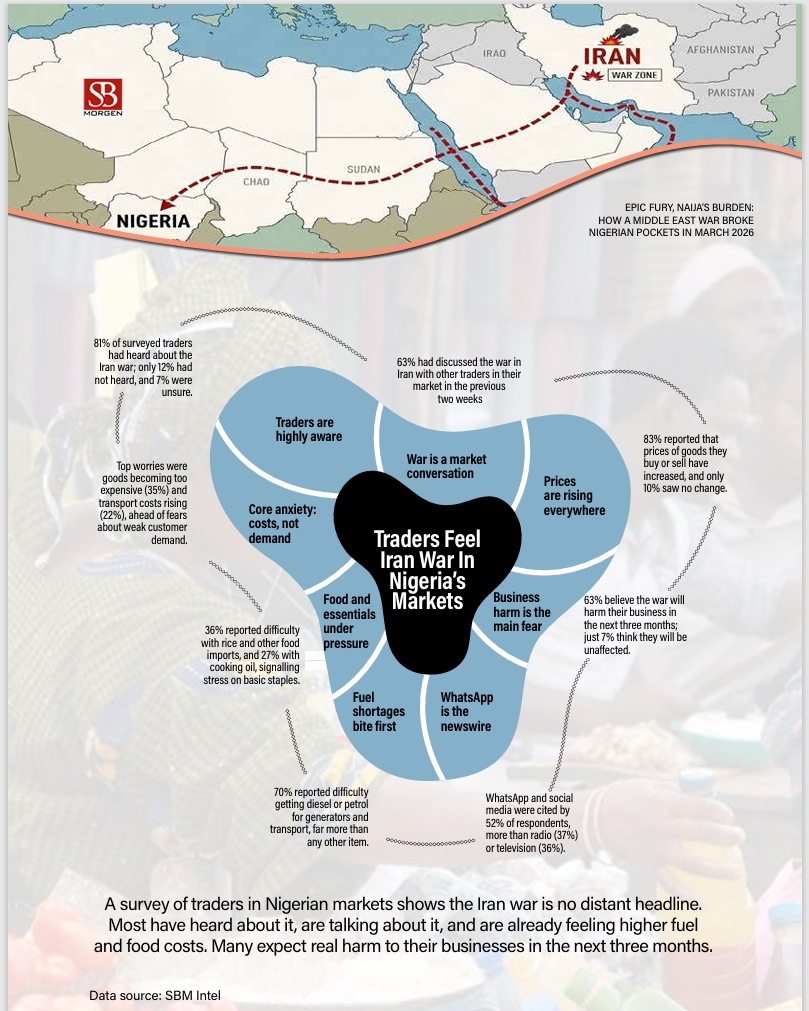
Market traders—who form the backbone of Nigeria’s informal economy—have borne the brunt of the crisis. According to the survey, awareness of the conflict was high, with 81% of respondents familiar with the situation, largely through WhatsApp and social media.
Their experiences paint a stark picture of economic strain. One trader in Lagos noted, “Anything you can think of, even water.” Another in Awka said, “No particular product, everything has skyrocketed.” In Abuja, a respondent summed it up: “Rice, beans, cooking oil, in fact everything dey go up small small.”
Fuel costs emerged as the dominant pressure point, with 70% of traders reporting difficulties accessing petrol or diesel. This has disrupted supply chains, increased the cost of transporting goods, and eroded already thin profit margins.
A spare parts dealer in Onitsha explained the cascading effect: “If the truck cannot move because diesel is too expensive or scarce, the parts do not arrive. If the parts do not arrive, I sell nothing. If I sell nothing, I cannot buy the next batch when prices are even higher.”
Uneven Impact Across Regions and Demographics
The economic burden of the crisis has not been evenly distributed. Traders in the Southwest and Northcentral regions reported the highest levels of concern, reflecting their dependence on imported goods and long-haul transport networks.
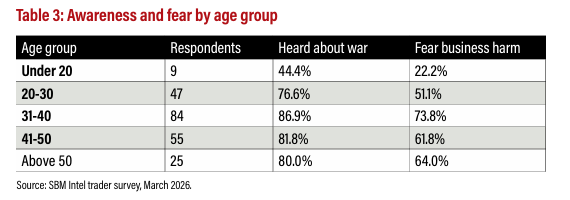
Age and education also shaped responses. Traders aged 31–40—often with established businesses but limited financial buffers—expressed the greatest anxiety about future losses. Meanwhile, more educated traders, particularly those dealing in import-dependent goods, showed higher awareness and concern.
In contrast, lower awareness levels in parts of the Southeast suggest that some traders have yet to fully connect rising prices with global events, even as they feel the effects.
Coping in a Time of Crisis
Faced with rising costs, traders and households are adopting a range of coping strategies, many of which signal deeper economic distress.
A food vendor in Lagos described how she now reduces portions: “We cannot remove the rice from jollof rice, but we can make the rice go further by adding more water and fewer expensive ingredients.” Others are pooling resources to buy goods in bulk, switching to cheaper substitutes, or cutting back on transport.
More concerning is the trend of traders halting restocking altogether. As one wholesaler in Onitsha put it, “I am selling what I have. When it finishes, I will close the shop for a while.” This signals a potential transition from inflation to outright scarcity if supply chains continue to weaken.
Policy Gaps and Structural Weaknesses
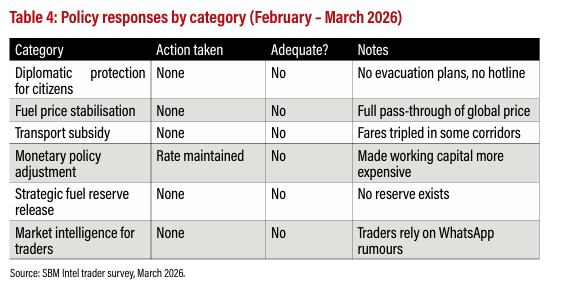
The crisis has also highlighted gaps in Nigeria’s policy response. Despite the rapid rise in fuel and commodity prices, there were no targeted interventions such as transport subsidies, price stabilisation measures, or strategic fuel releases.
The absence of a coordinated response has left households and small businesses to absorb the full impact of global shocks. At the same time, structural issues—including low refining capacity, dependence on imports, and weak logistics infrastructure—continue to amplify external disruptions.
Crucially, domestic refining alone has proven insufficient as a buffer, given that feedstock pricing remains tied to international markets. This means that even locally refined fuel reflects global price movements.
What Must Change: Practical Solutions
To move from vulnerability to resilience, Nigeria must adopt a proactive, multi-layered strategy that addresses both immediate shocks and long-term structural risks.
1. Build strategic fuel reserves
Establishing and maintaining reserves of refined petroleum products would help cushion sudden price spikes and stabilise the domestic market during global disruptions.
2. Launch real-time market intelligence systems
Providing traders with reliable, up-to-date information on prices, transport costs, and supply trends via SMS or digital platforms would reduce reliance on misinformation and improve decision-making.
3. Diversify trade and supply routes
Reducing dependence on shipping corridors linked to the Strait of Hormuz by expanding regional trade partnerships and alternative logistics channels can mitigate future disruptions.
4. Invest in transport infrastructure
Expanding rail freight networks, particularly along key corridors like Kano–Lagos, would lower logistics costs and reduce reliance on diesel-powered trucking.
5. Create commodity buffer systems
Strategic stockpiling of essential goods such as rice and cooking oil would enable controlled market releases during price surges, preventing extreme inflation.
6. Strengthen domestic production and industrial capacity
Encouraging local manufacturing of goods such as spare parts and electronics can reduce exposure to global supply chain shocks over time.
Read More : Keyamo Knocks Atiku Over Tinubu Criticism
7. Improve crisis preparedness and governance coordination
Clear contingency planning, including consular support for Nigerians abroad and coordinated domestic response mechanisms, is essential for managing future global disruptions.
The Bigger Picture
The Iran conflict has highlighted a critical reality: Nigeria’s economic challenges are not just about external shocks but about internal preparedness. Without deliberate efforts to build resilience, global crises will continue to translate into local hardship.
As one trader’s experience shows, the effects are immediate and personal—felt in rising food prices, shrinking profits, and uncertain futures. The lesson is clear: preparation, not reaction, will determine whether the next global shock becomes a manageable disruption or a full-blown economic crisis.