Trending
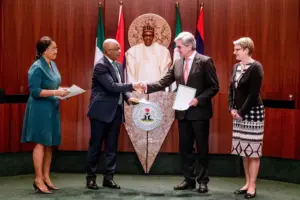
In July 2019, the Nigerian government announced a landmark electricity deal with German industrial giant Siemens. It was the aftermath of an Abuja meeting between former President Muhammadu Buhari and his then-German counterpart, Angela Merkel, a year earlier.
Siemens’ then Global Chief Executive Officer, Mr Joe Kaeser, signed the deal with Nigerian officials pledging to drag Nigeria’s power grid into the 21st century with a three-phase roadmap that would take the country from a pitiful 4,000 megawatts of reliable capacity to over 25,000 megawatts by 2025.
It was the kind of announcement that promised to change everything: factories that could run at night, hospitals that didn’t rely on generators, and an economy that could finally breathe. None of those targets has been met.
Read More : Oborevwori Urges Deltans to Collect PVCs
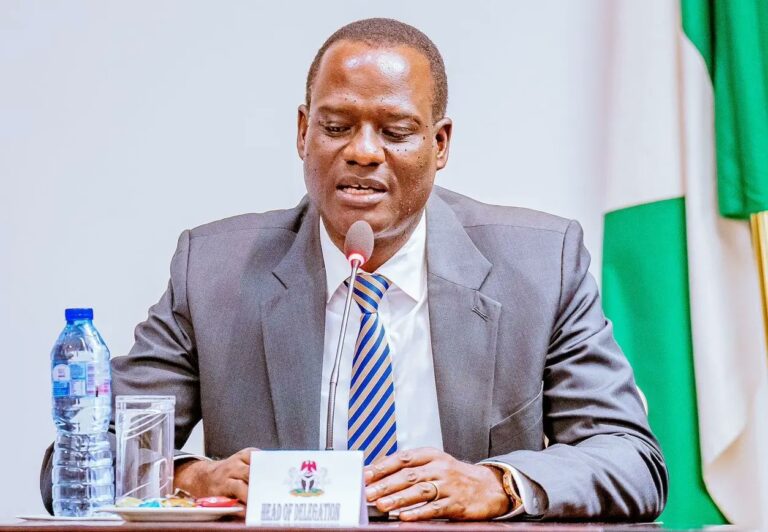
By February 2026, Germany’s own Deputy Head of Mission in Abuja, Johannes Lehne, was publicly admitting that the partnership had been largely “dormant” for years under the Buhari administration.
This was a diplomatic understatement of the highest order. What it really meant was that one of the most consequential infrastructure agreements in Nigeria’s history had been allowed to gather dust while over 200 million people continued to live under the tyranny of darkness and diesel.
To be fair and fairness demands acknowledgement, the Tinubu administration has restarted the engine.
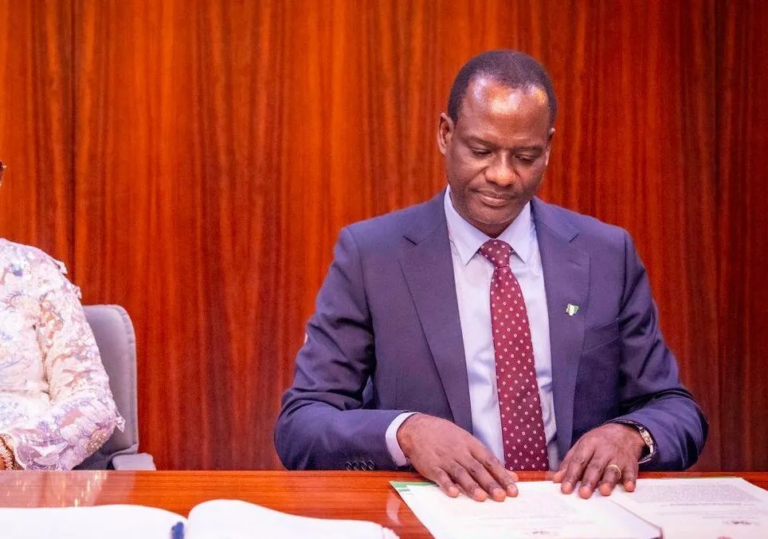
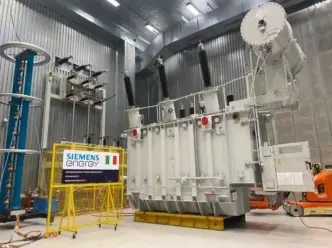
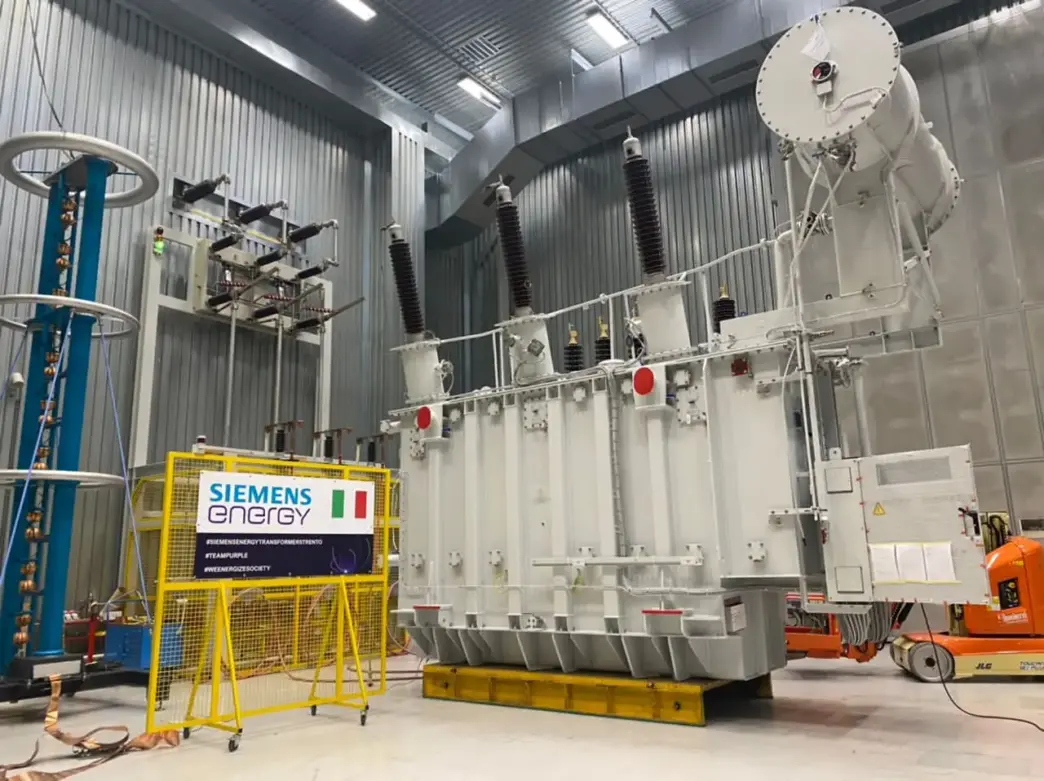
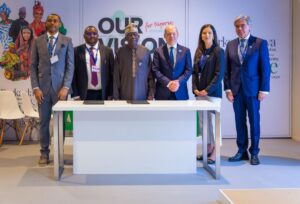
After President Bola Tinubu and former German Chancellor Olaf Scholz witnessed the signing of an accelerated performance agreement in Dubai in 2023, Siemens has delivered transformers and mobile substations, adding roughly 984 megawatts of capacity. Engineering, Procurement, and Construction contracts for new substations are advancing, with some expected to be completed by the end of 2026. Phases one and two are, by most accounts, now moving. That is genuinely more than what was happening before.
But let us be precise about what “moving” means here. Nigeria was supposed to have 7,000MW of reliable capacity by 2021. It was supposed to have 11,000MW by 2023. Today, incremental gains in transmission and distribution infrastructure are being celebrated as progress, and while they are progress, relative to stagnation, they are not success relative to promise.
The bigger question is whether this deal can now be concluded in any meaningful form, and what it would actually mean for Nigeria if it were.
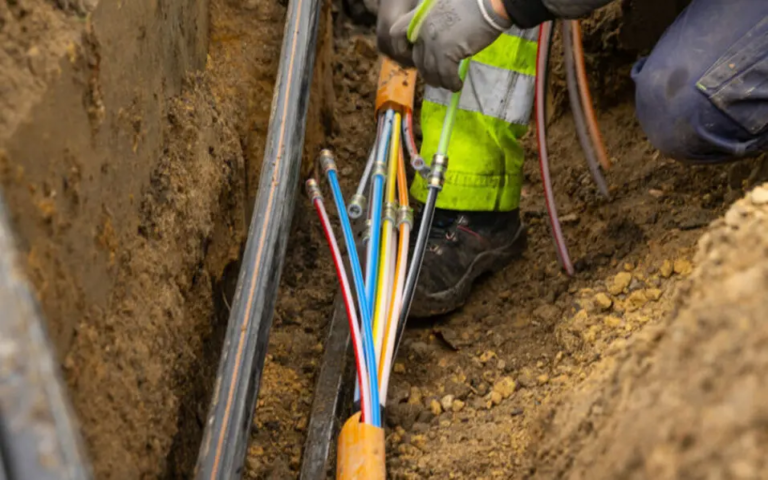
On the first point, there is cautious reason for optimism. Siemens has not walked away. German officials are re-engaged. The technical groundwork, substations, transformers, and transmission fixes are the unglamorous but essential work that actually moves megawatts.
If the political will holds, and funding doesn’t evaporate again, there is a realistic path to meaningful grid improvement, even if the original 25,000MW target by 2025 is now a relic of a more optimistic era.
On the second point, the economic impact, the stakes could not be higher. Power is the single largest constraint on Nigeria’s industrial capacity. Manufacturing firms spend an estimated 30-40% of their operating costs on self-generated electricity. Small businesses are suffocated by generator costs that their counterparts in Ghana or Kenya don’t pay.
Foreign direct investment decisions are quietly made against Nigeria every year because investors simply cannot accept energy risk at that scale. A functional, reliable grid would not just reduce costs, it would structurally transform Nigeria’s economic competitiveness overnight. The multiplier effect of reliable power on manufacturing output, cold-chain agriculture, tech infrastructure, and youth employment is genuinely enormous.
This is why the stakes of another failure would be enormous as well. Nigeria cannot afford to turn a revival into another false dawn. The Presidential Power Initiative needs more than momentum; it needs milestones, accountability mechanisms, and a public that holds its government to them.
Siemens has delivered on harder projects in less cooperative environments before. The question has rarely been about German engineering; it has always been about Nigerian governance.
Read More : Oghara Applauds New Technical College
The opportunity is still there. The damage from years of delay is real but not irreversible. If the Tinubu administration treats this not as a ribbon-cutting exercise but as an execution mandate with quarterly deliverables, transparent reporting, and zero tolerance for the bureaucratic inertia that killed the Buhari years, the Siemens deal could yet become the inflexion point Nigeria has been waiting for.
If not, it will become another cautionary tale about a country that had the plan and the partner but chose to delay anyway. Five years on, Africa’s largest economy is still running on fumes, but the clock is still ticking, and Nigeria cannot afford that story again.