Trending
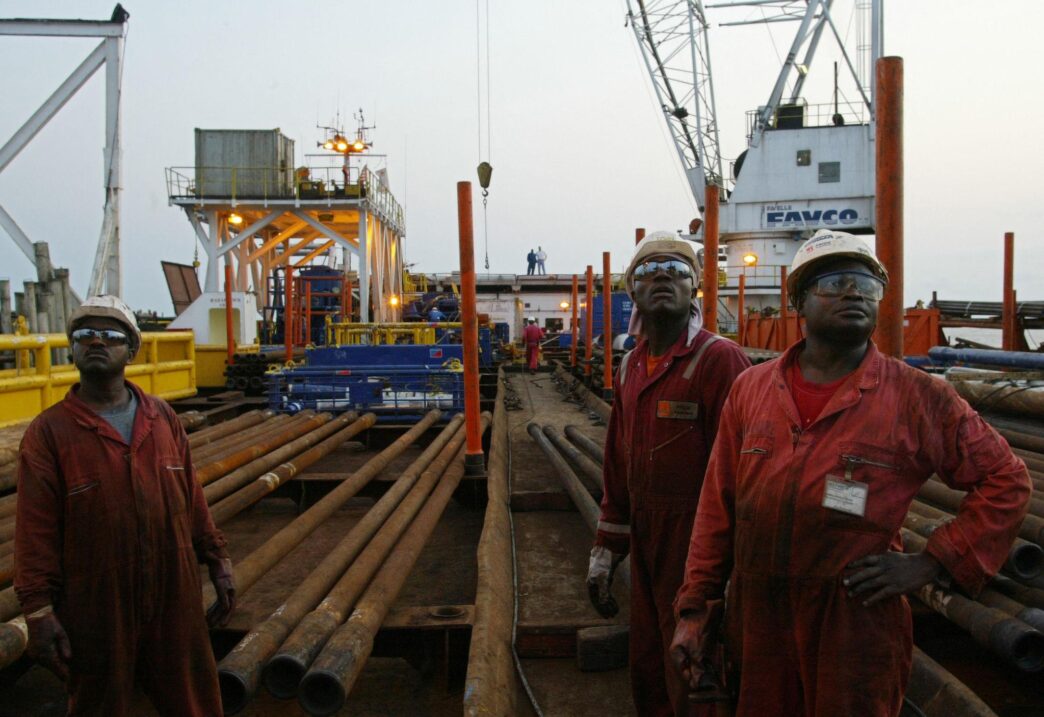
In Crude Oil: Power, Turnaround and Transformation in Angola, NJ Ayuk shifts attention from presidents and policy to the entrepreneurs, engineers and service companies turning reform into industrial capacity
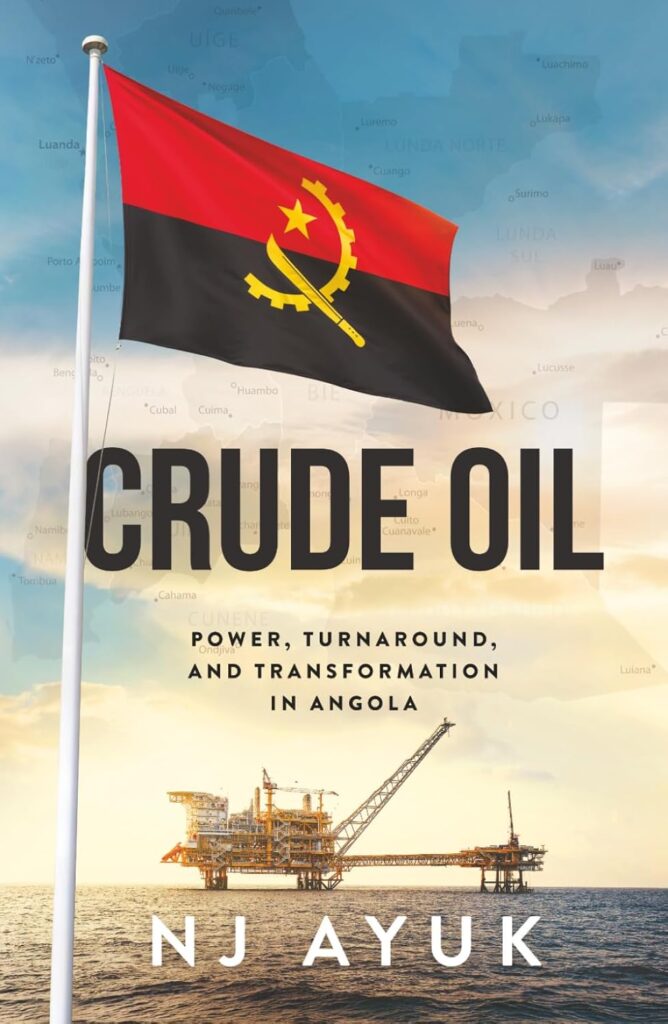
The most revealing parts of NJ Ayuk’s Crude Oil: Power, Turnaround and Transformation in Angola are not only the chapters that examine presidential reform, regulatory restructuring or Angola’s changing investment climate. One of the book’s strongest and most practical sections is Chapter 8, “Angolan Change-Makers,” where Ayuk moves the story away from government corridors and into the operating rooms of Angola’s energy economy.
This chapter matters because it answers a question that sits beneath every serious discussion about African oil and gas: after policy reform is announced, who actually builds the sector?
Read More : Defections, Divisions and Tinubu’s 2027 Edge
In many African resource economies, reform is often narrated from the top. The president signs. The minister announces. The regulator adjusts. International oil companies respond. Investors return or stay away. But Ayuk’s treatment of Angola becomes more grounded when he turns to the men, women and companies that occupy the difficult middle ground between policy and production.
Here, Angola’s transformation is no longer only about João Lourenço’s anti-corruption agenda, Diamantino Azevedo’s technocratic leadership, ANPG’s regulatory role or Sonangol’s restructuring. It becomes a story about local capacity, service delivery, technical competence, supply-chain depth and indigenous entrepreneurship.
That is what gives this part of the book its force.
Reform is not real until local firms can participate
The central argument that emerges from the chapter is simple but powerful: an oil-sector turnaround cannot be measured only by crude output, licensing rounds, offshore discoveries or foreign investment. It must also be measured by whether local companies are becoming more capable, more trusted and more deeply embedded in the value chain.
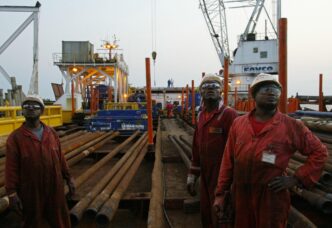
This is where Ayuk’s book becomes especially useful for African policymakers. Angola’s reforms are not presented merely as abstract improvements in governance. They are shown through the rise of companies and executives who are building Angolan competence in logistics, maritime services, engineering, oilfield support, maintenance, waste management, pipeline services, subsea operations and local manufacturing.
That is an important editorial shift. It prevents the book from reading like a celebration of hydrocarbons alone. Instead, it frames oil and gas as an industrial ecosystem. The barrel is only the final product. Around it sits a network of welders, divers, engineers, logistics firms, vessel operators, maintenance specialists, technology providers, fabricators, safety experts and environmental service companies.
Ayuk’s point is that Angola’s petroleum wealth becomes more meaningful when Angolans are not merely spectators to production, but participants in the supply chain.
The real test of local content
The book’s “change-makers” section is also a useful reminder that local content is not a slogan. It is not achieved by simply inserting domestic names into procurement documents or reserving contracts for politically connected firms. Real local content requires competence.
That distinction runs through the chapter.
The companies profiled are not presented as symbolic beneficiaries of reform. They are positioned as operating businesses solving practical problems in a technically demanding sector. CABSHIP, Enagol, Poliedro, Brimont, Tradinter, KAESO, Grupo Simples, Octomar and Friburge are used to show how local enterprises can move from peripheral service roles into more consequential positions within the petroleum value chain.
This is one of the chapter’s strongest contributions. It makes a case for local content that is not sentimental. It is commercial, technical and developmental.
The idea is not that Angolan firms should be included simply because they are Angolan. The stronger argument is that the sector becomes more resilient when local firms are trained, financed, trusted and held to high standards. In that sense, local content becomes both an economic policy and a competitiveness strategy.
It reduces import dependence. It shortens supply chains. It creates jobs. It allows skills to accumulate locally. It improves response times. It gives international operators partners who understand domestic realities. Most importantly, it helps convert oil activity into broader national capability.
From extraction to ecosystem
One reason this chapter works well is that it quietly expands the meaning of oil-sector reform. Reform is often judged by laws, agencies and fiscal terms. Those things matter. Without clear rules, transparent regulation and credible institutions, investors hesitate and production suffers. But Ayuk’s book suggests that the deeper transformation comes when reform begins to produce an ecosystem.
An extractive economy takes crude out of the ground.
An industrial ecosystem builds capability around that crude.
That is the difference Angola appears to be chasing.
The chapter profiles maritime service companies, energy technology providers, local engineering firms, oilfield support companies and waste-management players. In doing so, it shows that the country’s petroleum industry is not simply a story of offshore blocks and government revenue. It is also a story of firms learning to do difficult things: provide subsea support, manage complex logistics, develop technical talent, support FPSO operations, introduce specialised tools and create safer environmental practices.
That is where the chapter becomes relevant beyond Angola. Many African oil producers have spent decades exporting crude while importing too much of the knowledge, equipment, services and managerial capacity required to produce it. Ayuk’s argument, viewed through this chapter, is that Angola’s turnaround will be incomplete unless it changes that pattern.
Sonangol and the symbolism of institutional reinvention
The chapter becomes even more significant when it moves into Sonangol’s reform experience. Sonangol is not just another company in Angola’s petroleum history. It has long been one of the central institutions in the country’s political economy. For decades, it was operator, concessionaire, national symbol, commercial vehicle and strategic state instrument.
That concentration of roles became part of Angola’s problem.
The book treats Sonangol’s restructuring as one of the clearest signs that Angola understood the need to separate power from performance. By transferring regulatory and concession functions to ANPG, Sonangol was pushed toward a more focused commercial identity. That shift is crucial because national oil companies often struggle when they are asked to be everything at once: regulator, operator, investor, political instrument and development agency.
Ayuk’s treatment of Sonangol’s transformation suggests that reform is not simply about dismantling old structures. It is also about helping important institutions rediscover their proper function.
The most persuasive idea here is that Sonangol’s reform had to be both structural and cultural. It was not enough to move responsibilities on paper. The company also needed to rebuild internal confidence, retain technical staff, attract capital, reduce opacity and reposition itself for a future that includes oil, gas, renewable energy and critical minerals.
That makes Sonangol’s story a corporate reform lesson as much as an energy-sector story.
The chapter’s strongest insight: policy needs operators
What makes “Angolan Change-Makers” especially useful is that it brings policy down to earth. Laws do not execute themselves. Regulatory agencies do not repair pipelines. Presidential speeches do not train divers. Investment codes do not build subsea factories. Local content regulations do not automatically create local competence.
People and firms do.
That is the larger meaning of the chapter. It shows that Angola’s oil-sector turnaround depends on a class of operators who can translate national ambition into industrial work. These are not always the people who dominate headlines, but they are the ones who determine whether reform survives contact with reality.
Ayuk’s inclusion of these figures gives the book a more human and practical texture. It also broadens the reader’s understanding of transformation. Angola’s future will not be shaped only by the state’s ability to attract ExxonMobil, TotalEnergies, Chevron, Azule Energy or other international players. It will also be shaped by whether domestic firms can meet world-class standards and capture more value from the industry.
A useful lesson for Nigeria and other African producers
This chapter carries a clear lesson for Nigeria, Ghana, Senegal, Namibia, Mozambique and other African energy economies: oil reform cannot stop at legislation. Nigeria’s Petroleum Industry Act, for example, may create a better framework, but the deeper question is whether indigenous service companies, engineering firms, marine operators, fabricators and technical institutions can scale with the industry.
Angola’s example, as presented by Ayuk, suggests that the next phase of African energy reform must be judged by capacity. How much of the supply chain is local? How many technical jobs are being created? How many domestic firms are moving from basic support services into specialised, high-value work? How much technology transfer is real? How many local companies can compete without being protected from performance standards?
These are the hard questions behind the phrase “local content.”
Ayuk’s book is strongest when it refuses to treat African participation as decorative. In this chapter, local companies are not presented as charity cases. They are presented as builders of an energy economy that wants to become more self-confident, more technically capable and less dependent on imported solutions.
A book about oil, but also about capability
The broader title of the book — Crude Oil: Power, Turnaround and Transformation in Angola — can easily lead readers to expect a conventional petroleum story. But Chapter 8 shows that the word “transformation” may be the most important part of the title.
Transformation is not just Angola producing more oil.
Transformation is Angola building companies that can service the industry.
Transformation is Sonangol moving from an overextended state giant toward a more disciplined commercial energy company.
Transformation is indigenous firms moving from the margins of procurement into the heart of operations.
Transformation is the country learning that oil wealth becomes more durable when it creates national capability.
That is why “Angolan Change-Makers” deserves close attention. It is one of the book’s most practical sections because it shows reform at the level where it either succeeds or fails: in companies, contracts, skills, supply chains and execution.
Conclusion: the quiet architecture of Angola’s turnaround
NJ Ayuk’s book is, on the surface, a defence of Angola’s right to use its oil and gas resources for development. But this chapter shows a more sophisticated argument. The real defence of hydrocarbons is not ideological. It is developmental.
If oil merely enriches the state and foreign operators, it remains politically vulnerable and morally contested. But if oil builds local companies, trains workers, deepens industrial capacity, supports innovation and creates national competence, it becomes harder to dismiss as a curse.
That is the quiet power of Chapter 8. It tells the reader that Angola’s turnaround is not only being written by presidents, ministers and regulators. It is also being written by entrepreneurs, engineers, divers, logistics specialists, technology managers, service providers and reform-minded executives.
In that sense, Crude Oil: Power, Turnaround and Transformation in Angola becomes more than a book about barrels. It becomes a book about the difficult, unfinished work of turning resource wealth into a national industrial base.
And that may be the most important transformation of all.