Trending
For years, Zimbabwe’s cotton sector has struggled with falling prices, climate shocks and declining production.
Now, farmers, researchers and government officials believe a new generation of hybrid seeds could help restore the crop once known as the country’s “white gold.”
Among those witnessing the shift is 56-year-old Aleck Bikostone, a cotton farmer from Chinhoyi in Mashonaland West Province, who has spent more than two decades cultivating the crop despite volatile markets and rising production costs.
Read More : Togo Farmers Boost Cotton Yields
Although fluctuating global prices tested his resolve, Bikostone never abandoned cotton farming, which he credits with transforming his family’s fortunes.
“Cotton farming runs in my blood. For me to be who I am, it’s cotton production. I have managed to send my four children to school, all of whom have now graduated. It has not been easy though, at one point, the dwindling prices (from US$1.35 to a paltry US$0.35 cents per kilogram) had an impact on my family.”
He recalled the financial strain caused by collapsing prices but said perseverance kept him going.
“Imagine having spent so much money on the crop and in return there is nothing tangible. However, as time passed, I adjusted. Like I said, cotton farming is rooted in me. I soldiered on, and I still produce a better crop year in, year out. With the coming of the hybrid seeds, our future looks bright.”
Zimbabwe’s cotton industry has experienced a sharp decline over the past decade. According to Stewart Mubonderi, national chairman of the Cotton Producers and Marketers Association of Zimbabwe, government support has reached hundreds of thousands of smallholder farmers, although participation has declined in recent years.
Seed cotton production, which peaked at more than 350,000 tonnes during the 2010/11 season, has dropped to roughly 28,000–29,000 tonnes in 2025. However, the Agricultural Marketing Authority expects output to recover to around 38,500 tonnes in 2026, raising hopes that the industry may be beginning a gradual recovery.
For many rural communities, cotton remains one of the few reliable cash crops capable of supporting household incomes despite persistent challenges.
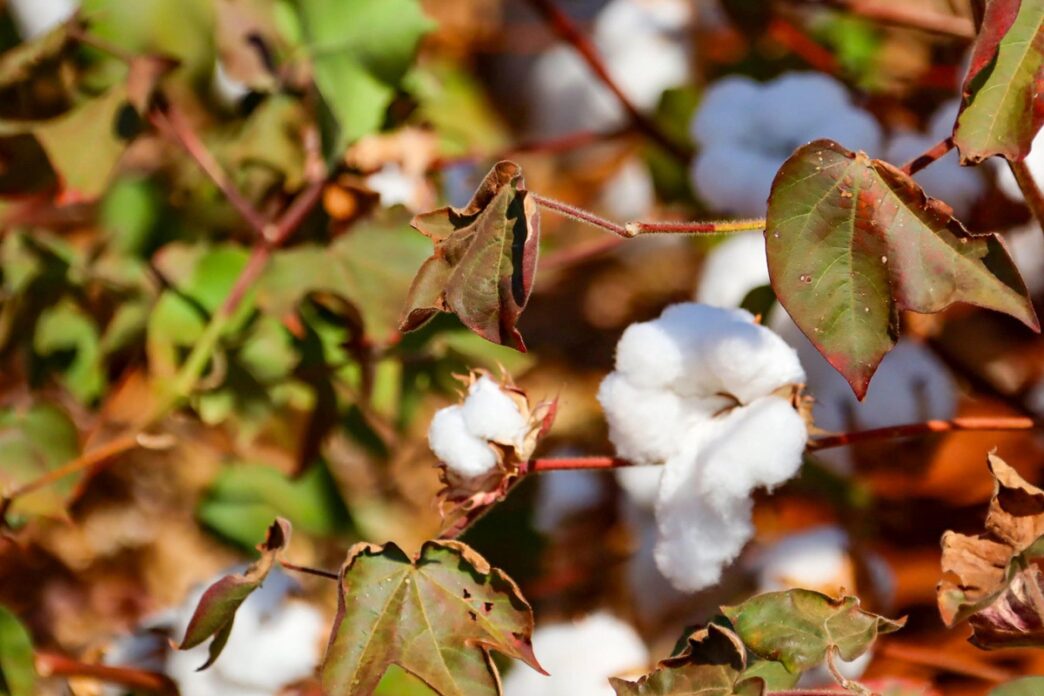
A key driver of optimism is the introduction of hybrid cotton seeds, which combine traits such as improved yields, stronger resistance to pests and diseases, and greater resilience to drought and changing weather conditions.
Bikostone said switching from traditional open-pollinated varieties to hybrids significantly improved his harvests.
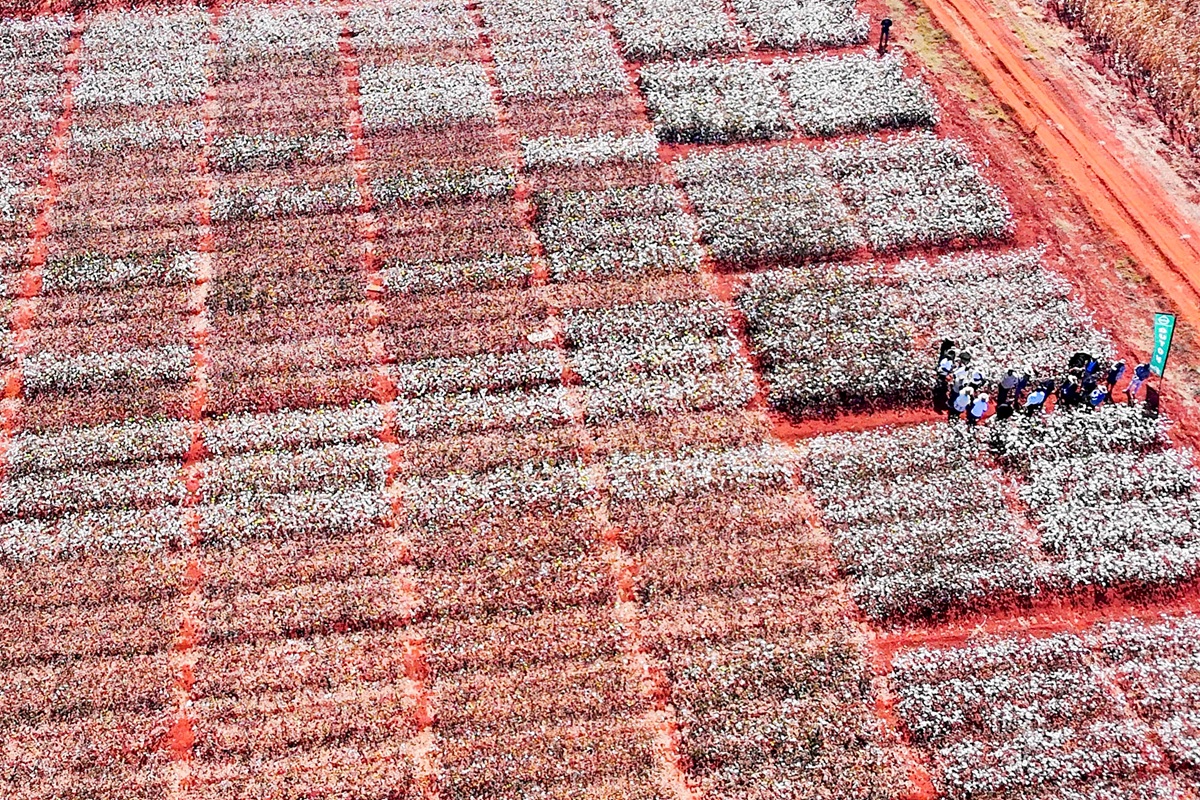
“I had been using the Open-Pollinated Varieties (OPV), but after being introduced to the hybrid seed varieties, the yield has improved, and the cost of production is conducive. At first, I hesitated, and later on I embraced it, and it worked wonders. With enough support and viable prices, many farmers will return to cotton production because it can significantly improve household incomes.”
Researchers developing the new seed varieties believe improved genetics is central to rebuilding Zimbabwe’s cotton industry.
Tapiwa Bhiri, a cottonseed breeder based in Chinhoyi, joined a breeding programme in 2025 and said maintaining quality throughout the process is essential.
“I joined the cotton seed breeding program last year. Cotton seed breeding requires monitoring to guarantee quality… Today, I am happy because cotton farming has provided income to support my family and other projects outside farming.”
Other farmers have also reported positive experiences.
Arnold Gwengo, another producer from Chinhoyi, said hybrid seeds have delivered stronger harvests while reducing losses from pests and diseases.
“With hybrid seeds you will never go wrong. I started using the varieties a few years ago and, honestly speaking, the results have been encouraging. One thing that is encouraging is that the hybrid seeds are resistant to pests and diseases.”
According to Nyasha Gandiwa, Head of Research at Quton Seed Company, improved seed genetics account for roughly half of a farmer’s production potential when combined with effective crop management.
“We have new genetic technologies that we are developing, and some are already on the market. In Zimbabwe, cotton production has been on a downward spiral, and we are targeting to revitalize the cotton industry.”
He said improved genetics and sound farming practices work together to maximise production.
“In terms of research, genetics contribute about 50% of the final yield that the farmer gets, and the other 50% goes to crop management and crop husbandry practices.”
One of the biggest advantages of hybrid varieties, Gandiwa explained, is their ability to withstand climate stress while delivering substantially higher yields.
“The advantages of these technologies are that they bring increased yield and are resistant to climate shocks and pests.”
He said farmers currently averaging about 500 kilograms per hectare could potentially produce up to four tonnes per hectare under favourable conditions using improved seed varieties.
“Using hybrid seeds we can actually have 4 tonnes per hectare. Imagine a farmer who was doing 500kg per hectare now does 4 tonnes that translates to good returns and the farmers’ livelihoods improves.”
Agricultural extension officers agree that hybrid technology could play a significant role in reviving the industry.
Promotion Harutizwi of the Zimbabwe Farmers Union said the improved varieties produce better yields, resist pests and diseases, and deliver higher-quality lint.
“Hybrid seeds are critical in the revival of the cotton industry in the country and across Africa.”
Quton Zimbabwe General Manager Kaustubh Joshi said the company is also developing climate-smart seed varieties for wider distribution across the continent.
“Our objective is to produce seeds that bring high yields and also transform livelihoods for the farmers.”
Zimbabwe’s government says it is committed to supporting the industry’s recovery through research, improved seed systems, irrigation and better access to farm inputs.
Medlina Magwenzi, Chief Director of Agricultural and Rural Development Advisory Services (ARDAS), said cotton remains vital to the livelihoods of smallholder farmers.
“We are realising that the cotton industry has been dwindling. But as a government, we know that this crop is just not a crop. It is a crop that we are looking forward to uplift the livelihoods of the smallholder farmers in Zimbabwe.”
She added that improving seed quality alone will not be enough unless farmers also have access to irrigation, fertiliser and fair markets.
“We want to make sure that we support this hybrid seed because hybrid seed will not only yield higher in the rain-fed fields… We also want to make sure there is availability of fertilisers.”
Read More : Kigali Hosts Africa’s Growth Conversation
While market pricing remains a concern, many farmers believe the emergence of hybrid seed technology represents the strongest opportunity yet to revive Zimbabwe’s cotton sector and restore its place as a major contributor to rural livelihoods.
By Elia Ntali, Bird Story Agency