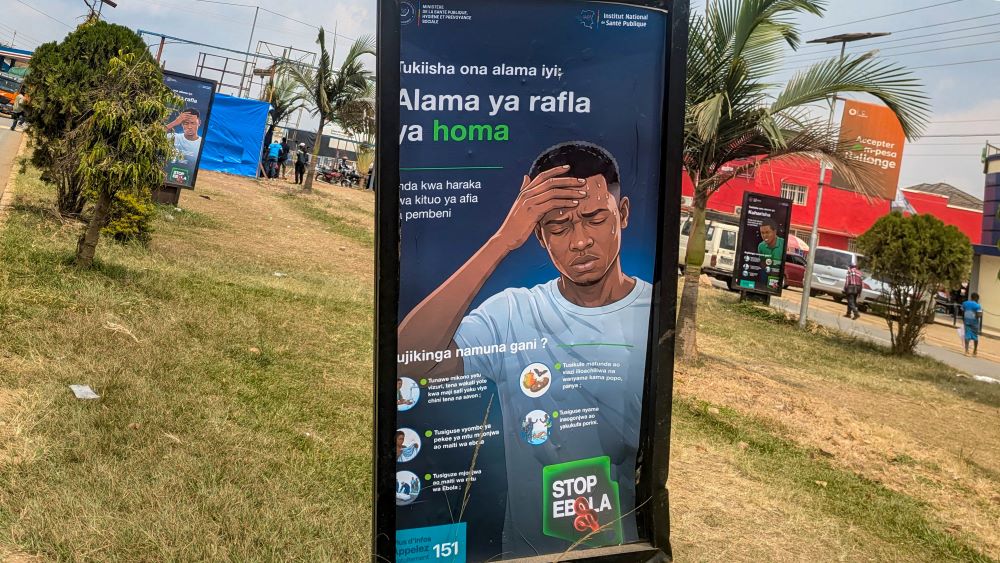
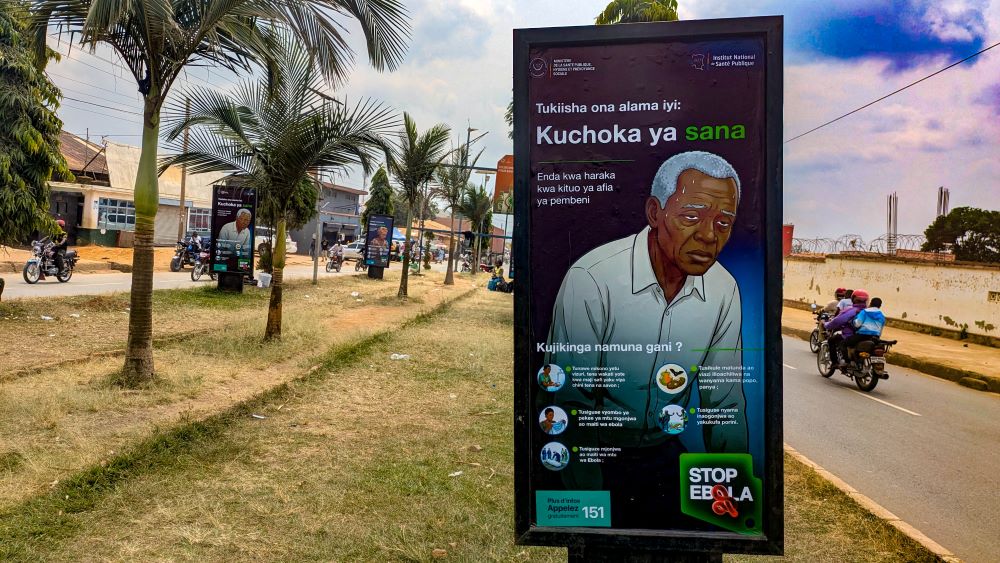
An Ebola awareness message displayed along Boulevard de la Libération in Bunia, Ituri Province. Credit: Bird story agency.
Communities have taken the lead in the Democratic Republic of the Congo’s fight against the latest Ebola outbreak, as health workers and religious leaders intensify efforts to stop the spread of the deadly virus.
In Ituri Province, community health workers and religious leaders are going from house to house to educate residents, counter misinformation, and encourage people to seek early treatment.
Their efforts have become even more important because there is currently no vaccine for the Bundibugyo strain of Ebola.
Ituri, a province in northeastern DRC with about five million people, has faced years of armed conflict, displacement and disease outbreaks, making it difficult to control the virus.
According to the World Health Organisation (WHO), the DRC has recorded 1,792 confirmed Ebola cases, including 625 deaths, while 295 patients have recovered since the outbreak was declared a Public Health Emergency of International Concern on 17 May 2026.
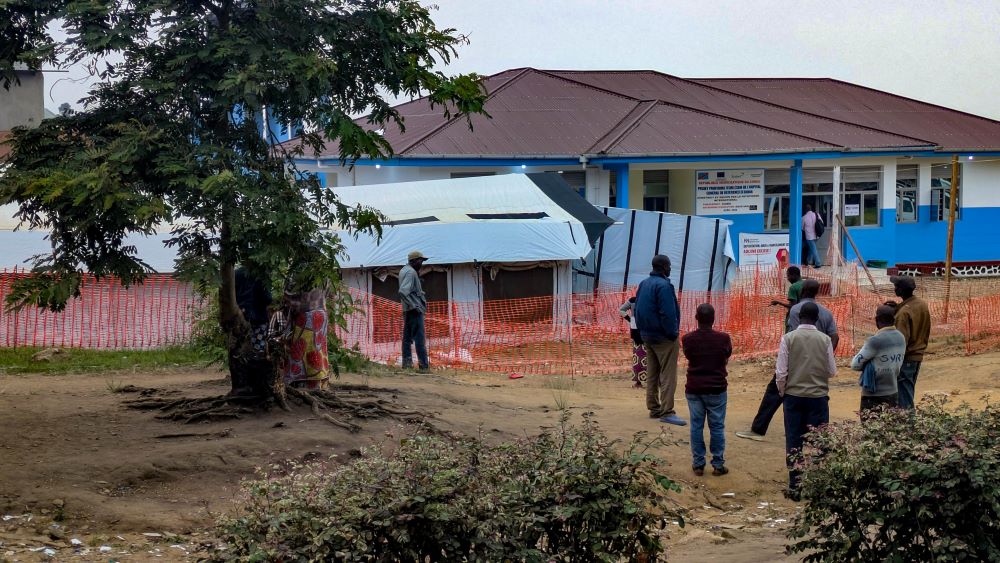
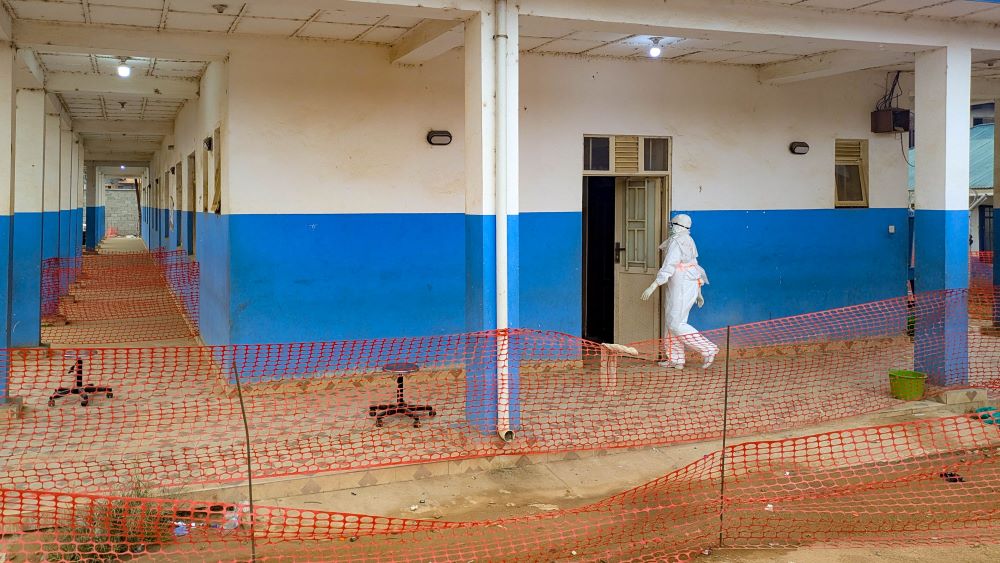
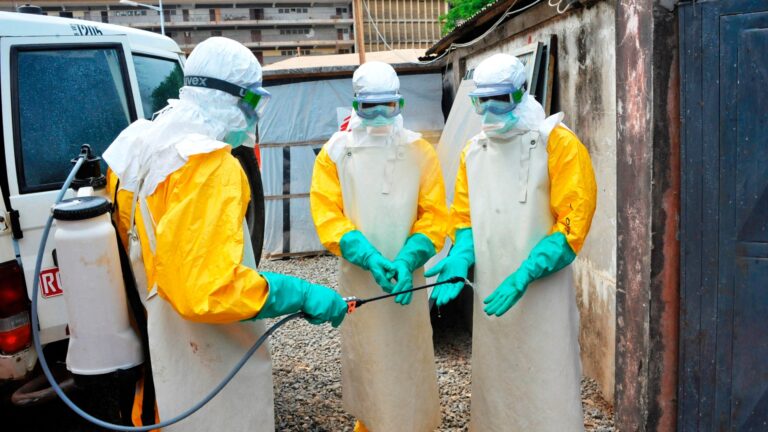
An Ebola Treatment Centre set up at the Bunia General Referral Hospital in Ituri Province. Credit: Bird story agency.
Community health workers say convincing people remains a major challenge because many residents still do not believe Ebola is real.
“Some people ask us whether Ebola really exists. Others believe that once a patient is taken to a treatment centre, they never come back. Many also question whether there is any treatment at all, or even doubt the existence of the disease,” said community health worker Aristote Banga.
He said some people wrongly believe the disease was created to attract international funding.
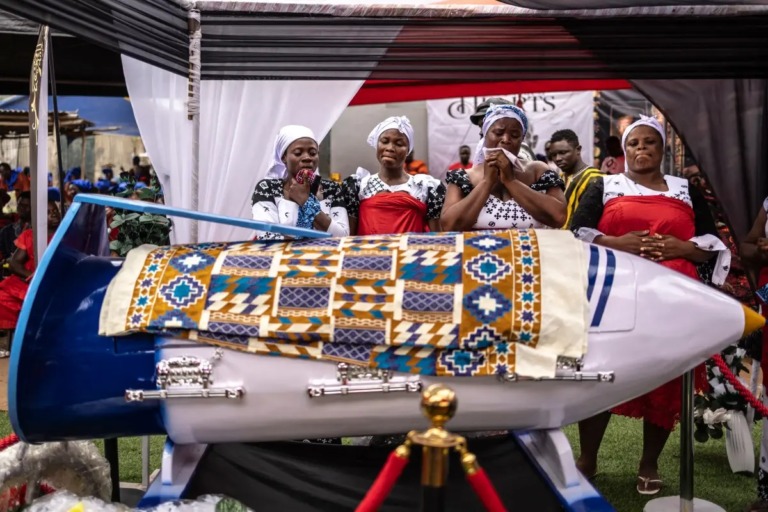
“People need to understand that Ebola exists and everyone must play their part to stop this epidemic. We have already lost several loved ones, and if awareness is not increased, we will be far from stopping this epidemic despite other measures that may be put in place,” he added.
An Ebola Treatment Centre set up at the Bunia General Referral Hospital in Ituri Province. Credit: Bird story agency.
Religious leaders have also joined the awareness campaign because of the trust they enjoy within their communities.
The head of the Islamic community in Ituri, Sheikh Shukrani Byaruma, said religious leaders are working closely with health officials to educate worshippers.
“Our mission is to show the faithful that Ebola is a very real disease. We encourage them to respect the measures recommended by health authorities, to consult health facilities quickly if they experience symptoms, and to avoid any contact with people who are sick or have died from the disease,” he said.
Health officials say this outbreak is different from previous ones because it involves the Bundibugyo strain, which has no approved vaccine or specific treatment.
“This epidemic is not similar to previous ones. Its particularity is that it is occurring in a mining area, characterised by a high population density and significant movement of people,” said Dr Richard Kitenge, Incident Manager of the Ebola response.
An Ebola awareness message displayed along Boulevard de la Libération in Bunia, Ituri Province. Credit: Bird story agency.
Response teams also face shortages of vehicles and protective equipment, forcing some workers to travel by motorcycle, taxi or even on foot to investigate suspected cases.
Despite the challenges, health workers say they remain committed to protecting their communities.
“Sometimes we’re tempted to give up, but since it’s our community, we give it our all,” said a response worker identified as Angel Bahati.
Deborah Akwa is a content writer with over four years of experience creating brand stories, editorial content, and audience-focused articles on topics like health, lifestyle, and entertainment.
When she isn't writing, she is behind the scenes managing editorial operations and helping the content team work better.
She loves using words to connect brands with their audiences. Outside of work, she enjoys watching movies and engaging in thought-provoking conversations.
Weekly roundups. Sharp analysis. Zero noise. The NewsCentral TV Newsletter delivers the headlines that matter—straight to your inbox, keeping you updated regularly.
 Trending