Trending
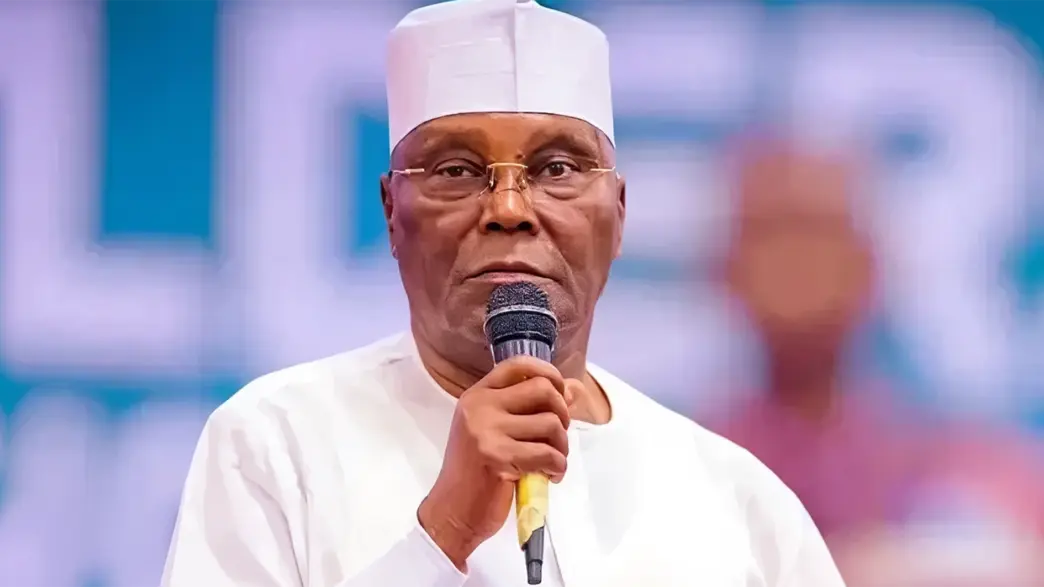
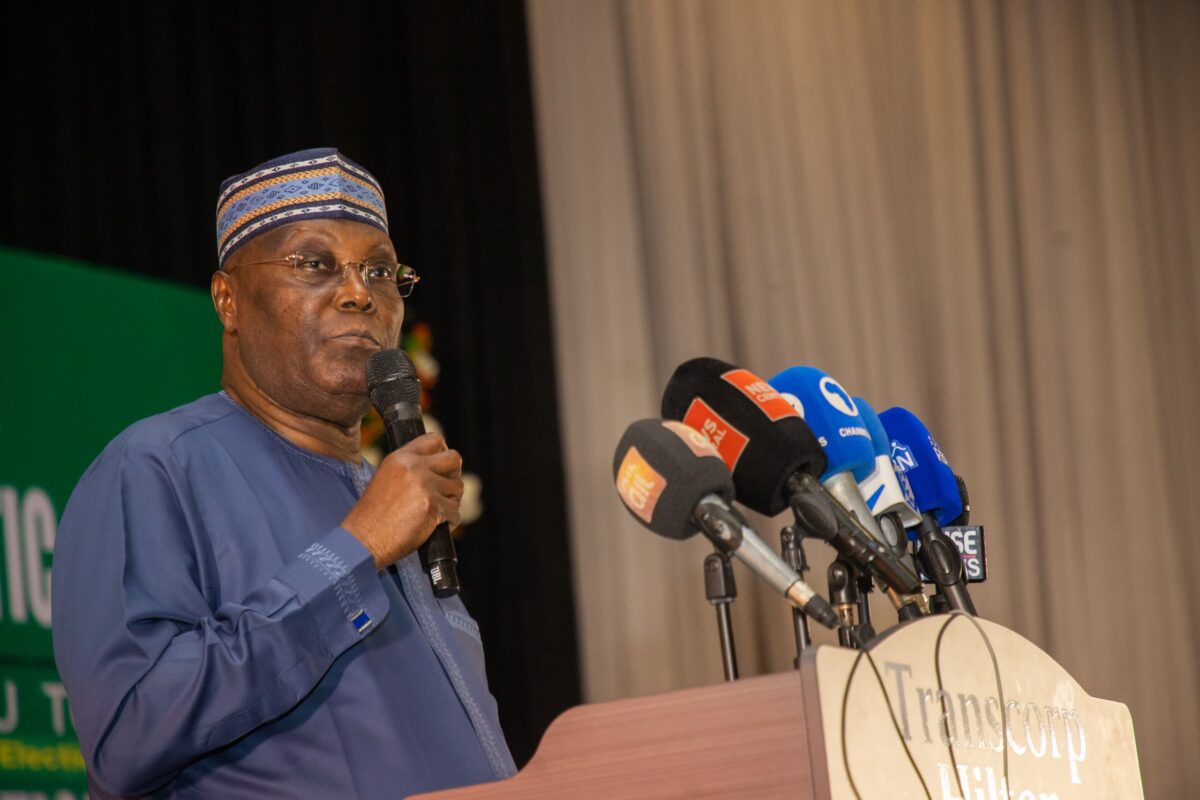
African Democratic Congress (ADC) presidential candidate, Atiku Abubakar, has called on the Nigerian Government to abandon what he described as an import-dependent economic model, arguing that Nigeria’s long-term prosperity depends on expanding domestic production, reviving manufacturing and building an export-driven economy.
In a statement issued on Monday by his Senior Special Assistant on Public Communication, Phrank Shaibu, Atiku said Nigeria must prioritise producing what it consumes, manufacturing locally and exporting finished goods rather than relying on imports.
He argued that the country’s economic difficulties stem from policy choices that favoured consumption over production and importation over industrialisation.
According to him, no country has achieved sustainable prosperity by depending on imports, warning that Nigeria was effectively exporting jobs while importing poverty.
“Nigeria cannot borrow, import and tax its way to prosperity. For too long, we have celebrated importation while neglecting production. We import food that should be grown in our fields, goods that should be manufactured in our factories and even raw materials that ought to be processed by Nigerian hands.
“No nation has ever become prosperous by exporting jobs and importing poverty,” Atiku declared.
The former vice president pointed to rising food prices, declining industrial output and the growing cost of importing raw materials as evidence of the country’s economic challenges.
He noted that food inflation remained high across the country, citing a national figure of 17.52 percent, with rates exceeding 50 percent in Kogi and above 43 percent in Niger State, while manufacturers spent about N3.53 trillion on raw material imports within six months.
“Food inflation remains at 17.52 per cent nationally and has climbed to 53.02 per cent in Kogi and 43.83 per cent in Niger State, pushing millions of families beyond the reach of basic nutrition.”
Atiku warned that shrinking manufacturing activity was weakening the naira, fuelling inflation and limiting job creation.
He advocated greater investment in agriculture, manufacturing, solid minerals, technology and value addition, saying processing raw materials locally would create employment, strengthen the currency and reduce dependence on imports.
The ADC presidential candidate also outlined what he described as the priorities of his administration if elected, including improved security for farming communities, affordable financing for farmers and manufacturers, lower import duties on industrial machinery unavailable locally, competitive energy prices, tax policies that encourage production and sustained infrastructure investment.
He said factories could not thrive where borrowing costs were high, energy remained expensive, the naira was unstable and consumers lacked purchasing power.
Atiku also cited the economic reforms implemented during the administration of former President Olusegun Obasanjo, where he served as vice president, saying they restored investor confidence, liberalised key sectors and attracted private investment.
He maintained that Nigeria’s wealth would ultimately depend on its ability to produce, process and export rather than import.
The comments come as the Tinubu administration continues to defend its economic reforms, including the removal of fuel subsidy, exchange rate liberalisation and tax reforms, saying they are laying the foundation for long-term economic stability despite criticism over rising living costs.
In a separate statement on Monday, Atiku accused the Nigerian Government of concealing trillions of naira in the 2026 Appropriation Act, describing the budget as lacking transparency.
He questioned the sharp increase in the Service-Wide Vote, which he said rose from N638 billion in the 2025 budget to N12.8 trillion in 2026.
“The Service-Wide Vote stood at N638bn in the 2025 budget, but it has inexplicably ballooned to N12.8tn in the 2026 Appropriation Act, an astonishing increase of approximately 1,918 per cent in just one year,” Atiku said.
“No responsible government can expect citizens to accept a 19-fold increase in a notoriously opaque budgetary provision without disclosing exactly who will spend the money, what it will be spent on, and under what legal authority,” he stated.
The former vice president argued that such a significant increase required full public disclosure, including details of how the funds would be spent and the legal basis for the allocation.
He also raised concerns over personnel provisions under the budget, questioning a N2.19 trillion personnel allocation captured under the Service-Wide Vote managed by the Ministry of Budget and Economic Planning.
According to Atiku, Nigerians deserve to know who the beneficiaries are and how the funds would be administered.
Read More : Shettima To Speak At UNGA On Thursday
“Who exactly are the workers earning N2.19tn? Where are they? What offices do they occupy? What agencies do they belong to? This is not budgeting; it is budgetary absurdity. Nigerians deserve to see the payroll,” he added.
He further argued that the allocation exceeded the combined budgets of critical sectors such as education, defence and agriculture, urging the National Assembly to demand full disclosure of all expenditures captured under the Service-Wide Vote.
The Service-Wide Vote is a budgetary provision used by the Nigerian Government to fund expenditures that are not assigned to specific ministries, departments or agencies when the budget is prepared, including contingency spending, statutory obligations, pensions and other government-wide commitments.