Trending

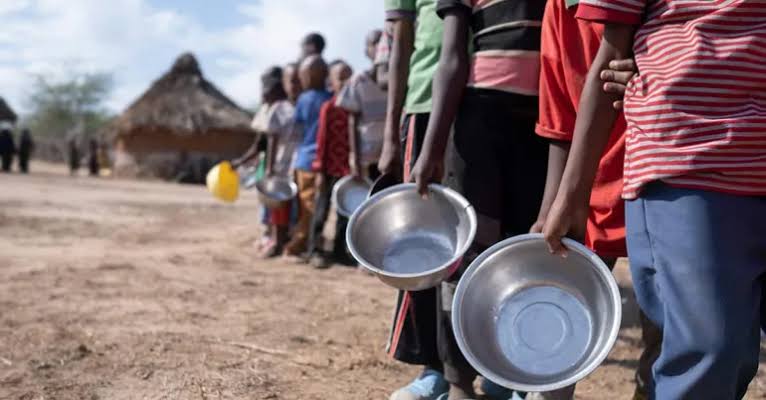
Nigeria is projected to have one of the highest populations in need of urgent humanitarian food assistance in January 2027, alongside Sudan, Pakistan and the Democratic Republic of Congo, according to a new report by the Famine Early Warning Systems Network.
The July 2026 Food Assistance Outlook Brief projects that between 145 and 155 million people across FEWS NET’s presence countries will require food assistance in January 2027, representing approximately 10 percent of the total population.
Nigeria is expected to contribute over 10 percent of total food assistance needs, with an estimated 16 to 17 million people facing Crisis (IPC Phase 3) or worse acute food insecurity.
“Across northern Nigeria, Crisis (IPC Phase 3) and worse outcomes are expected in January, driven by conflict that disrupts livelihoods, restricts cultivation, and constrains household income,” the report said.
Despite the completion of the main harvest in December, staple food prices are expected to remain high as production and supply disruptions coincide with high market reliance among conflict-affected households unable to cultivate.

In the North East, inaccessible areas and local government areas most affected by conflict-related movement restrictions are expected to face Emergency (IPC Phase 4).
The report noted that food assistance needs in Nigeria are projected to be higher than in January 2026, reflecting persistent insecurity and economic pressures.
Other countries with the highest projected food assistance needs include Sudan (19-20 million), Pakistan (17-18 million), the Democratic Republic of Congo (16-17 million), Yemen (13-14 million), Afghanistan (8-9 million), South Sudan (7-8 million), Syria (6-7 million) and Somalia (6-7 million).
When expressed as a percentage of total population, South Sudan has the highest share at 50-55 percent, followed by Sudan (40-45 percent), Yemen (35-40 percent), Somalia (30-35 percent), Syria and Haiti (25-30 percent each), and Lebanon (20-25 percent) .
The report identified conflict, economic shocks, and weather-related events as the primary drivers of food insecurity across most affected countries.