Trending
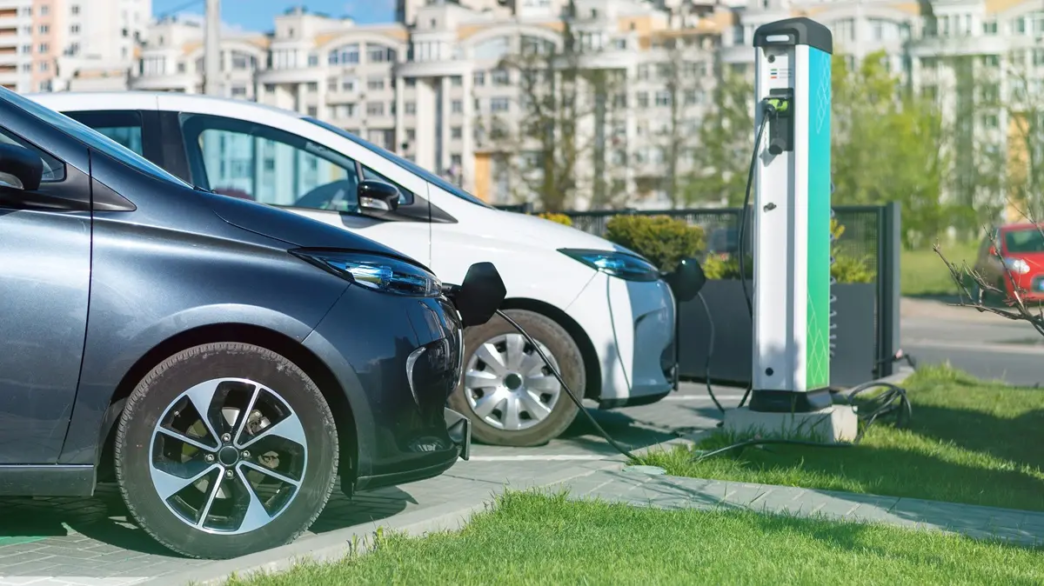
India’s expansion of electric vehicles into Africa is becoming a strategic challenge to China’s early dominance of the continent’s electric mobility market. From Kenya and Malawi to Tanzania, Zanzibar and South Africa, Indian manufacturers are combining exports, public transport projects, local assembly plans and trade diplomacy to build a competing EV ecosystem across Africa.
Indian electric vehicle manufacturers are expanding rapidly across African markets, creating the strongest competitive challenge yet to China’s early lead in the continent’s electric mobility sector.
The shift suggests African governments and distributors are broadening their EV partnerships beyond a China-dominated ecosystem as demand for affordable electric transport accelerates across the continent.
Read More : Gunmen Kill Seven in Jordan Church Attack
The latest signal came on August 6, 2026, when TVS Motor Company launched its iQube electric scooter in Kenya, becoming the first Indian original equipment manufacturer (OEM) to introduce a premium electric scooter in Africa.
The Nairobi launch, supported by Car & General’s distribution and after-sales network, confirms that Indian manufacturers are beginning to compete directly for Africa’s next generation of electric mobility customers.
According to Kenyan technology analyst Moses Kemibaro, the country’s electric two-wheeler market has largely been driven by boda boda operators, delivery riders and commercial fleets, with financing and battery swapping at the centre of adoption.
“TVS’s premium scooter strategy suggests Indian manufacturers are testing whether Africa’s EV market can expand beyond commercial fleets into consumer mobility,” he explained.
The iQube entered the Kenyan market in two variants built around urban commuting rather than commercial fleet operations.
The iQube 3.5 uses two lithium-ion battery packs with a combined 3.5 kWh capacity, delivering a real-world range of 115 kilometres and a top speed of 82 km/h, while the iQube 2.2 offers a 75-kilometre range with a 2.2 kWh battery.
Both models are powered by a 4.6 kW hub-mounted motor and can be charged from a standard household socket using a portable charger, reaching 80% charge in about two to three hours.
The scooter also incorporates TVS’s SmartXonnect connectivity platform, which includes smartphone-linked navigation, ride tracking, anti-theft alerts, geofencing, crash detection, reverse parking assist and up to 32 litres of under-seat storage, positioning it as a connected premium mobility product rather than a basic electric commuter scooter.
The launch comes as Africa’s EV market continues to gather momentum. According to the International Energy Agency (IEA), electric vehicle sales on the continent more than doubled in the first half of 2026, with more than 30,000 EVs sold across African markets.
South Africa recorded more than fivefold growth, while Egypt registered more than threefold growth, indicating that demand for electric mobility is beginning to scale beyond a handful of pilot markets.
What makes the current moment significant is that India’s EV expansion is emerging from an automotive relationship that has already become strategically important.
South Africa was India’s largest car export destination in FY2025–26, with about US$1.5 billion in passenger vehicle exports, accounting for 16.6% of India’s global car export value. India exported 905,137 passenger vehicles in FY2025–26, the highest level on record, while total car export value reached about US$9 billion, according to industry data by Autopunditz.com.
The same manufacturing ecosystem that made South Africa India’s largest automobile export market is now becoming the foundation for India’s electric mobility expansion across Africa.
However, China remains the dominant force in the global EV industry. The IEA estimates that China accounted for nearly 75% of global electric vehicle production in 2025 and about 40% of global EV exports, with Chinese manufacturers supplying many of the affordable electric vehicles that have driven adoption across emerging markets. Chinese brands entered Africa early through low-cost imports, battery supply chains and charging infrastructure partnerships.
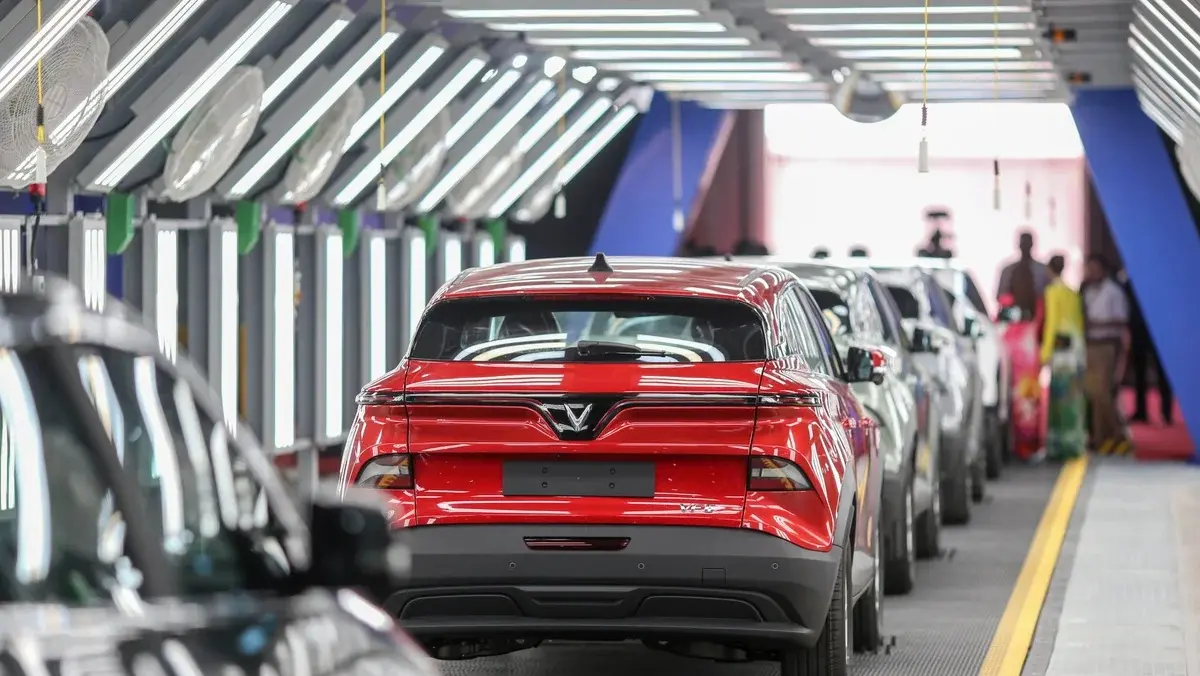
India is trying to challenge that early lead with a different industrial model. Rather than focusing only on vehicle sales, Indian manufacturers are entering Africa through consumer mobility, public transport, commercial vehicles and government-backed industrial partnerships. Their strategy increasingly combines exports with distribution networks, after-sales service, assembly discussions and long-term investment cooperation.
The expansion has accelerated across multiple African countries within a short period.
In May 2026, Mercury EV Tech advanced a government-backed electric vehicle partnership with Malawi after Malawi’s High Commissioner Leonard Senza Magenzie visited the company’s manufacturing facility in Vadodara to assess its production capabilities.
The two sides were finalising a memorandum of understanding covering vehicle exports, local EV production, investment and technology cooperation, with discussions extending beyond trade into long-term industrial collaboration.
“The company is nearing the completion of an MoU with the Malawi government, with the initial shipment of Made-in-India electric vehicles anticipated to be exported shortly,” said Mercury EV Tech Chairman Jayesh Thakkar.
Indian companies have also expanded into electric buses for public transport systems in Tanzania and Zanzibar.
India’s EKA Mobility launched an initial fleet of 15 electric buses in Zanzibar on July 23, 2026, with commercial routes beginning August 1. Partnering with the Zanzibar Social Security Fund and GRT Limited, the rollout scales up to a 150-bus fleet by year-end and an ultimate goal of 500 buses.
Tata Motors has explored opportunities in commercial EVs and local assembly. In Kenya, the automaker plans to test battery-powered trucks locally before rolling them out broadly and assembling them via Associated Vehicle Assemblers in Mombasa.
The export data suggests this strategy is gaining momentum. India’s electric passenger vehicle exports rose from 1,122 units in the April – June quarter of the previous year to 15,641 units in the same period of 2026, a nearly 14-fold increase. Manufacturers including Maruti Suzuki, Tata Motors and Mahindra are increasingly targeting international markets.
Mahindra, for instance, has intensified its African EV ambitions. In February 2026, Mahindra South Africa confirmed it was conducting a feasibility study to launch its BE 6 and XEV 9e electric SUVs in the country, with trademark applications for both models filed locally in July 2025.
The move would mark the company’s entry into South Africa’s growing electric vehicle segment and expand its presence in what is already India’s largest automotive export market in Africa.
The South African feasibility process points to a potential market entry in late 2026 or early 2027, underscoring India’s push into Africa’s emerging passenger EV market. Trade diplomacy is becoming an important part of the ongoing push for Africa.
Read More : UK, France Simulate Nuclear Strike
On August 12, 2026, India and the Southern African Customs Union (SACU) signed the Terms of Reference for negotiations on a proposed preferential trade agreement covering automobiles, auto components and other manufacturing sectors. The timing is significant because South Africa has been considering raising automobile import duties on vehicles from both India and China.
The Southern African Customs Union (SACU) comprises five member states: Botswana, Eswatini, Lesotho, Namibia and South Africa.
Credit: Bonface Orucho, Bird Story Agency.