Trending
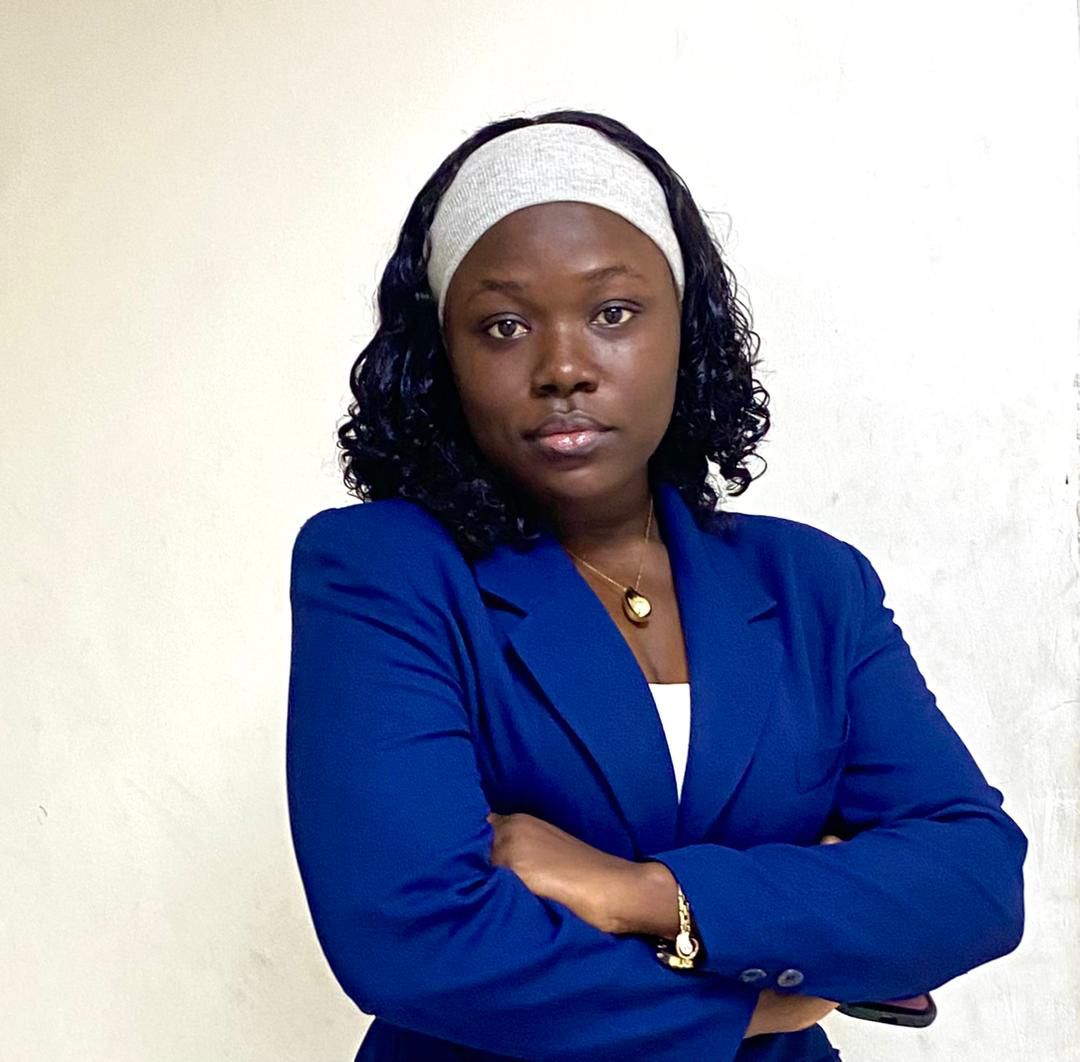
Every morning, before the day’s fresh tomatoes were sorted for sale, Shifra Ainomugisha had another task: picking the rotten ones from her family’s store.
Growing up in a tomato-farming family in Ibanda District, western Uganda, Ainomugisha became accustomed to watching a significant share of each harvest spoil before it reached the market.
“I used to wake up every single morning to collect rotten tomatoes from our store and leave the fresh ones for sale,” she recalled.
Read More : Ugandan Journalist Installed As Tooro King
“But it was so heartbreaking that the biggest percentage of the tomatoes were going to waste.”
At first, the waste seemed like an ordinary part of farming.
But as she grew older, Ainomugisha began to understand its consequences.
The losses were not simply about spoiled tomatoes. They were keeping her family poor despite the hours of labour invested in each harvest.
At school, the contrast became even clearer.
“We were kept in poverty, yet we were labouring a lot,” she said.
“Maybe I needed a certain kind of school shoes, but I couldn’t get the shoes. It kept sinking in that something was not right.”
That realisation, which began when she was about 15, would eventually inspire the creation of Solafam Uganda Limited, a climate-technology company she founded with university colleagues.
In June, Ainomugisha was named the 2026 Commonwealth Young Person of the Year and the regional winner for Africa for work that combines solar-powered cold storage, shared solar irrigation and an artificial intelligence-supported advisory service for farmers.
Her journey reflects a growing generation of young Africans turning problems they have experienced firsthand into businesses and technologies designed to solve them.
From Spoiled Tomatoes To A Business Idea
Ainomugisha studied renewable-energy engineering at Makerere University in Kampala, where she met other young people from farming families who understood the challenges she had grown up with.
Among them was Moreen Nabahiirwa, a mechanical engineering student who later became Solafam’s chief operating officer, bringing business expertise to the team.
The founders had technical knowledge and an idea for addressing post-harvest losses. What they did not have was money.
“After school, you don’t have anything to start a business if you have not worked for an organisation and earned a salary,” Ainomugisha said. “We only had knowledge. We needed that one person to believe in us.”
That person was a lecturer who had seen the students working on a related university project. The lecturer connected them to the Sahara Impact Fund, whose support enabled the young team to develop its first prototype.
They converted a shipping container into a solar-powered cold room, using locally sourced batteries and solar panels.
With no other location available, Ainomugisha installed the prototype at her father’s home.
Her parents became the first people to test the system. Soon, farmers from the surrounding community began visiting to see what the young engineers had built.
But convincing them to trust the technology was another challenge.
“They saw a very young girl, 23 or 24 years old,” Ainomugisha said. “They would ask, ‘What do you mean you’re doing this? You’re a woman entrepreneur, an engineer, and you’re solving this?’ It was hard for people to take us in and believe in our solution.”
Winning Farmers’ Trust
The technology offered a practical answer to one of the problems Ainomugisha had known since childhood.
Without proper storage, freshly harvested tomatoes could last only a few days, perhaps a week or up to 10 days. The cold room extended their shelf life to as much as 21 days, giving farmers more time to find buyers and reducing the pressure to sell during periods of oversupply.
Her father’s experience became an important proof of concept.
As farmers saw the benefits, Solafam began to expand its approach. The team realised that post-harvest losses were only one part of the challenges confronting farmers.
Dependence on rainfall could limit farmers to a single productive season. Preserving crops was of little use if farmers could not find buyers. They also needed timely information about irrigation, pests, crop management and harvesting.
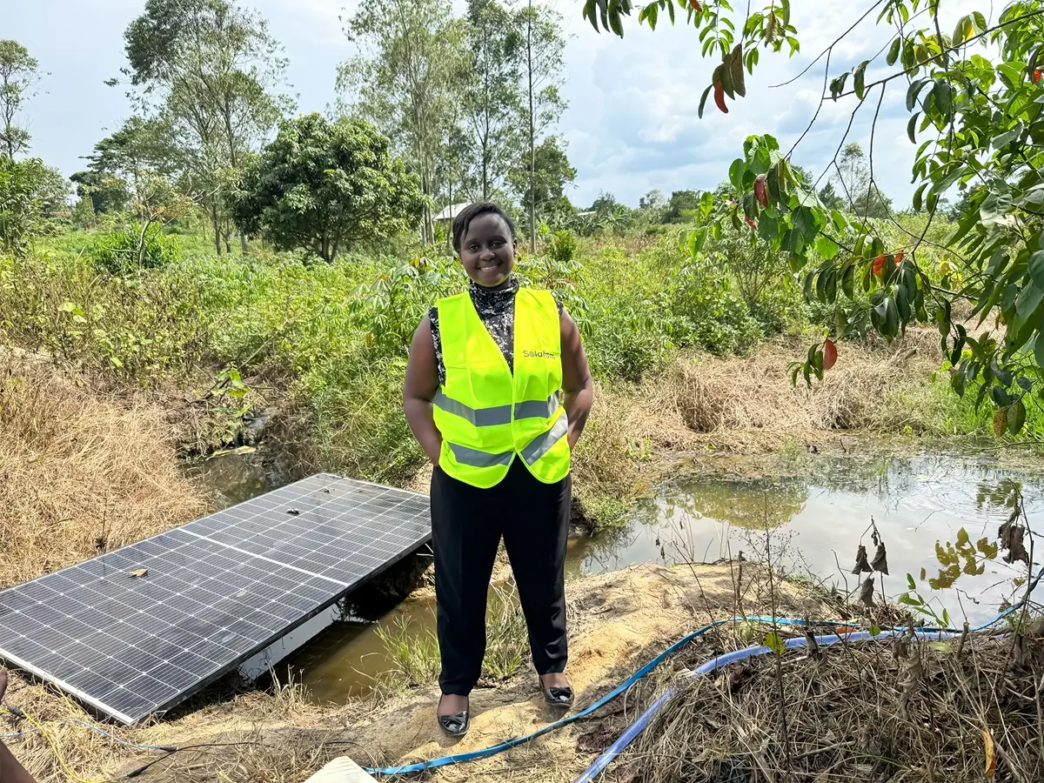
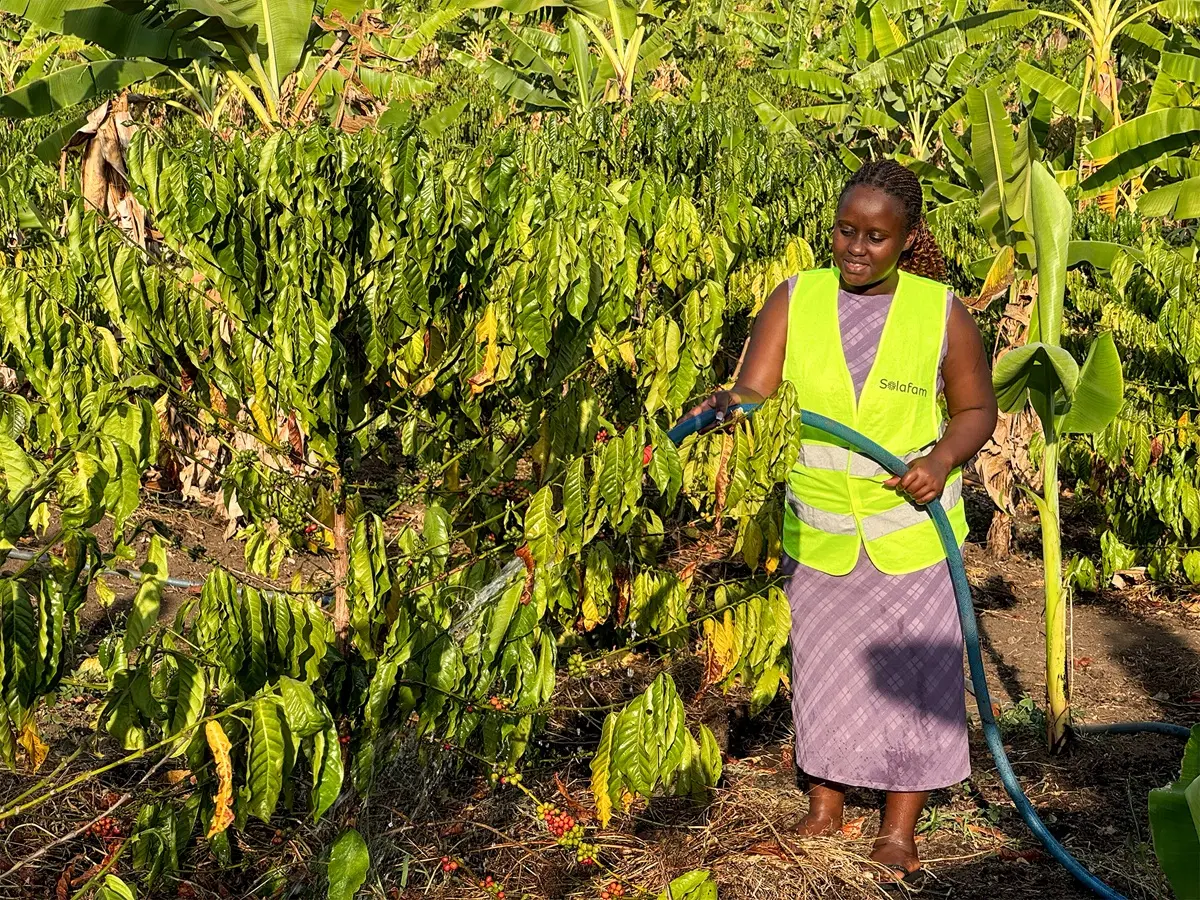
Solafam responded by developing shared solar irrigation systems and LYN, an artificial intelligence-supported advisory service accessible through WhatsApp.
Ainomugisha remains closely involved with the farmers using the technology.
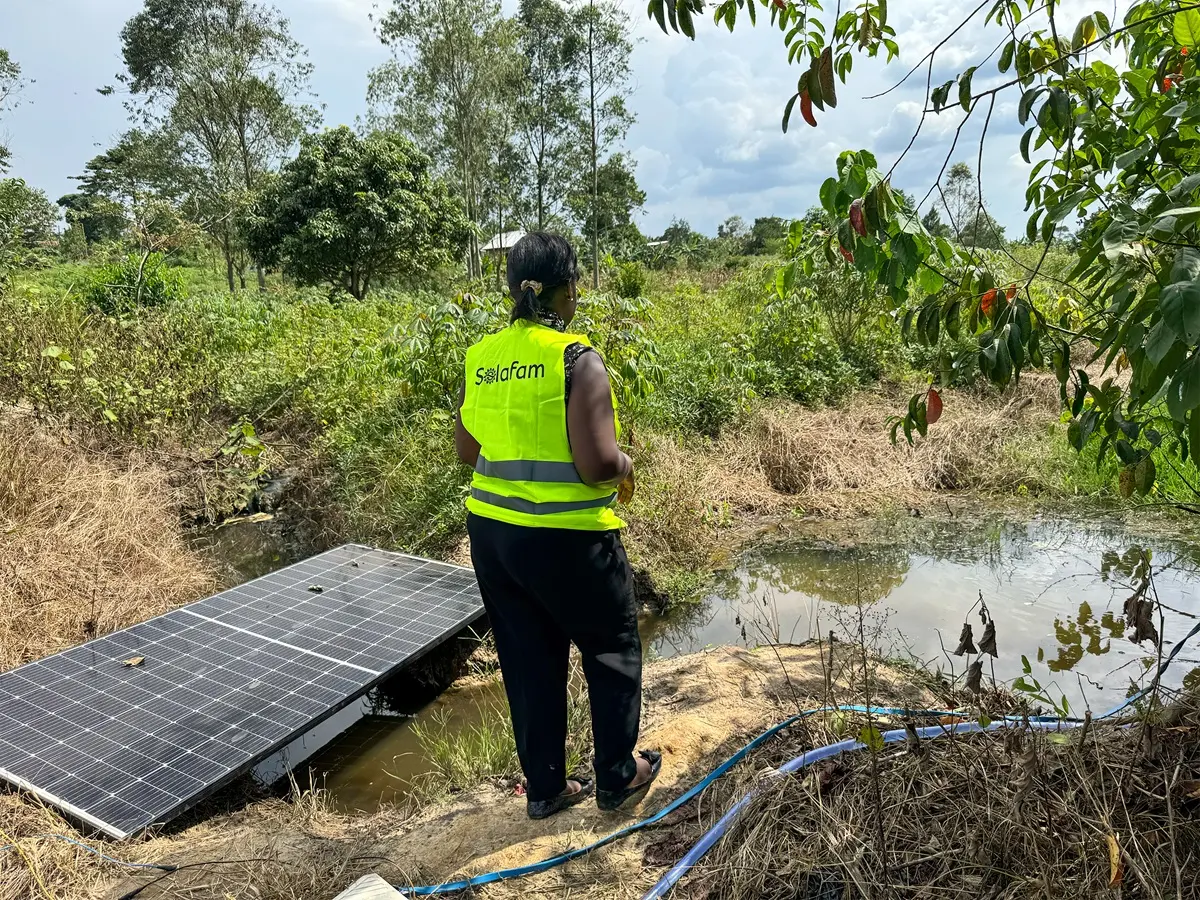
“I’m always in the field to check on how the farmers are doing, if there is any maintenance needed for the irrigation systems,” she said.
Solafam says LYN has reached nearly 2,000 farmers, but Ainomugisha sees that figure as a starting point rather than a finish line.
The company continues to seek new clients and communities where its solutions can be deployed. Its ambitions also extend beyond Uganda, with plans to explore expansion into Tanzania, Kenya and other countries.
When Farming Pays for University
For Ainomugisha, the impact of the business is measured not only in the technology deployed but also in the lives of the families using it.
One story that remains particularly close to her is that of a woman in her community who recently invited her to her daughter’s graduation, scheduled for December.
The woman has five children. According to Ainomugisha, some of her older children had reached higher levels of education but could not afford university.
After the family began using Solafam’s services, the mother was able to support at least one child through university.
For Ainomugisha, such stories show what happens when farmers are able to produce across more seasons and earn more from their work.
The result, she says, is not only better livelihoods for individual farmers but more food available within the communities where it is produced.
Her own ambition is rooted in changing perceptions about agriculture.
“I want to change the narrative that farming is for the poor,” she said. “I want people to make money out of agriculture, adopt technology and change their livelihoods.”
Recognition Opens New Doors
Being named the 2026 Commonwealth Young Person of the Year has given Ainomugisha and Solafam a level of visibility that would have been difficult to achieve on their own.
She describes the recognition as “life changing” and the biggest achievement for the company since its creation.
Although Solafam had partners as far back as 2023, she said the award has generated new attention and opened doors that had previously been difficult to access.
One of the biggest opportunities has been engagement with the Ugandan government.
“From the time we got that award, we are now in talking stage with the government,” she said.
The recognition has also created opportunities for partnerships that could help Solafam extend its work to more farmers.
Ainomugisha is now looking ahead to the Commonwealth Heads of Government Meeting, scheduled to take place in St John’s, Antigua and Barbuda, from Nov. 1 to 4, 2026.
She wants the meeting to focus not only on celebrating young people but also on dismantling the barriers that prevent their ideas from growing.
“I want to see the youth being supported, and a system created whereby it will be easy for someone like me, staying in Uganda, to access education in Antigua,” she said. “I shouldn’t get issues with visa access. I want the system to be easy for us.”
“We have a lot of network-connectivity issues,” she added. “I want someone to address that.”
Young People Need Someone to Believe
For Ainomugisha, access to finance and support remains one of the biggest barriers facing young African innovators.
She believes many young people already understand the problems in their communities and have ideas for solving them. What is often missing is someone willing to take a chance on those ideas.
“Young people are the ones making a big change in our communities,” she said.
“They have solutions, but they are lacking people to believe in them and support them to reach their dreams.”
Her own experience has reinforced that belief. Without the lecturer who connected the young founders to funding, Solafam might never have moved beyond an idea developed at university.
Ainomugisha also wants young people to see agriculture as more than traditional farm labour.
“The youth should know that it is beyond going to the farm and digging,” she said. “There are many opportunities to improve the problems related to farming using AI technology.”
For her, agriculture offers opportunities across renewable energy, engineering, logistics, artificial intelligence, market information and finance.
The journey has also taught Ainomugisha that success is rarely achieved alone. She credits the people who supported the idea from its earliest stages and, especially, the farmers who took the risk of trusting a young engineer with an unfamiliar solution.
“I want to thank the farmers,” she said, “whose resilience has driven us to such big opportunities.”
Her story began with rotten tomatoes being removed from a family store each morning. Today, that same problem has become the foundation of a company seeking to help farmers preserve more food, earn more money and build more secure livelihoods.
For Ainomugisha, the ultimate goal is bigger than preventing food from spoiling.
It is about proving that the problems facing African communities can also become the starting point for African-led solutions.
By Lerato Pooe, Bird Story Agency.