Trending
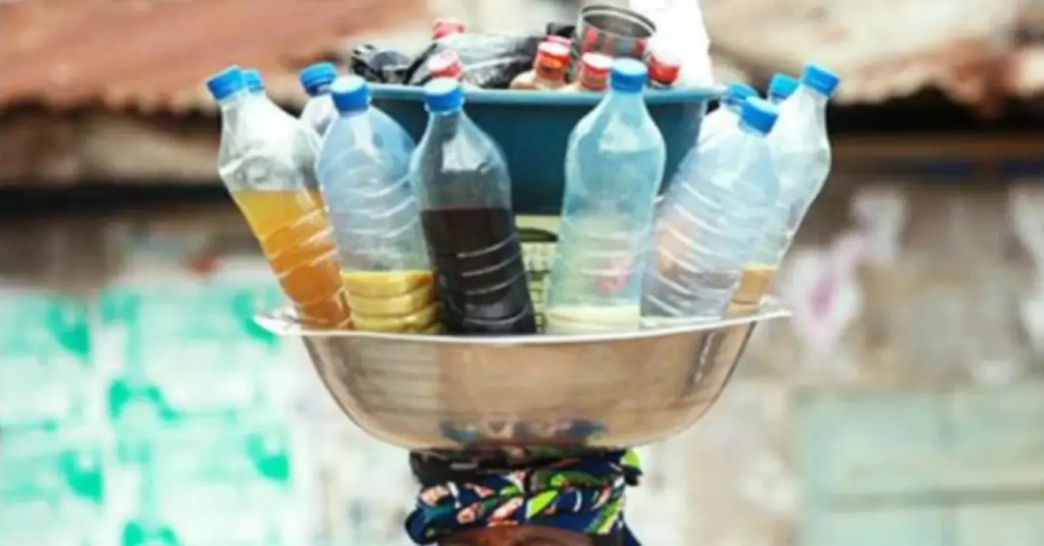
When I heard that a harvest of death had occurred in Ondo after people consumed herbal drinks, my mind did not first go to the statistics.
It went to Innocent Odey. Innocent was my bosom friend, my course mate and my roommate during our undergraduate years. He was brilliant and full of promise, the sort of young man whose future seemed already written in invisible ink.
He died after attempting to treat himself with local herbs.
Read More : The Road Home Should Not Be A Death Sentence
They were believed to be potent. They were believed to be natural. They were believed to be safe. We lost him anyway.
Perhaps that is why the latest tragedy in Ondo feels less like news to me than an old wound being reopened.
On September 5, 2026, Shola drank two shots of a locally produced herbal alcoholic drink known as Monkey Tail. By the following morning, he had lost his sight.
At least 32 others who consumed the same batch were not as fortunate. They lost their lives. About 60 more people are reportedly in hospital.
Among the dead were three siblings. Three people from the same family. One evening. One substance. Three graves. There are tragedies that happen because nobody could have known.
And there are tragedies that happen because somebody should have known, but nobody did enough. This one belongs dangerously close to the second category.
We have been here before.
In 2015, methanol-contaminated alcoholic drinks killed scores of Nigerians in Rivers and Ondo states. In 2023, another adulterated alcoholic drink outbreak in Lagos killed eight people and left 11 others seriously ill.
The geography changes. The victims change. The batch changes.
The chemistry does not. There is an almost cruel simplicity to the science.
Methanol and ethanol share some physical characteristics. But resemblance is not safety.
Ethanol is the alcohol ordinarily found in legitimate alcoholic beverages. Methanol is highly toxic. Exposure can cause visual impairment, neurological injury and death.
The frightening part is that methanol does not necessarily announce itself.
It can look and smell like ethanol. Its early effects can resemble ordinary intoxication. The person taking the shot may therefore have no reason to suspect that the liquid is poisonous.
The Consumer Cannot Regulate What the State Has Failed to Test
By the time the body reveals the deception, the damage may already be underway.
This is why telling people to “be careful” is not enough.
Careful about what?
How does someone buying a ₦50 or ₦100 shot at a roadside joint determine its chemical composition? Does the seller know? Can the consumer distinguish methanol from ethanol by looking at the drink?
No. The consumer is not the regulator.
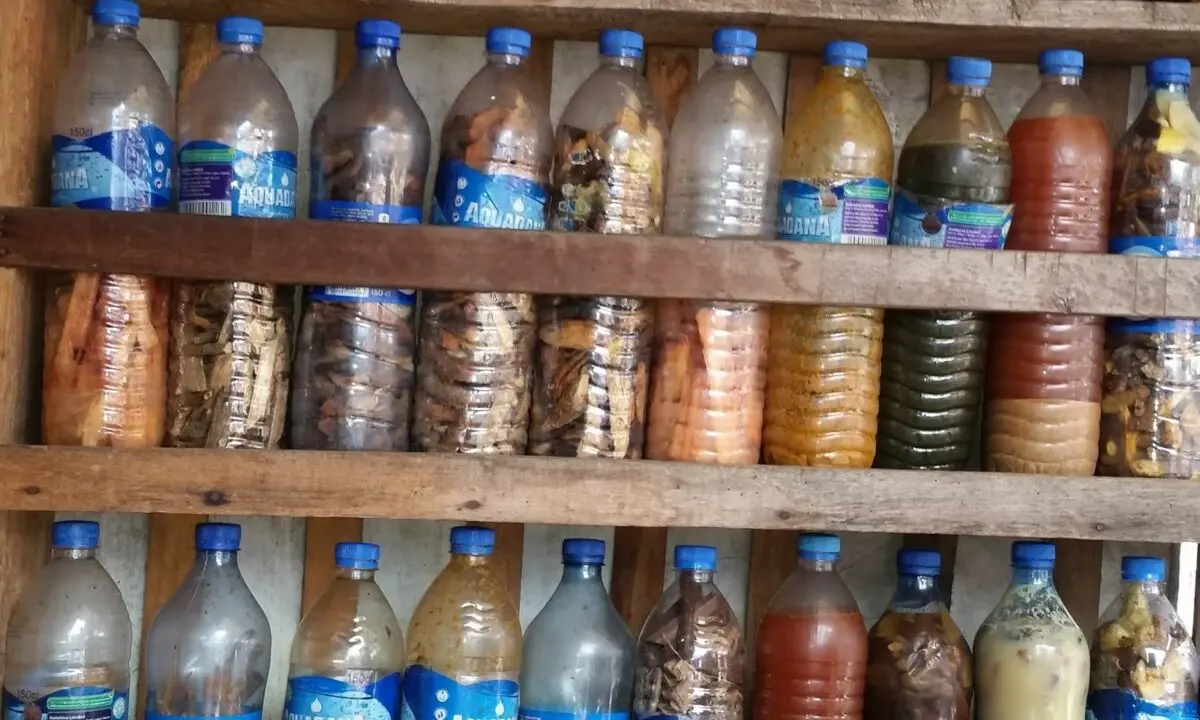
There is something profoundly unjust about a system in which the poorest consumer is expected to perform the job of the regulator.
National Agency for Food and Drug Administration and Control (NAFDAC) exists because ordinary people cannot independently verify the safety of everything they consume. We do not expect someone buying medicine to conduct a chemical analysis before swallowing a tablet. We trust that somebody has done the work.
That somebody is supposed to be the state and its regulatory institutions.
Yet Nigeria has developed a peculiar regulatory geography.
Regulation works best where regulation is easiest.
In the cities, there are offices, laboratories, inspectors, registered businesses and formal supply chains.
Then there is the other Nigeria: roadside sellers, remote communities, informal markets, small-scale producers and products changing hands without records.
This is where the state can become almost invisible.
Yet this is precisely where regulation matters most.
If a dangerous product can travel through several communities and kill dozens of people before government knows it exists, the problem is bigger than one reckless producer.
The system failed before the first person took the shot. Do not blame the dead
Do Not Blame the Dead for a System They Cannot Control
It is tempting to moralise about alcohol. We can say people should not drink. We can urge restraint. We can say water is safer.
All of that may be true.
But none of it answers the central question.
If someone chooses to consume an alcoholic beverage, is the government relieved of its responsibility to ensure that the beverage does not contain a substance capable of killing them?
If a person chooses ethanol, must they also unknowingly accept methanol?
That is not personal responsibility.
It is a public-safety failure.
There is an uncomfortable economic dimension, too.
For someone living on the margins, a cheap local alcoholic drink may be more accessible than a branded, regulated alternative. The informal alcohol economy exists because demand exists.
Poverty does not merely reduce purchasing power. It shapes the market.
Where regulation is weak, adulteration can become economically attractive. A cheaper substitute can increase volume and profit.
The producer gains. The seller may not know. The consumer pays. Sometimes with his life.
We keep banning the symptom through a familiar governmental choreography.
An outbreak occurs. Officials express concern. A ban is announced. A seller is arrested. Regulators arrive. Samples are collected. Warnings are issued.
Then the cameras leave.
The market eventually returns.
And somewhere down the road, another batch is prepared.
A ban may temporarily remove a product. It does not necessarily eliminate demand, formalise production, establish traceability or guarantee that the next batch is safe.
Prohibition without regulation can simply push an existing market further underground.
Nigeria needs more than another emergency ban.
It needs a system that knows who produces these drinks, tests what they produce, tracks where products come from and brings legitimate artisanal producers into a framework where safety standards can be enforced.
And that system must reach the village, not merely the capital.
Innocent. I keep thinking about Innocent. Statistics are useful because they tell us the scale of a disaster. But they can also conceal its humanity.
Thirty-two is not thirty-two. It is a father. A daughter. A husband. A sister. A friend.
Three of those numbers were siblings. And somewhere in a hospital, Shola Adebayo is praying for his eyesight.
“I swear I will never take any drinks again,” he reportedly said.
I understand the vow.
But I also think about its unfairness. Why should a man have to lose his sight before he learns that the drink he bought was unsafe?
Why must Nigerians discover the weaknesses of their regulatory system through their own bodies?
The state cannot regulate every human decision. It cannot prevent every foolish choice.
But it can ensure that when people buy a product, the product is what they believe it to be.
That is the social contract.
Perhaps water really is enough. In the Nigeria we inhabit today, perhaps water really is enough.
There is something absurd about needing courage to drink alcohol because you cannot be certain whether what is inside the bottle is ethanol or a cheaper, deadlier chemical masquerading as it. I will not tell another adult what to drink.
But in a country where the regulatory chain can be so porous that poison reaches consumers before regulators do, caution is not paranoia.
It is self-preservation.
Still, the burden cannot ultimately rest on the individual.
A functioning state does not tell its citizens, “Be clever enough to detect the poison.”
It builds institutions strong enough to keep the poison away from them.
Shola is 32. Three siblings are dead.
Innocent is still dead.
And somewhere in Ondo, somebody may already be preparing another bottle.
The question is not whether we will mourn the next victims. We probably will.
The question is whether, before the next bottle is opened, we will finally change the system that keeps putting poison within reach.
We should not need a funeral to discover that a product was unsafe. And a bottle should never become a death certificate.