Trending
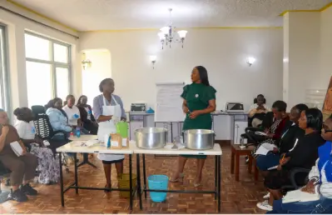
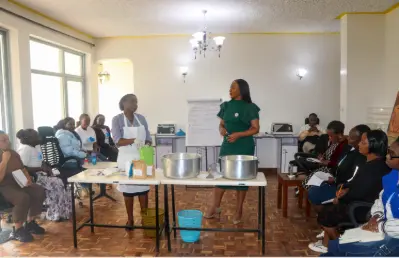
A Kenyan social enterprise has helped women leaving prison rebuild their lives through skills training and garment-making jobs.
At a workshop on the outskirts of Kenya’s Kitengela town, women work behind rows of sewing machines. One checks fabric quality and another hems a garment. Nearby, fashion students gather around a table covered with fabric. They discuss where to cut. In another room, finished garments hang on display. Some were made from fabric offcuts that could have ended up in landfills.
Tuwe Bora, a social enterprise founded by Linda Sigilai, runs the workshop. Tuwe Bora means “be better” in Swahili.
Read More : UNGA: Women Closing Africa’s Management Gap
The organisation trains and employs women, refugees and marginalised young people. It uses garment production to help them find work and build independent lives.
Sigilai trained as a nutritionist and spent six years working in public health. Her move into fashion began in 2019 when she started supporting women leaving prison.
“Landing in fashion was purely because we were supporting women in prison. And in prison, we found that most prisons have programmes such as sewing, and the skill that most women in prison have is dressmaking,” she said.
“So, we looked at it as an easier route to create a way for them, as they’re coming out of prison, to have a place to land as they’re reintegrating into their community.”
Tuwe Bora began in 2019 as an informal support group after five young mothers met to exchange income-generating skills. Membership later grew to 100 before the group became Tuwe Bora Ltd in June 2021. However, Sigilai soon realised that employment alone could not solve the challenges facing women leaving prison.
“When we started, we were working with women specifically who were in prison and were transitioning. In the process, we realised that we were trying to solve something that has already happened, yet it can be prevented,” she said.
“We realised that social inclusion is the biggest issue.”
The organisation later expanded its work to young people without higher education and refugee communities, training young people to operate machines and linking them to jobs in Kenya’s export processing zones. Refugees also received skills training and employment support.
“We also work with refugee communities because they are a marginalised group both financially and socially, either because of language barriers or difficulty getting papers,” Sigilai said.
“Legally being here becomes difficult for them to gain employment, so we create a system for them to get skills and give them employment to prevent them from ending up in the prison system.”
Teresa Njoroge, founder and chief executive officer of Clean Start Africa, said poverty was a major factor behind the incarceration of women.
“The government has substantiated that 70 per cent of women who are incarcerated are incarcerated due to petty survival offences, as they’re trying to fend for themselves, not just for themselves, but also for their children,” she said.
Njoroge knows the challenge personally. She spent time in prison after being wrongfully convicted following a fraudulent bank transaction she handled as a bank employee. For many women, the challenges continue after release.
Without stable housing, employment or support networks, some return to the same conditions that contributed to their incarceration.
“This revolving door of poverty and incarceration continues to perpetuate because we are not addressing the root cause of their being arrested, which is the lack of a decent, sustainable means of livelihood,” Njoroge said.
A May 2025 study titled Examination of the Effects of Imprisonment on Recidivism: A Review of Kisumu County, Kenya interviewed 700 former convicts, 85 prison officers and 15 probation officers.
The study found that 82 per cent of former convicts had taken part in rehabilitation or treatment programmes while in prison. However, 14 per cent said they had no access to such services.
At Tuwe Bora, some women already know how to sew. The challenge is adapting those skills to modern machines and market standards.
“We create an upskilling opportunity where we teach them this is what good quality means; this is what a good, finished garment looks like; this is how you thread the machine; and this is how you ensure the color of the thread matches the outfit,” Sigilai said.
Joyce Wanja is one of the women who benefited from the programme. Wanja, now 60, spent 13 years at Lang’ata Women’s Prison from 2008 to 2021. She was convicted of robbery with violence. Her original sentence was death, which was later commuted to time served after the mandatory death penalty was declared unconstitutional.
Wanja already knew how to sew when she arrived at Tuwe Bora. She had learnt the skill in prison, where she used single-needle manual machines.
“In prison, they were mostly using the single-needle manual machines. The market demands higher quality, so we just had to show her how to thread modern machines, balance speed, and do a clean finish as per international requirements,” Sigilai said.
Wanja trained at Tuwe Bora for about two years; she later started her own business in Kitengela. Today, she makes school bags, laptop bags and custom clothing. She also spends time doing prison ministry and returns to facilities similar to the one she once left.
“I trained under Ms Sigilai for about two years while regaining my footing, then went on to start my own business. I am back to living and healing with my children, and I can see my grandchildren,” Wanja said.
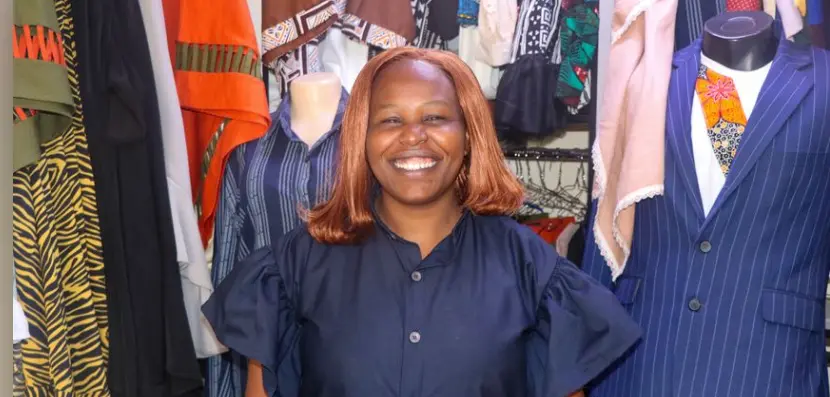
For Sigilai, Wanja’s journey reflects Tuwe Bora’s goal. The organisation wants people to gain skills and support to build independent livelihoods.
“We are holding space for others to be able to exist and do what they’re able to do. That is where my sense of satisfaction comes from,” she said.
Sigilai also works directly with Kajiado Women’s Prison, establishing a textile centre there and supplying machines and training, to ensure women can leave prison with skills they can use to start businesses or find jobs.
They do not have to relocate to the Tuwe Bora workshop to benefit. Tuwe Bora generates revenue through its upcycled garment line and white-label production for corporate clients. It also offers paid short courses that train people for employment within four weeks.
The enterprise also recovers textile waste and turns fabric offcuts into new products. However, combining social impact with commercial sustainability remains challenging.
“You have a community that you have to take care of, but you are also a business, and you need to make a profit at the end of the day,” Sigilai said.
Tuwe Bora imports most of its raw materials. This makes the business vulnerable to shipping delays and rising transport costs. High electricity and labour costs have also made it harder for Kenyan manufacturers to compete with imported garments.
Read More : Dangote IPO Tests Africa’s Capital Markets
Despite the challenges, Sigilai said the business model has allowed Tuwe Bora to keep creating opportunities for people who struggle to find work. The enterprise plans to expand its textile waste recovery work. It also plans to continue training women who have left prison, refugees and vulnerable young people.
For the women who have passed through its doors, however, success is simple. It means having skills to earn a living, regain independence and build a new life after prison.
Credit: Mercy Koech by Bird Story Agency.