Trending



Corruption is costing Kenya billions of dollars annually in lost government revenue, higher business costs and reduced workers’ earnings, while weakening investment and economic growth, according to a new World Bank report.
The East African country faces graft across different levels of society, ranging from routine payments to traffic police to major public procurement scandals involving senior government officials.
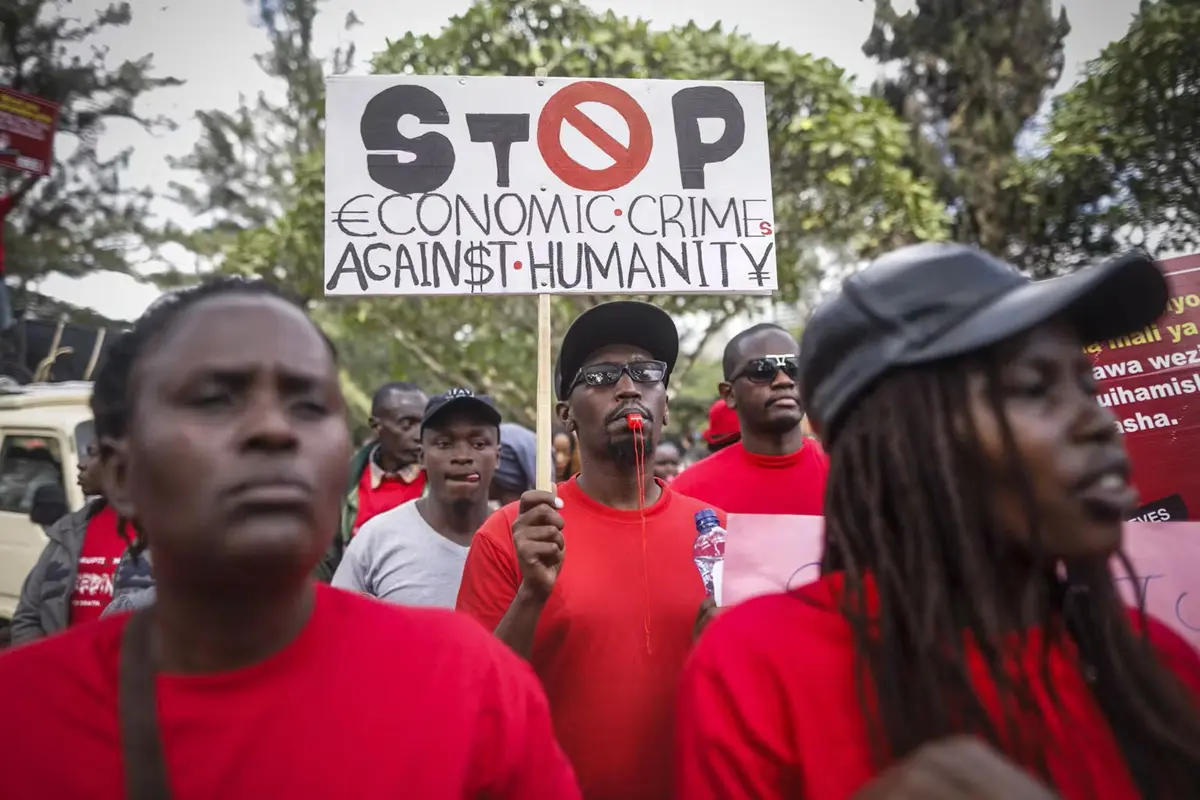
Corruption has also fuelled public anger and contributed to widespread protests over the past two years.
Read More : US Midterms: Musk Jokes About GOP Defeat
The World Bank report ranks Kenya among the most corrupt countries in its peer group of lower-middle-income economies. It estimates that weaknesses in governance increase the country’s annual fiscal deficit by about 370 billion Kenyan shillings ($2.8 billion), equivalent to two per cent of gross domestic product.
The estimate, which the report describes as conservative, accounts for revenue lost through tax evasion, wasteful public spending, increased borrowing costs and other financial consequences of corruption.
Public frustration over graft was particularly visible during the mass protests in mid-2024, when the government proposed tax increases. The World Bank noted that Kenyans would be more willing to meet their tax obligations if they had greater confidence in how public officials managed government resources.
The report’s authors are urging political leaders to recognise the economic benefits of tackling corruption.
According to the bank’s modelling, Kenya’s economy could become more than 20 times larger by 2035 if the country adopted anti-corruption reforms similar to those implemented in Ghana and Senegal. Such changes could also generate an additional 7.7 million jobs, with improved employment opportunities.
Verena Fritz, the World Bank’s lead governance expert for Kenya, said the country had the potential to become a regional leader if it addressed its governance challenges.
She told reporters that Kenya had many of the foundations needed to achieve that ambition and that the necessary reforms were within reach, with benefits extending to its citizens and neighbouring countries.
“Kenya has a lot of the ingredients that it would take to be a really leading country in the region. And it should make good on that promise, both for its own citizens and for the neighbouring region. And it’s feasible,” Verena Fritz told reporters.
The World Bank approved its latest lending package for Kenya in June after holding up the process throughout 2025 over concerns about the government’s slow progress on anti-corruption reforms.
The bank had called for stricter rules to address conflicts of interest involving politicians, the introduction of an electronic public procurement system and the passage of a long-delayed Whistleblower Protection Bill.
The report also detailed how corruption is increasing costs across key areas of Kenya’s development, including electricity and infrastructure.
Electricity prices in Kenya are considerably higher than in some comparable countries. The World Bank linked this partly to weaknesses in the awarding of power contracts.
A 2021 study found that only 24 per cent of 42 power purchase agreements examined were known to have been awarded through competitive bidding.
Infrastructure projects also face inflated costs. The report noted that the Nairobi-Mombasa railway cost about one-third more per kilometre to build than a comparable railway in neighbouring Tanzania.
The bank estimated that recovering just 10 per cent of losses associated with public procurement could save Kenya 120 billion shillings ($930 million) annually.
Businesses are also reporting growing difficulties linked to corruption. A World Bank survey found that 39 per cent of Kenyan firms considered corruption a major or severe obstacle to doing business in 2025, compared with 25 per cent in 2013.
The survey also found that 36 per cent of businesses had been asked to pay a bribe at least once in the preceding year.