Trending
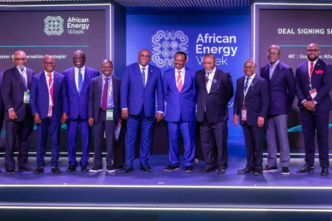
African Energy Week 2026 brought governments, oil majors, investors and financiers to Cape Town with ambitious plans for the continent’s petroleum resources.
Beyond the investment announcements and declarations of energy sovereignty lies a more consequential question: how much of Africa’s energy wealth will ultimately benefit Africans?
A peculiar contradiction lies at the heart of Africa’s energy economy. A continent that supplies the world with crude oil, natural gas, and some of the minerals essential to modern industry still struggles to provide electricity to millions of its own citizens.
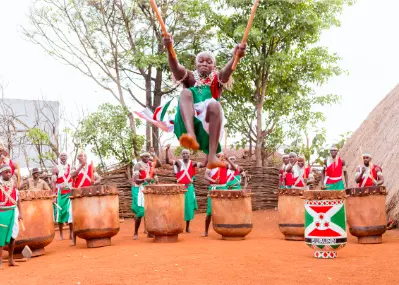
Read More : Burundi’s Royal Drumming Faces Challenges
Its resources travel thousands of kilometres to power factories, illuminate cities and sustain economies elsewhere, while many African businesses must generate their own electricity and households continue to live with the consequences of inadequate energy infrastructure.
For five days in October, that contradiction followed the international energy industry into Cape Town.
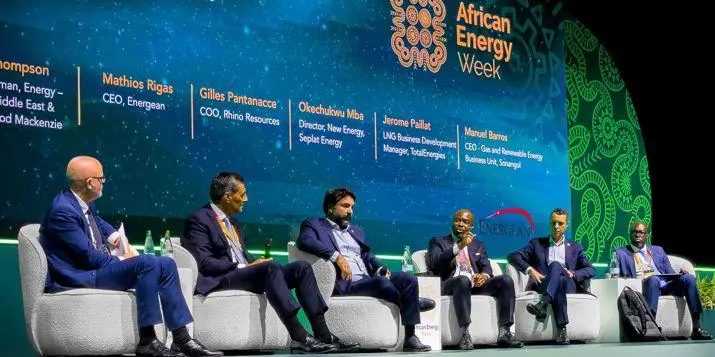
At African Energy Week (AEW) 2026, held from October 12 to 16, petroleum executives, government ministers, financiers and national oil company chiefs gathered to discuss what organisers presented as a new era of African energy investment.
Exploration opportunities were unveiled, multibillion-dollar developments promoted, commercial agreements announced and speeches delivered about the continent’s right to determine its own energy future.
The spectacle had considerable substance. Nigeria reported advances in offshore oil and gas development. Angola outlined regulatory reforms and fresh investment plans.
Ghana presented evidence of a recovery in petroleum production. Senegal sought partners for an ambitious domestic gas project. Namibia and Mozambique moved closer to decisions that could reshape their energy industries for decades.
Yet as the conference concluded, one distinction remained essential: the difference between money announced, money sought, money committed, and money actually invested.
That distinction may ultimately determine how history judges the gathering.
The Billions Behind the Headlines
By the final days of AEW 2026, the African Energy Chamber was reporting significant commercial progress. Its senior vice president, Verner Ayukegba, said the conference recorded approximately $10 billion in deals.
The figure underscored AEW’s growing significance as a platform connecting African energy projects with international capital. Its broader commercial impact will become clearer as agreements progress through financing, regulatory approvals and execution.
A complete, independently reconciled breakdown of the reported transactions was not immediately available.
Across the gathering, governments and companies presented projects at different stages of development. Some had secured investment approval; others sought partners or negotiated commercial terms.
A portfolio of 15 projects promoted through the conference’s Deal Room sought more than $16 billion in financing.
Mozambique’s proposed Rovuma LNG development carried an estimated $30 billion price tag, while Senegal’s Yakaar-Teranga gas project represented a potential $7.5 billion investment across two phases.
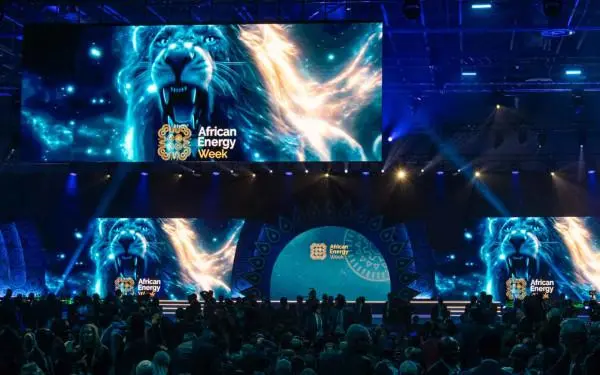
These opportunities showed the scale of Africa’s energy potential and the value of a platform that brings financiers, governments and developers together. Some projects, including the Ima gas development approved by TotalEnergies and Nigerian indigenous operator AMNI in September, predated the conference but gained renewed visibility in Cape Town.
AEW’s significance therefore extends beyond agreements signed during the event to the partnerships, investment discussions and commercial momentum it helps generate.
A Bank Born of African Ambition
Perhaps the conference’s most consequential development was advancing an African-controlled energy financing institution.
The proposed African Energy Bank, sponsored by the African Petroleum Producers’ Organisation (APPO) and the African Export-Import Bank (Afreximbank), reported $500 million in initial capital and moved closer to opening.
Headquartered in Abuja, the institution seeks to address a longstanding contradiction: Africa possesses enormous energy resources but frequently relies on foreign financial institutions to develop them.
Speaking during the conference, APPO Secretary-General Farid Ghezali said the bank was expected to open in November, with initial project financing anticipated in 2027. It hopes to raise $5 billion from financial markets and eventually build towards $10 billion.
Although these remain future fundraising ambitions, the institution could create important financing channels for refineries, pipelines, gas infrastructure and projects that struggle to secure conventional international funding.
More significantly, it represents a shift in the sovereignty debate: from asserting ownership of resources towards developing African institutions capable of financing their exploitation.
Its success will depend on mobilising capital, managing risk and supporting commercially viable projects.
Nigeria, Angola and the Ownership Question
The drive for greater African participation was evident in the expanding role of indigenous petroleum companies.
Nigeria offered several examples.
TotalEnergies and AMNI are developing the Ima gas project, expected to produce approximately 350 million cubic feet daily from 2028.
AMNI holds a majority interest, while TotalEnergies provides operating expertise. The project includes commitments to Nigerian contractors and host-community employment.
ExxonMobil reported progress on its $1 billion Usan infill development, while TotalEnergies outlined plans to mobilise a deepwater drilling rig before the end of October.
Together, these developments suggest renewed activity in Nigeria’s upstream sector following regulatory and commercial reforms.
Angola presented a related challenge. Indigenous operator Etu Energias is pursuing offshore acquisitions to strengthen local participation, but executives acknowledged that domestic banks financed only a small share of recent upstream acquisitions.
The situation reinforces the need to strengthen African financial institutions alongside indigenous ownership.
International partnerships remain valuable for capital, technology and expertise. Their greatest developmental contribution, however, comes when they also build competitive African engineering companies, skilled workforces and enterprises capable of executing complex projects.
Meaningful local content must ultimately translate into lasting industrial capacity.
Ghana and Senegal: Taking Gas Beyond the Export Terminal
Ghana and Senegal offered examples of how petroleum resources could support domestic development.
Ghana’s Energy Minister, John Abdulai Jinapor, reported that crude production had increased by approximately 30 per cent, reversing a period of decline.
The government also outlined plans to attract investment and expand natural gas utilisation.
Central to its strategy is reducing dependence on expensive liquid fuels for electricity generation through increased domestic gas supply and regional imports, including from Nigeria.
Senegal is pursuing a comparable ambition through Yakaar-Teranga, a major offshore gas development seeking investors. Beyond exports, the project is intended to support electricity generation, fertiliser manufacturing and other industries.
Both countries illustrate a central theme of AEW 2026: African hydrocarbons can contribute more directly to domestic energy security, industrialisation and regional integration.
Petroleum wealth produces its greatest developmental value when resources and revenues strengthen the wider economy.
Beyond Petroleum Wealth: The Energy Access Challenge
Africa’s Energy Deficit Remains Enormous.
International Energy Agency estimates indicate that approximately 600 million people in sub-Saharan Africa lacked electricity access in 2024, while hundreds of millions more across the continent depended on polluting cooking fuels.
These figures explain why energy poverty remains central to the African Energy Chamber’s advocacy. The Chamber argues that Africa must develop its resources to support industrialisation, employment and economic growth.
The challenge is ensuring that expanding production also strengthens infrastructure and delivers affordable energy to households and businesses.
Natural gas, solar, wind, hydropower, storage and modern electricity networks all have roles to play, depending on national circumstances.
The World Bank and African Development Bank’s Mission 300 initiative, targeting electricity connections for 300 million Africans by 2030, provides a measurable benchmark.
Ultimately, the continent’s energy success must extend beyond export terminals, production platforms and corporate balance sheets.
The Environmental Debate
The conference also reflected the continuing debate over hydrocarbons in Africa’s development.
On October 13, Greenpeace Africa and Extinction Rebellion activists protested outside the Cape Town venue, expressing concern about the environmental consequences of further oil and gas exploration. Police subsequently removed demonstrators.
Their objections illustrated competing priorities.
African governments need investment, employment, electricity and public revenue. Yet petroleum development carries environmental risks, while climate change threatens communities across the continent.
These considerations need not be treated as mutually exclusive.
Responsible resource development, cleaner technologies, renewable electricity and stronger environmental safeguards can form part of national strategies adapted to local economic circumstances.
The challenge is to balance development opportunities with environmental responsibility and ensure communities share in the benefits.
From Declaration to Continental Cooperation
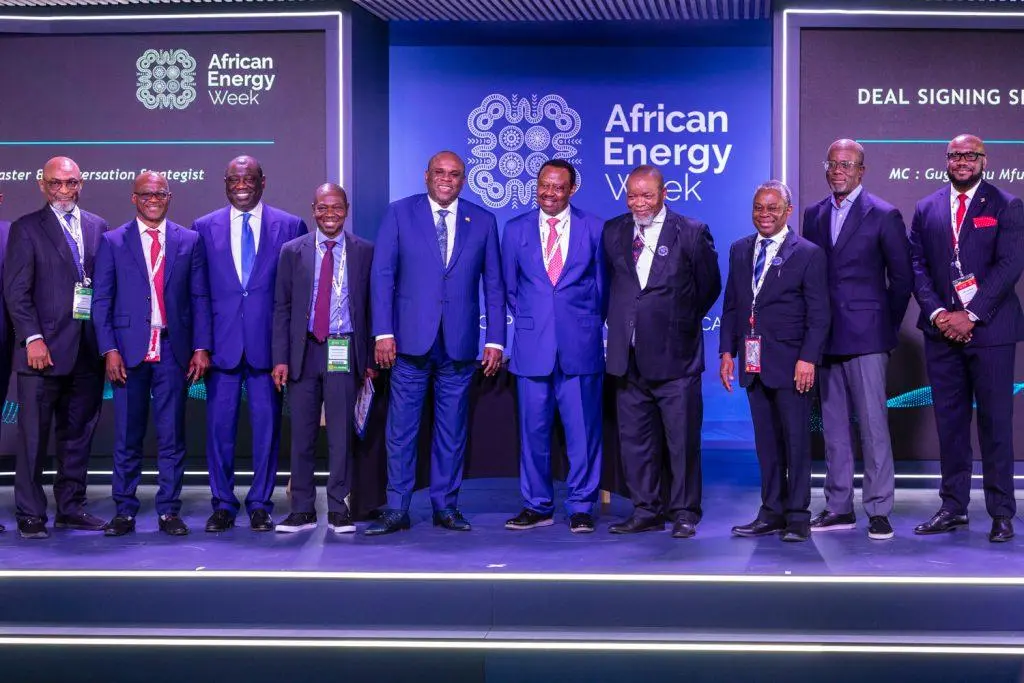
Among AEW 2026’s institutional achievements was the Cape Town Declaration, signed by participating African national oil companies on October 12.
The non-binding agreement calls for stronger regional petroleum trade, improved refining capacity, shared infrastructure, technology cooperation and closer coordination among producers.
It recognises that Africa’s energy development cannot always be organised efficiently within national borders.
Regional pipelines, processing facilities and coordinated investments could help countries retain greater economic value from their resources.
The declaration also reflects the African Energy Chamber’s efforts to establish AEW as an African-led platform bringing governments, international operators, indigenous companies and financiers together around continental priorities.
That convening role is significant in an industry whose major investment decisions and policy conversations have historically been concentrated outside Africa.
The next opportunity lies in translating these relationships into bankable projects, coordinated policies and functioning regional markets.
After Cape Town, a New Chapter Begins
African Energy Week 2026 provided renewed momentum for investment, financing and cooperation as African governments seek greater influence over their energy resources.
It highlighted indigenous participation, international partnerships, the promise of the African Energy Bank and opportunities for regional integration. It also reinforced Cape Town’s position as an important meeting point for African energy stakeholders and international capital.
The next chapter will be defined by how these opportunities become operational projects, stronger industries, improved infrastructure and lasting economic results.
Will the African Energy Bank mobilise sufficient capital? Will the Cape Town Declaration encourage effective regional partnerships? Will indigenous companies gain greater technical and financial capacity? Will petroleum development translate into reliable electricity and competitive African industries?
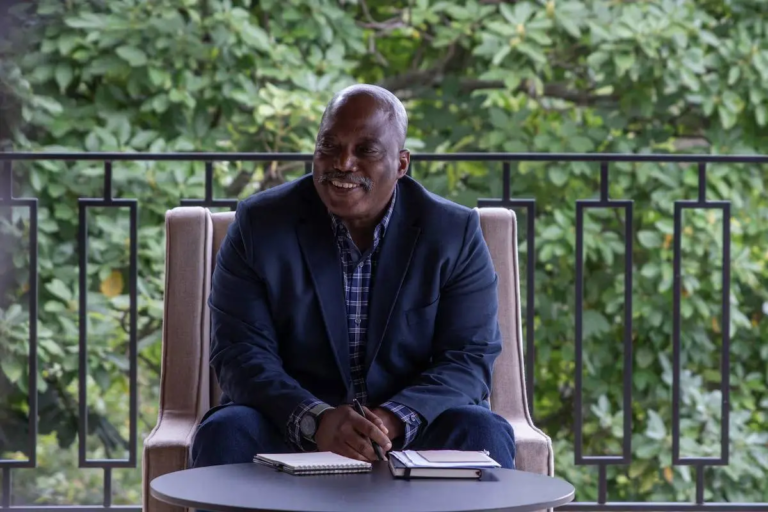
Read More : Can Kabila’s Rebrand Boost DR Congo Rebels?
These questions concern governments, investors and institutions throughout the continent.
For a region that has exported enormous energy resources while struggling to power its own development, success must ultimately be measured beyond the investment figures announced in Cape Town.
It lies in the industries strengthened, jobs created, infrastructure developed and economic value retained by African societies. Africa has never lacked energy wealth. Its defining challenge is to turn that wealth into enduring African prosperity.