Trending

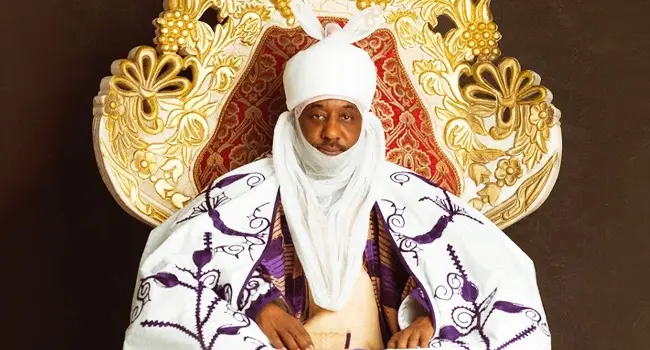
The Emir of Kano, Muhammadu Sanusi II, has called for greater women’s representation in government, saying their inclusion is essential to addressing Nigeria’s development challenges.
Sanusi made the call on Tuesday while speaking at the Oxford Global Think Tank Conference, themed “Setting Africa’s Priorities for a Prosperous Future.” He said women remained largely excluded from political leadership and decision-making nationwide.
The former Central Bank governor questioned the low number of women in the National Assembly, noting that only four of Nigeria’s 109 senators were female.
Read More : Lagos Police Uncover Indoor Cannabis Farm
“We have 109 senators in Nigeria. I think only four are female,” he said.
Sanusi also challenged the representation of women in the House of Representatives, state assemblies and ministerial positions. He argued that women must have a stronger voice in governance because they understand many issues that directly affect families and communities.
These include maternal health, malnutrition, child education and early childhood development. According to him, decisions on these issues are more likely to reflect people’s needs when women are involved in policy-making.
“We need to consciously promote this culture of bringing women into the centre of governance, into the centre of decision making,” he said.
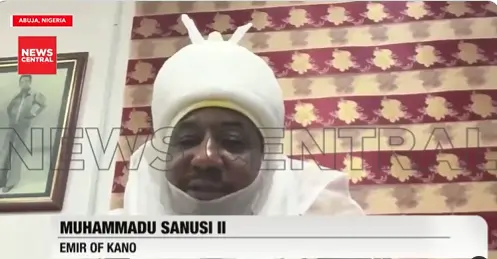
Sanusi added that wider representation would help ensure that government policies reach more Nigerians and promote inclusive development.
Beyond women’s inclusion, the Emir called on Nigeria to adopt a clear economic direction and strengthen support for local investment. He urged the government to move the country away from a rentier economy, which depends heavily on income from government-controlled resources, towards a productive economy driven by investment and local businesses.
Sanusi argued that some business interests oppose local investment because it threatens established systems of rent-seeking and exploitation.
He cited the Dangote Refinery, saying some people wanted to import cheaper petroleum products and weaken local refining to protect existing business interests. He urged the government to support local businesses and investors willing to create value in Nigeria.
Sanusi also acknowledged improvements in some economic indicators under the current administration, despite the challenges the country faces. He said Nigeria’s average growth rate had risen from 0.9 per cent to 4.5 per cent, while inflation had dropped from above 30 per cent to 14.5 per cent.
He also said the country’s foreign reserves had increased from a negative position in 2023 to $55 billion.
“I think moving from an average growth rate of 0.9% to 4.5% is progress. Moving from inflation of over 30% to 14.5% is progress. Moving from a point where in 2023 the central bank’s reserves were maybe negative to where we are now having reserves of $55 billion is progress.”
“I think we should give the government credit for that,” he said.
However, he stressed that Nigeria must address structural challenges and promote inclusive governance to sustain economic progress.
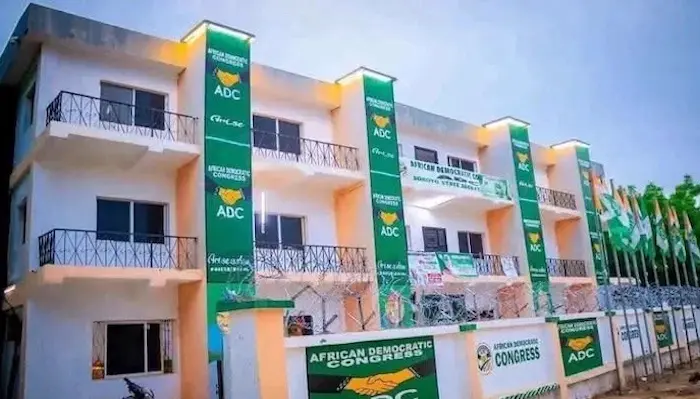
Read More : Sokoto Government Seals ADC Campaign Office
“Moving from an average growth rate of 0.9 per cent to 4.5 per cent is progress… Moving from inflation of over 30 per cent to 14.5 per cent is progress.”
Emir of Kano Muhammadu Sanusi II says Nigeria must rethink an economy that favours connected businesses over local investors.
— News Central TV (@NewsCentralTV) November 3, 2026