Trending

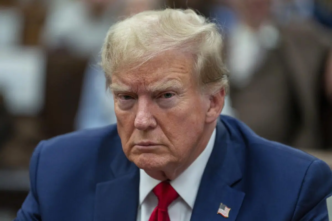
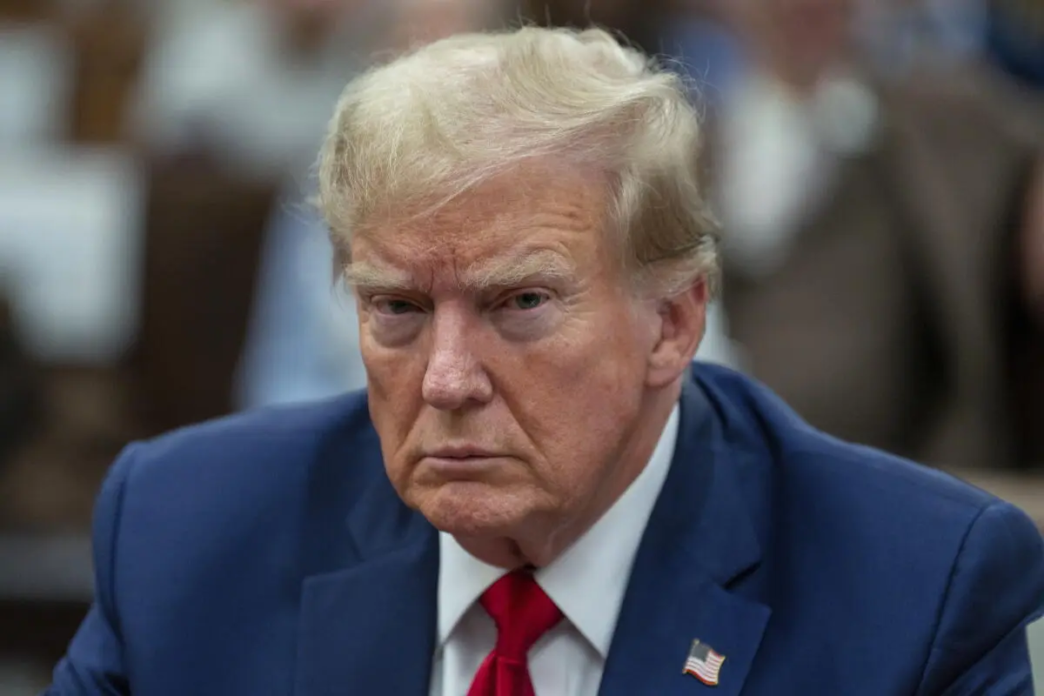
The most extraordinary thing about America’s 2026 midterm elections is not that Democrats have taken control of Congress. It is where they have won.
Texas, which has not elected a Democratic senator since 1988, has sent James Talarico to the Senate. South Carolina, a Republican stronghold where Democrats have struggled for decades, has delivered another upset. Kansas has elected a Democratic senator for the first time since 1932. Across the country, districts that Republicans considered politically impregnable have fallen.
This is not an ordinary midterm correction. It is a repudiation of a political movement that had become increasingly convinced that its cultural grievances, ideological battles and presidential bravado could compensate for everything else.
Read More : Infantino Accused of Breaching Airport Protocol
Donald Trump lost the argument about what the Republican Party should represent.
The explanation goes beyond the familiar midterm punishment that voters routinely inflict on a president’s party. Three decisions, in particular, have turned Republican political strength into an electoral liability: the cultivation of religious antagonism, the deterioration of relationships with traditional American allies and an unnecessary military confrontation with Iran.
Each exposed a different weakness in Trump’s political project. Together, they overwhelmed the Republican Party’s electoral advantages.
A politics of exclusion cannot sustain a governing majority
The first mistake was the Republican Party’s growing obsession with religious identity, particularly its decision to turn Muslims into convenient political villains.
In the months preceding the election, Republican candidates and prominent party figures increasingly portrayed Muslim communities as threats to American values. Vice-President JD Vance attacked Michigan Senate candidate Abdul El-Sayed, describing him as evil and accusing him of defending terrorism. In Texas, Governor Greg Abbott pursued controversies around a proposed Muslim-led development, invoking fears of Sharia courts. Republican Senator Tommy Tuberville warned of an enemy within the gates while referring to radical Islam. These were not isolated remarks from anonymous campaigners. They came from prominent political figures.
The political calculation was familiar: mobilise conservative Christians, stir anxieties about immigration and national identity, and make religious difference an electoral liability for opponents.
But it was a strategy with diminishing returns. America is not a country in which every voter can be organised around the anxieties of one religious constituency. Its electorate includes Muslims, Christians, Jews, Hindus, atheists and millions whose political priorities have little to do with religious identity.
More importantly, voters can disagree profoundly about religion without accepting that their neighbours should become political suspects.
Michigan offered Republicans a particularly uncomfortable lesson. Abdul El-Sayed’s victory demonstrated that a Muslim candidate could overcome an aggressive campaign built partly around his faith. The Republican strategy did not merely fail to prevent his election; it helped expose the party’s growing difficulty in appealing to an increasingly diverse electorate.
The irony is that Republicans did not need to abandon their conservative religious convictions. They needed to understand the difference between defending religious freedom and weaponising religion against political opponents.
Picking fights with America’s friends
The second mistake was Trump’s increasingly antagonistic relationship with countries that have traditionally been America’s closest partners.
For decades, American global influence rested on more than military superiority. It depended on alliances, diplomatic credibility, economic partnerships and the confidence of countries that regarded Washington as a dependable friend.
Trump treated much of that inheritance as an inconvenience.
His confrontational approach to Canada, Europe, Japan and other traditional partners, particularly through tariffs, threats and transactional diplomacy, weakened relationships that successive American administrations had spent generations building.
This was not simply a diplomatic disagreement among political elites. It carried economic consequences for ordinary Americans.
A Council on Foreign Relations survey published in October found that 75 per cent of Americans were concerned about affording food and groceries. Forty-one per cent identified higher prices as the principal effect of tariffs. Meanwhile, majorities continued to regard Canada, Japan, the European Union and Mexico as fair trading partners.
Council on Foreign Relations
That contradiction should have alarmed Republican strategists.
Voters were being asked to support an administration that appeared willing to antagonise countries they considered friends, while defending trade policies that threatened to make everyday purchases more expensive.
There is a difference between negotiating firmly with allies and treating them as adversaries. A country can insist on fair trade, demand greater defence contributions and protect its industries without turning longstanding partnerships into recurring diplomatic confrontations.
Trump’s approach confused confrontation with strength. It also underestimated how much Americans value the stability that international partnerships provide.
For a party that traditionally presented itself as the guardian of American global leadership, this was an extraordinary departure.
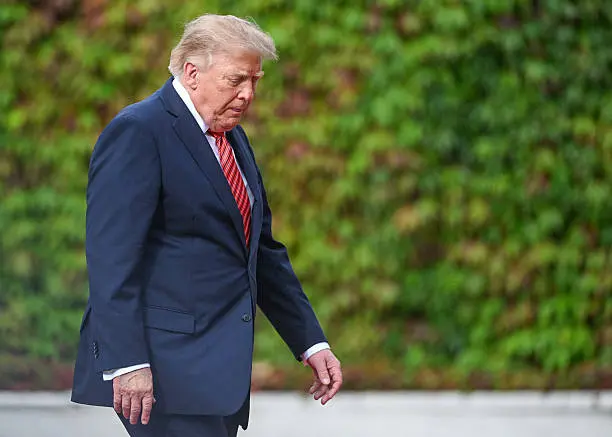
Iran: The war Americans did not want
The third and perhaps most damaging mistake was the military confrontation with Iran. Trump’s political appeal was built partly on his promise to avoid the costly foreign wars that had consumed American administrations before him. He presented himself as the candidate who understood that America could not endlessly spend blood and treasure policing the world.
Yet his administration dragged the country into a conflict whose strategic objectives increasingly appeared disconnected from the everyday concerns of American households.
The consequences were not confined to military casualties, diplomatic uncertainty or the danger of a wider regional conflict. They reached American petrol stations, supermarkets and family budgets.
Energy prices became another source of economic anxiety, while the administration struggled to convince voters that the war justified its costs.
A Reuters/Ipsos poll conducted ahead of the election found that 55 per cent of Americans considered the war with Iran not worth its cost. Only 25 per cent believed otherwise. The same survey found that the cost of living was the leading voting concern, identified by 48 per cent of registered voters.
Gallup’s October survey had already found that 47 per cent of registered voters considered the situation in Iran extremely important to their midterm vote.
The political contradiction was glaring. A president who promised to put America first had committed the country to a war that many Americans neither wanted nor considered worth the sacrifice.
The question was never whether Iran represented a legitimate national security concern. It did. The question was whether military confrontation was proportionate, necessary and capable of delivering a clearly defined strategic outcome.
An administration cannot indefinitely demand public patience for a war while struggling to explain its destination.
For Republicans defending vulnerable seats, that became an increasingly difficult argument to make. Isn’t it a joke on the establishment that Trump failed at a regime change in Tehran but succeeded in Texas?
The economy was the ballot, but foreign policy was the warning
There is, however, an important qualification. It would be simplistic to attribute the Republican collapse entirely to religious antagonism, damaged alliances and the Iran war.
The economy mattered enormously. Americans were angry about the cost of living, healthcare, fuel and the widening gap between political promises and household realities. There were also concerns about corruption, presidential conduct and the administration’s handling of government institutions.
Indeed, the Reuters/Ipsos findings suggest that economic anxiety was the most immediate motivation for many voters. Democrats also benefited from stronger electoral enthusiasm and a desire to check Trump’s power.
Republicans can reasonably argue that midterm elections are traditionally difficult for the party occupying the White House. They can also point out that Democrats have their own political divisions and have yet to demonstrate that they can govern more effectively.
But these arguments do not adequately explain the extraordinary scale of the defeat.
A president’s party can survive economic difficulties when voters believe it is competent, focused and attentive to their concerns. It becomes much harder when voters perceive their leaders as preoccupied with ideological battles, foreign confrontations and personal political vendettas.
The economy may have delivered the immediate punishment, but the administration’s broader political choices helped create the conditions for it.
That distinction matters because Republicans cannot repair their electoral fortunes simply by changing campaign slogans or replacing a few unpopular candidates.
They need to reconsider what their party has become.
What happens to the Republican Party now?
The Democratic victories in Texas, South Carolina and Kansas suggest that America’s political geography is not as permanently Republican as Trump and his allies imagined. They also demonstrate that cultural conservatism alone cannot guarantee electoral loyalty.
For the Republicans, the immediate challenge is succession, but the deeper question is ideological. Can the party return to a politics built around economic opportunity, institutional competence, national security and responsible international leadership? Or will it remain trapped in a movement that treats disagreement as disloyalty and political opponents as enemies?
For Africa, the implications are equally significant. Trump’s electoral humiliation does not automatically translate into a friendlier or more predictable Washington. The president remains in office, and his administration retains considerable influence over American trade, security partnerships, development assistance and diplomatic engagement.
African governments should therefore resist the temptation to interpret Republican losses as an immediate change in American foreign policy. They should instead recognise the broader lesson: American political commitments can become vulnerable when domestic ideological calculations overwhelm long-term strategic interests.
Washington’s relationships with African countries should not depend on the political fortunes of one president or the ideological preferences of one party. African governments must develop stronger regional partnerships, diversify their economic relationships and negotiate with the United States from positions of greater strategic confidence.
For Republicans, however, the lesson is more immediate.
There is nothing inherently wrong with defending conservative values, demanding better terms from international partners or confronting genuine security threats. The problem begins when these objectives become excuses for antagonism without strategy, hostility without purpose and military action without a convincing national interest.
Trump’s political ‘genius’ was once his ability to recognise the frustrations of ordinary Americans and challenge an establishment that appeared disconnected from them. His tragedy may be that, having captured the Republican Party, he increasingly became the very kind of political establishment he promised to dismantle.
The 2026 midterms have delivered a verdict on that transformation.
A party cannot permanently govern by telling people whom to fear, which friends to distrust and which wars to finance. Eventually, voters will ask a much simpler question: what have you done to improve our lives?
The Republicans have just discovered the cost of not having a convincing answer.