Trending



Across Africa, many people struggle to access affordable legal information and professional advice.
Podus AI, founded by Nigerian lawyer Nelson Olanipekun, uses artificial intelligence to help people understand legal information and navigate their options.
Loveday Izuwa, an engineer in Ibadan, really wanted the job he’d been offered. What concerned him was what came after receiving the offer.
Read More : Four Nigerian-Americans Secure US Election Wins
The position came with a salary and terms he was prepared to consider, but the accompanying documents contained clauses he did not fully understand. Before signing, Izuwa wanted to know exactly what he was agreeing to.
“I needed to understand every single line so that whenever I put my pen to paper and signed that off, I’m sure I’m not signing away my future,” he says.
Professional Legal Advice
He considered getting professional legal advice but found that difficult to afford.
“I was trying to contact a lawyer, but trust me, legal fees are not smiling,” he says.
Instead, a friend suggested he try artificial intelligence to help him understand the document. He suggested Podus AI.
“I was like, AI, how?”
Izuwa turned to Podus, a Nigerian artificial intelligence platform designed to help people understand legal information and navigate justice-related needs.
Through WhatsApp, users can describe a legal problem in everyday language and receive information about their rights, options and possible next steps.
Podus is entering a market where Nigerians are already testing out general-purpose AI.
According to a Google/Ipsos multi-country survey, 84 per cent of Nigerians have used generative AI tools such as ChatGPT, Gemini, or Claude, with many employing the technology to help them learn complicated subjects and tasks.
Legal Problems
However, for legal problems, the distinction between a general-purpose chatbot and a system designed specifically for Nigerian law can be significant.
For Izuwa, the immediate task was more specific. He wanted help understanding the clauses in his employment documents.
“AI made for Nigeria, by Nigerians? I used it even on WhatsApp, like chatting with your friend. You send a question, get an answer back,” he said.
He worked through the clauses one by one, using the responses to identify provisions he wanted clarified and areas he was uncomfortable with.
“The responses I got to each of those lines were quite revealing,” he said. “At the end of the day, I was sure I understood every single statement before I signed off. It helped me know the areas that weren’t comfortable for me, and it gave me a professional way of responding to the employer,” he said.
The negotiations eventually produced an agreement he was comfortable with.
“I felt like a guru,” he laughs.
How People Access Legal Information in Nigeria
Izuwa’s experience points to a broader question about how people access legal information in Nigeria.
A 2023 Justice Needs and Satisfaction study by HiiL, based on interviews with 6,573 randomly selected Nigerian adults, found that 81 per cent of Nigerians had experienced at least one legal problem in the previous year.
About 86 per cent of those who experienced a legal problem took some form of action to address their most serious problem.
Taking action, however, does not always mean getting help from a lawyer.
Ikemesit Effiong, a partner at SBM Intelligence and legal practitioner in Lagos, says access to legal services can be affected by both availability and cost.
“The vast majority of lawyers are either in Lagos or Abuja,” Effiong says. “Between consultation fees, court fees, and transportation, those costs easily add up and can put formal legal help out of reach.”
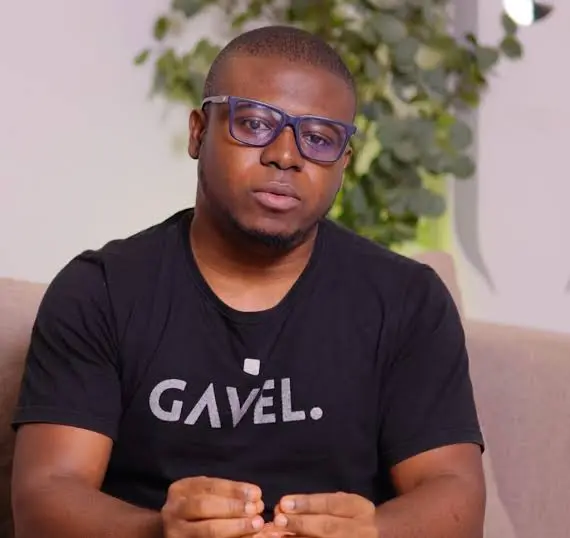
It is within this gap that Nelson Olanipekun, founder of Podus and Citizens’ Gavel, saw a role for technology.
Justice for Ordinary Nigerians
Olanipekun, a lawyer and social entrepreneur, founded Citizens’ Gavel in 2017 to improve access to justice for ordinary Nigerians. His interest in the issue was influenced in part by his family’s 11-year legal dispute with a bank, which nearly cost them their home.
After leaving private practice, he began developing technology-based approaches to help people understand their rights and navigate the legal system. That work eventually led to Podus AI.

“When we started Citizens Gavel, we realised that many people need justice,” Olanipekun says.
He says traditional access-to-justice efforts have often been limited by the need for physical offices and face-to-face interactions.
“Most nonprofit organisations providing access to justice in Nigeria operate within the brick-and-mortar space, and they are constrained because of that,” he says.
Availability on WhatsApp
Podus allows users to start with a question rather than a visit to a law office. Its availability on WhatsApp also puts the service on a platform familiar to many Nigerians.
“If you’re confused about tenancy laws, for instance, you can simply go on WhatsApp and ask, ‘My landlord wants to pursue me. What does the law say, and what can I do?” Olanipekun explains.
The platform’s scope extends beyond employment and tenancy questions.
Podus can provide information on legal rights and possible options, help users prepare documents and direct them towards appropriate institutions or professional support.
Olanipekun says the aim is not to make lawyers unnecessary but to give people somewhere to begin when they have a legal question.
“If you have a simple offence or simple situation, instead of getting connected to a lawyer, the AI could help you understand the legal problem and provide legal insight on how to resolve that,” he says.
The technology is also designed around Nigerian law.
Nigerian Laws and Judicial Precedents
Olanipekun says the system was trained using Nigerian laws and judicial precedents to make its responses relevant to the country’s legal environment.
That topic mirrors a broader debate about whether African countries should simply accept global AI technologies or design systems based on their specific needs.
Speaking at the AI in Action Now 2026 conference in Lagos, the conference’s coordinator, Debola Ibiyode, termed the push for locally produced AI as “contextual AI.”
“Contextual AI is building AI on your own local context. Gone are the days when we use European products built for their context. We should take advantage and get solutions that fit us better and faster. The country that wins will be the one that builds responsibly and scales locally,” she said.
But that does not mean every legal problem can or should be handled by AI.
Effiong says users need to distinguish between information generated by an AI system and advice from a qualified legal practitioner.
“No AI chatbot or AI tool is licensed to practice law in Nigeria or, as far as I know, in any legal jurisdiction anywhere in the world,” he says.
AI-generated responses, he says, should therefore be treated as guidance rather than a final legal authority.
Podus itself incorporates human support into its model. Damilare Ayankoya, the company’s tech lead, says the developers recognise the limits of relying entirely on automation.
“We’re not just making everything AI; we’re introducing human factors to balance things and make sure it’s properly done,” he says.

Podus Aid
The broader Podus ecosystem includes Podus Aid, which connects people who cannot afford lawyers with pro bono legal support; Podus Contracts, for drafting and reviewing legal documents; Podus Appointments, which helps connect people in the diaspora with lawyers; and Podus Multidoor, focused on alternative dispute resolution.
Olanipekun says the platform is also intended to develop beyond a single consumer-facing product.
“We are transforming from a product. It’s now an ecosystem level,” he says. “But in the next five years, we will be at an infrastructure level where other people can build on our software and our platforms.”
For Izuwa, the impact of the technology was more immediate. He was not trying to change how Nigeria’s justice system works. He wanted to understand the terms of a job he hoped to take.
Podus did not negotiate the contract for him or make the decision to sign or replace a lawyer. It gave him information he used to identify questions, raise concerns and take part in the negotiation with a clearer understanding of the document.
For people facing legal questions, that may be where AI has its most practical role: not as a substitute for legal expertise, but as a starting point for understanding what comes next.
By Blessing Uma, Bird Story Agency