


 Trending

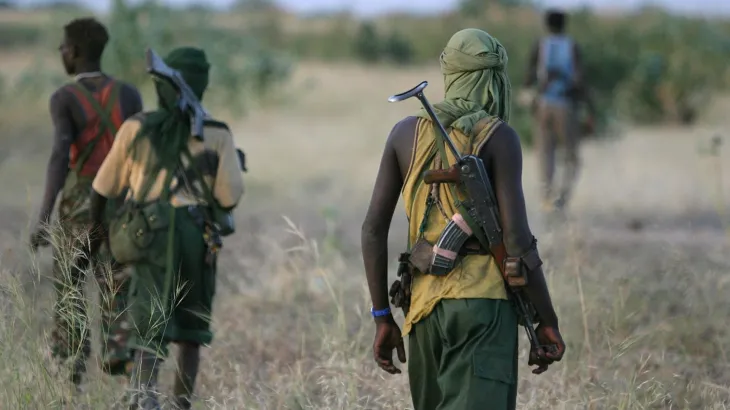
Farmers in Plateau state, Nigeria, say they can no longer work safely in their fields, while herders complain of losing cattle and relatives to attacks.
Both communities accuse the other of violence and say the authorities have failed to protect them.
The sound of gunfire shattered the night in Hwol Gassa village. By the time morning came, a family was waiting for news of a missing relative. What they eventually found was his body.
Dung Gyang remembers being asleep when the shooting began.
“By around 9:00, I was already asleep. When I heard firing, I heard firing from every angle of the village,” he told News Central TV in an investigative documentary examining the violence in Plateau.
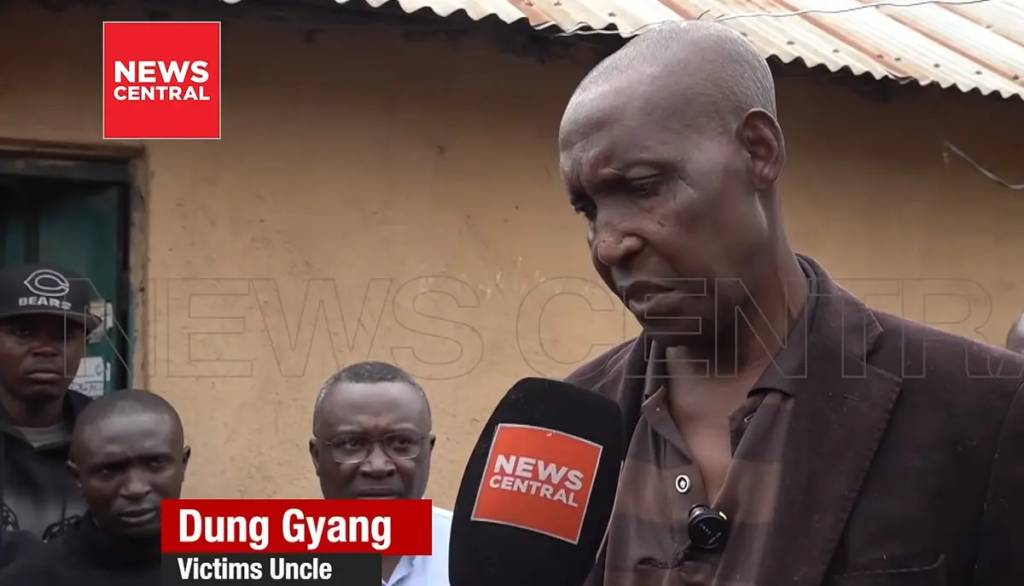
His nephew had gone out during the attack. He did not return alive.
“He went out, and we cannot see him again. It was only the dead body that we heard had been found,” Gyang said.
For him, the loss has hardened into anger. He blamed Fulani herders for the violence, accusing them of repeatedly entering farmland and threatening residents.
“We don’t have any problem other than the Fulani herders. They are the people disturbing us. We have been dealing with them. They have been bothering us. They are even in our farms at all times,” he said.
Across Plateau, where deadly clashes have repeatedly uprooted communities, farmers and herders describe lives shaped by fear and loss.
Their accounts, captured in the News Central TV documentary, reveal people who see themselves as victims and feel abandoned by authorities.
‘We cannot go to our farms’
For farmers in Hwol Gassa and surrounding communities, the fear is not confined to the night.
Ishaya Pam said armed men had attacked farms and destroyed crops, leaving families uncertain whether they could safely return to their fields.
“These people come with guns, G3 and MG, but we have nothing. We have God,” he said.
“Even yesterday they came here and destroyed our cabbage and maize plantation.”
Another farmer said more than 100 farms had been attacked since April, describing how the violence had taken away even the most basic means of survival.
“Right now, we don’t have the right to go to our own farms because if you go to farm they will kill you,” he said.
The farmers also complained that reporting attacks to security personnel had brought only little relief.
“When we take the issue to the security, they will ask us, ‘Did you apprehend the suspects?’ Meanwhile, they usually come at night. But if we go on vigilante duties at night, they will kill us,” one said.
Choji Pam described a daily struggle in which livestock damage crops and residents fear attacks inside their own homes.
“Here, cows disrupt our livelihood. The herdsmen disturb us. They destroy our properties. They hunt us to kill us in our houses. Honestly, what is our crime?” he said.
For Solomon Nwantiri, national president of the Berom Youth Moulder Association, the violence has also changed how his community views its history of welcoming newcomers.
“My people are very hospitable, which has become our weakness, because if our forefathers had not accommodated these terrorist elements who came as Fulani herdsmen but today have grown and metamorphosed into full terrorist elements, we wouldn’t have been going through this,” he said.
For these farmers, the attacks have turned the land they depend on for survival into a source of danger.
‘Those killed cannot be compensated for’
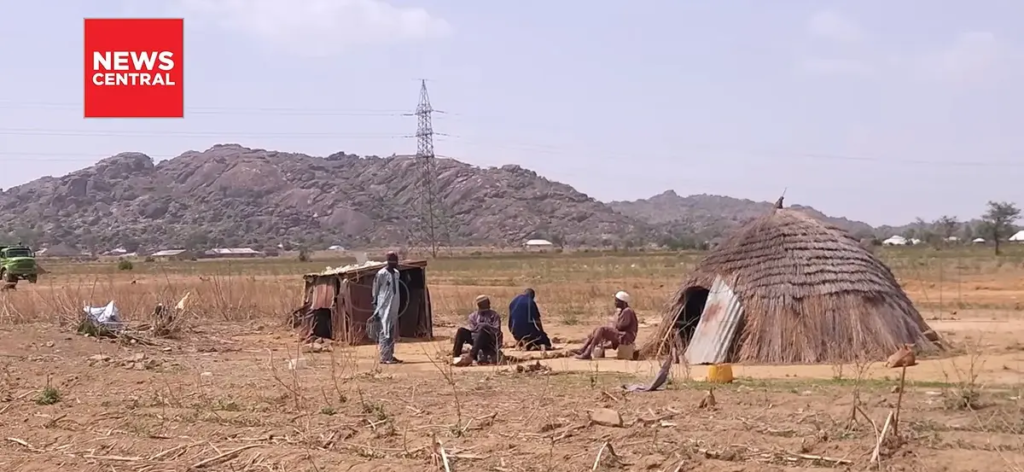
But in Marabandere, a settlement in Bassa Local Government Area largely occupied by Fulani herders, residents offered a sharply different account of the conflict.
They said their community had also suffered killings, livestock theft and attacks on cattle, accusing neighbouring groups of targeting them.
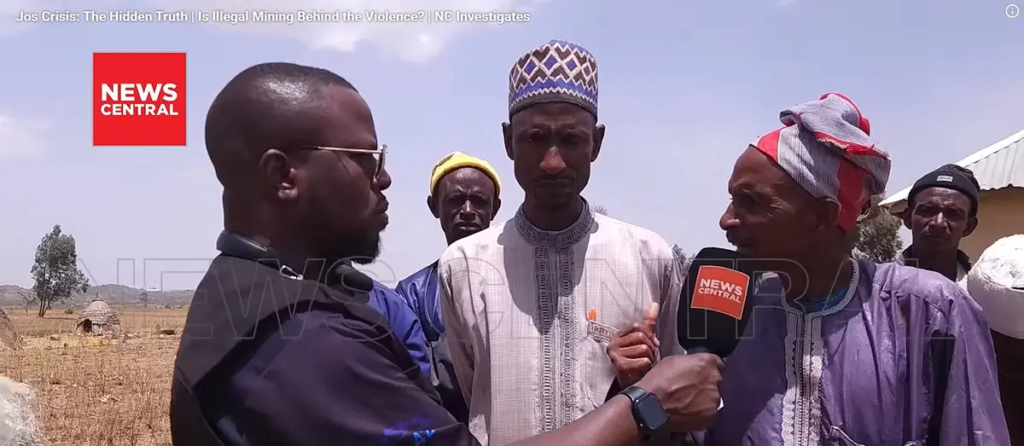
One Cattle herder named Adamu Buba welcomed the News Central TV crew stating that the community’s complaints had often been disregarded.
“I appreciate News Central for coming to us. May your coming be beneficial to us in this town. Our complaints are never regarded. Yet we have lost so much in this town. They’ve killed our people and livestock,” Buba said.
He alleged that 52 cattle belonging to him had been killed in one attack and said some of his animals had also been stolen.
“Some of my cows were rustled. We went there with soldiers. They caught him and said we should head to court. But what will I take to pursue the case when all my cows have been stolen and we never got any compensation?” he said.
He also alleged that 80 cattle were killed in another incident, with 41 later recovered.
“Those killed cannot be compensated for, but all the cows killed must be compensated for,” he said.
Idris Ya’u, chairman of the Miyetti Allah Cattle Breeders Association of Nigeria (MACBAN) in Bassa Local Government Area, said Fulani families had lived in Plateau for generations but were still not recognised as indigenes.
“We were born here, and we live here in Plateau State. We’ve been in Bassa Local Government for over 500 years. Our parents and great-grandparents were born here. Up until this moment, we’re not recognised as indigenes of Plateau State,” he said.
Ya’u traced the conflict to the September 7, 2001 violence in Jos, which involved Muslim and Christian groups, saying attacks on his community had continued in the years that followed.
“They stormed us in the forest without any reason. They killed our livestock, killed our women,” he said.
He said the violence had continued beyond 2013 and 2020, and claimed that many members of his community had been killed.
“There’s a place we set aside as grave sites. Ninety-five per cent of them are those who were murdered. Sometimes we bury three, five or six people,” he said.
Ya’u alleged that some victims had been mutilated, with children among those killed.
He also claimed that 381 cattle had been killed in one incident and complained that compensation had been inadequate.
“They came and paid 50,000 naira each for cows that are sometimes worth over one million naira. That was the only time we had some semblance of justice. Other than that, I don’t know anyone who got paid,” he said.
The MACBAN chairman rejected suggestions that herders in the area carried guns, saying they did not use firearms and that only a few carried knives.
“We have never had any herder who possesses a gun. Even the soldiers know this. We don’t use guns,” he said.
‘They poisoned our well’
Among the most disturbing incidents Ya’u recounted was an alleged attempt to contaminate a well used by the herders and their children in 2025.
He said residents became suspicious after noticing that frogs and fish in the well had died. According to his account, soldiers visited the location and called residents to inspect what had happened.
“The soldiers went to the location and called the residents to come and have a look, only to realise that the frogs and the fishes in the well were all dead,” he said.
Ya’u said soldiers, then questioned residents who had reportedly drunk from the water and challenged him to drink from it again.
“He said yes. They now asked him to drink from the water, but he declined. They asked him to drink it, but he hesitated. He insisted he wouldn’t drink it,” he said.
“The entire place was smelling of rat poison. Things like this cause unrest,” he said.
‘I used to be wealthy. Now I’m a pauper’
Ardo Waziri, a district leader in the herders’ community, said the violence and loss of livestock had impoverished families and affected children’s education.
He questioned why the conflict was often presented as a dispute involving only two ethnic groups when Plateau has many communities.
“Are there only two ethnicities in Plateau State? We have 53 ethnic groups in Plateau State, but only Berom and Irigwe are causing nuisance in the state,” he said, accusing the two groups of being responsible for unrest.
Waziri also alleged that some security personnel demanded money before responding to calls for help.
“I suspect government is complicit in this matter because when we call soldiers to intervene, if you don’t have money to grease their palms, they will not go with you,” he said.
He said he had lost 41 cattle and had gone from being wealthy to struggling financially.
“By God, they killed 41 of my cows. I used to be wealthy. Now I’m a pauper. My children dropped out of school because I couldn’t afford their education. They’ve destroyed my source of wealth,” he said.
Waziri said he owned land in areas where he now felt unwelcome, despite saying the property had been bought for him by his father.
“I have three lands in Irigwe. They were bought for me by my father. Once they see us, they start pointing accusing fingers at us. What is our offence?” he said.
He also argued that the grievances extended beyond Bassa, describing strained relations between his community and other ethnic groups in the state.
Lives on hold
The documentary also raises questions about whether competition for Plateau’s mineral resources may be worsening the violence. The state has a long history of mining, particularly tin extraction, and some community leaders have alleged that attacks and displacement are linked to attempts to gain control of mineral-rich land.
For now, farmers and herders interviewed in the investigation say they are struggling to protect their families and livelihoods while seeking recognition and justice.
Gyang has the memory of a nephew who left home during gunfire and was later found dead. In Hwol Gassa, a local vigilante described how residents rely on cutlasses and prayer because they lack weapons to confront attackers.
“We have nothing, but we have God. We pray over the cutlass so that God will give us victory over them,” he said.
In the herders’ community, Ya’u appealed for fair treatment and said he hoped the television team’s visit would draw attention to their complaints.
“Our leaders must remain just to us. I pray your coming will be beneficial to our community,” he said.
The testimonies reveal communities with sharply conflicting accounts of the violence, each describing itself as abandoned and victimised.
Both sides want justice, but neither appears to trust the other. In Plateau, the cycle of grief and accusations continue.
Read More : NEMA Receives Six Nigerians Deported From US
Watch the full video: