Trending
African governments are increasingly repositioning themselves from passive digital consumers to active developers of core infrastructure, as artificial intelligence, cloud computing, and data-driven industries reshape global investment patterns.
Over the next 12 to 24 months, policy direction across the continent is expected to focus on three interconnected areas: data sovereignty, electricity market reform, and financing models that support long-term digital and energy infrastructure.
These shifts will be central to discussions at the Renegade Intel Track of African Energy Week (AEW) 2026 in Cape Town, scheduled for October 12–16. The platform is expected to convene energy developers, technology firms, financiers, and policymakers to assess how gas, power systems, transmission networks, and digital infrastructure can collectively support Africa’s integration into the global AI economy.
Read More : White House Hosts AI Leaders on Regulation
Across the continent, governments are introducing stricter data localisation frameworks. These policies are designed to ensure that sensitive information, such as public records, financial data, and healthcare systems, remains within national or regional infrastructure while still permitting regulated cross-border data flows under the African Continental Free Trade Area Digital Trade Protocol.
Nigeria is advancing this direction through the General Application and Enforcement Directives, alongside its National Digital Economy and E-Governance Bill. The framework strengthens the mandate of the National Information Technology Development Agency, introduces tiered classifications for data controllers, and increases oversight of high-value digital systems and artificial intelligence applications.

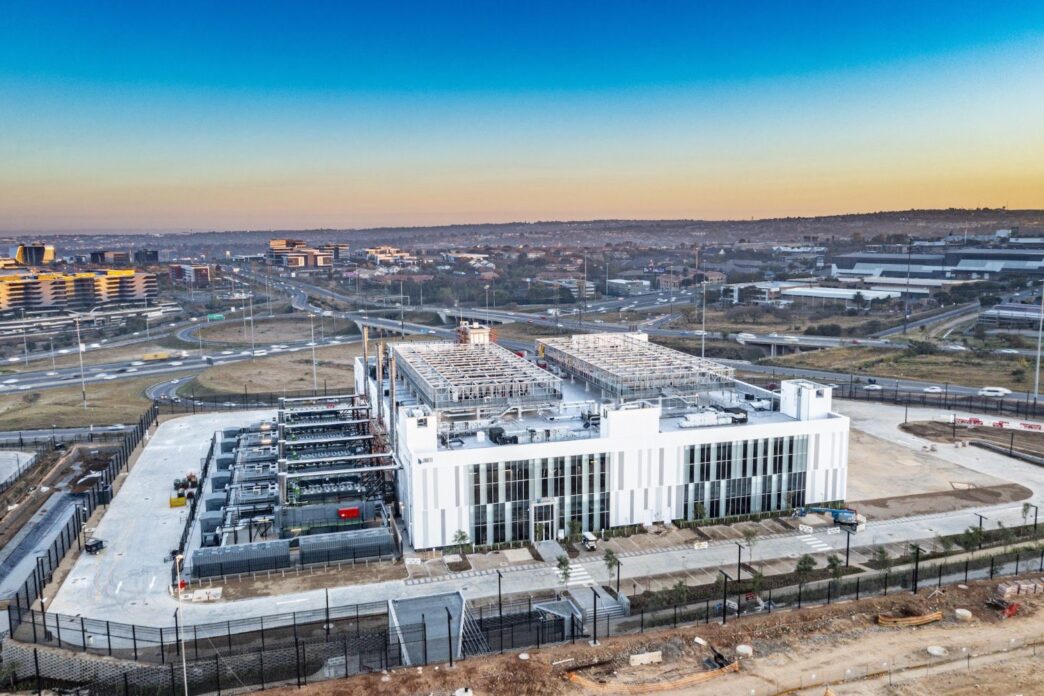
Senegal has adopted a more centralised approach, mandating that government data be hosted within national borders. This policy is reinforced by a Tier III national data centre project near Dakar, aimed at strengthening state control over digital infrastructure.
Electricity reform is also becoming a structural requirement for AI expansion. Large-scale data centres depend on uninterrupted power supply, pushing governments toward liberalised electricity markets and expanded transmission capacity.
South Africa’s Electricity Regulation Amendment Act 38 of 2024, which took effect on January 1, 2025, is widely cited as a regulatory model that establishes an independent transmission operator and enables third-party power wheeling arrangements.
Financing mechanisms are evolving in parallel. Blended finance structures, public-private partnerships, and development finance institution-backed vehicles are being deployed to reduce investment risks in capital-intensive projects.
Nigeria’s 90,000 km open-access fibre-optic plan, structured through a special purpose vehicle with private and multilateral backing, reflects this model.
“Africa cannot afford to be a passive consumer in the global AI revolution,” said NJ Ayuk, Executive Chairman of the African Energy Chamber. “By aligning energy investments, digital infrastructure and financing models, we can ensure our resources, our data and our innovation power the next generation of global industry from within the continent.”
As these reforms accelerate, Africa’s digital strategy is increasingly converging energy systems, data governance, and infrastructure finance into a single industrial policy framework. AEW 2026 is expected to examine how these regulatory and investment pathways can be converted into bankable infrastructure projects across the continent.