Trending
Africa is emerging as the centre of a new wave of global oil exploration, accounting for about 40 per cent of the 42 high-impact exploration wells planned worldwide in 2026.
Global operators are expected to spend about $55 billion on exploration this year, with more than $10 billion allocated to frontier basins. The scale of investment marks a return to levels last seen before the COVID-19 pandemic, as companies increase efforts to identify new sources of energy supply.
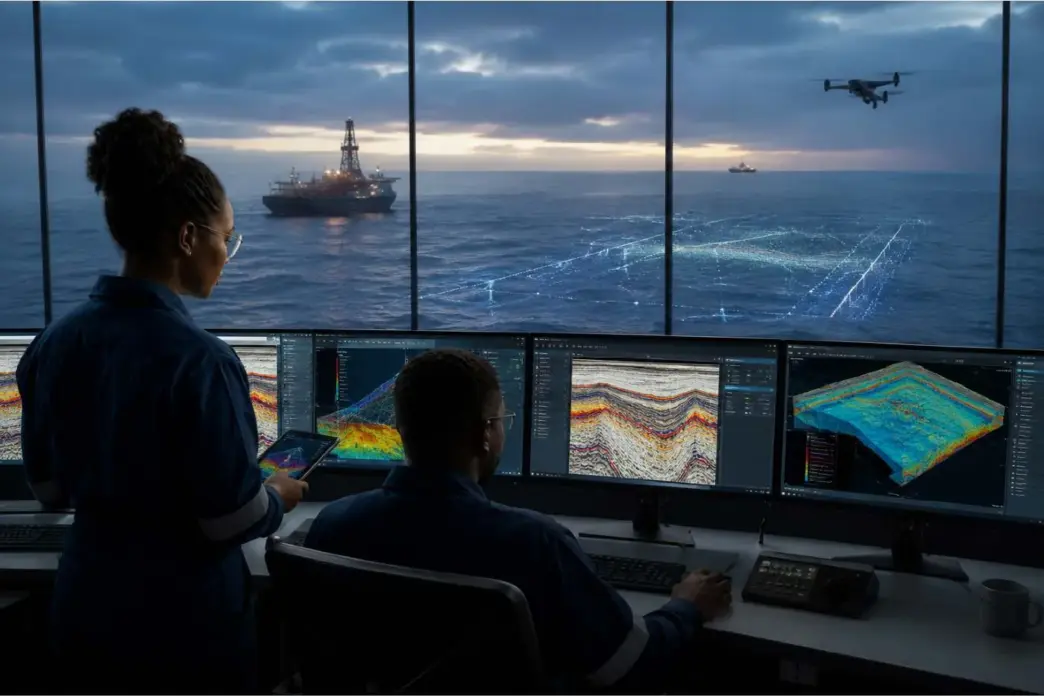
However, exploration spending has become more selective since 2020, with investors demanding greater confidence in subsurface models before approving major drilling projects. The pressure to reduce costly dry wells has accelerated the adoption of artificial intelligence and machine learning across the energy sector.
The role of these technologies will be examined at Renegade Intel, an AI and data centre conference at African Energy Week (AEW) 2026.
A dedicated panel, titled The Data-Driven Basin: How AI Will Reshape Africa’s Next Billion-Barrel Discoveries, will explore how artificial intelligence is changing exploration processes, including seismic interpretation, reservoir analysis and prospect evaluation.
According to Rystad Energy, the success rate of high-impact wildcat wells almost doubled between 2024 and 2025, increasing from 23 per cent to 38 per cent. The volumes discovered from those wells also grew by more than half, reaching about 2.3 billion barrels of oil equivalent.
Industry experts surveyed by the American Association of Petroleum Geologists (AAPG) say AI and machine learning could reduce the time required to move from acquiring exploration acreage to confirming a discovery. The current four-to-six-year timeline could potentially be shortened to two or three years through improved data analysis and modelling.

Namibia’s Orange Basin demonstrates the impact of advanced exploration technology. TotalEnergies’ Venus-1 prospect was supported by high-resolution seismic imaging and advanced subsurface modelling, helping reduce uncertainty before drilling began. The discovery, estimated at between 1.5 and 2 billion barrels of recoverable oil, has become the largest discovery in sub-Saharan Africa and has changed expectations for the basin.
In Angola, technology is also being used to reassess previously underexplored areas. TGS began a 12,600 line-kilometre 2D seismic survey across Angola’s ultra-deepwater region in February 2026, marking the first survey of its scale in those waters since 2015. The Ultra Profundo campaign uses advanced processing methods, including full waveform inversion, to improve imaging of pre-salt and sub-salt structures.
The use of AI allows companies to analyse vast amounts of seismic data, well information and satellite imagery, identifying patterns that may not be easily detected through traditional methods. By improving pre-drill assessments, these tools could reduce exploration costs and improve the chances of commercial discoveries.
For Africa’s frontier basins, the technology could change investment decisions by making previously high-risk projects more attractive. Renegade Intel will focus on how these advances can support exploration across a continent with some of the world’s least explored geological regions.
“AI will not replace the geoscientist, but it will transform what a geoscientist can do with the data,” says NJ Ayuk, Executive Chairman of the African Energy Chamber. “For a continent sitting on some of the world’s most underexplored basins, that is a competitive advantage waiting to be realised, and Renegade Intel is where we start putting it to work.”
Renegade Intel will bring together investors, technology companies, energy firms and policymakers to discuss how artificial intelligence and digital infrastructure are changing Africa’s energy sector. The conference will be held during African Energy Week 2026 in Cape Town from October 12 to 16.