Trending
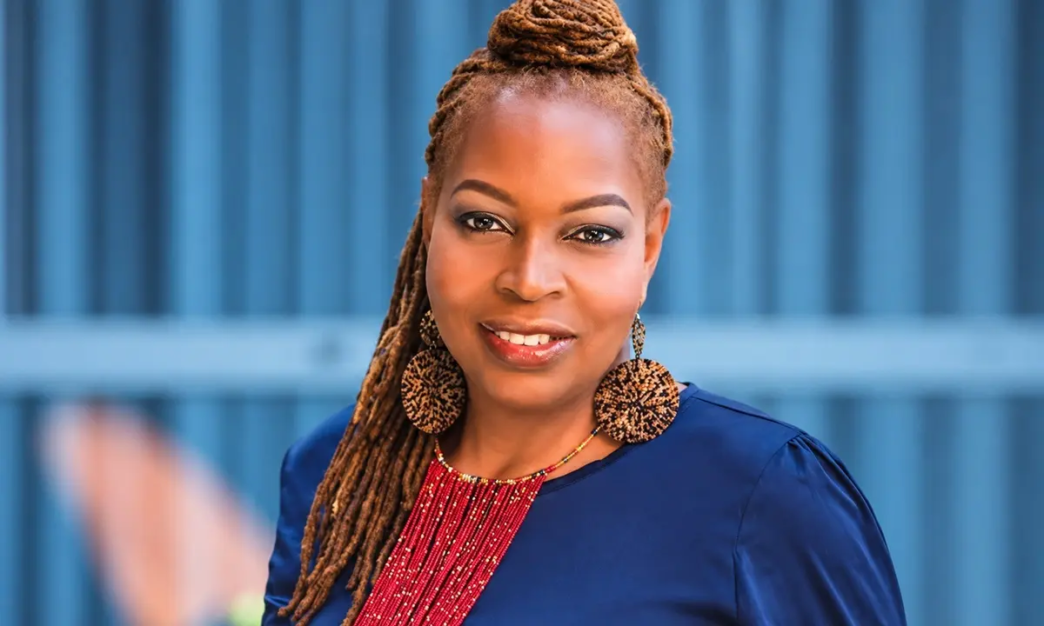
For two decades, she has worked at the intersection of music, fashion, enterprise and corporate leadership. Now, as she prepares for Artistic Pulse Festival & Trade Fair 2026, Dr Ngozi Omambala is focused on turning Africa’s global cultural influence into lasting commercial opportunities.
Africa has become remarkably good at exporting its creativity. Its music travels across continents, its fashion commands international attention, and its films reach audiences far beyond their countries of origin. Yet beneath this extraordinary visibility lies a more complicated question: who owns the value, who controls the opportunities, and how much of the wealth generated by African talent remains in African hands?
It is a question that increasingly defines the work of Dr Ngozi Omambala, entrepreneur, business leader and advocate for a more commercially structured creative economy.
Read More : Trump Spokeswoman Confirms Bar Exam Failure
For nearly two decades, Omambala has navigated the intersection of artistic expression and enterprise, building platforms, cultivating partnerships and confronting the demanding realities of doing business in Nigeria.
A chartered accountant with an MBA and an honorary doctorate in Business Administration, Leadership and Strategy Management. Her professional journey combines financial discipline with cultural entrepreneurship. In 2009, she served as Nigeria’s Head of Marketing at MTV Base Africa before developing initiatives including LoudNProudLive, a monthly live-music platform sustained for 14 years before evolving online; the Pan-African Music & Fashion Runway, now in its 12th year; The African Narrative Magazine; and GBT Auditions.
Her journey has also involved difficult decisions. Before the inaugural Artistic Pulse Festival in 2025, an intellectual property challenges forced her to abandon an existing arrangement and rebuild the project independently. During the COVID-19 pandemic, she moved the Music Fashion Runway #MFR brand platform online, attracting more than 10,000 live viewers and expanding its international reach.
These experiences reinforced her conviction that talent alone is insufficient without adaptability, sound management, intellectual property protection and access to markets.
As Group Managing Director and CEO of NMO Management Limited, recently reappointed Vice Chair of NACCIMA Creative Economy and LCCI’s past Creative & Entertainment Group Chairperson in 2023, Omambala also operates within Nigeria’s organised business community.
November 2026 marks 20 years since she came to Nigeria. It also brings the next edition of Artistic Pulse Festival (APF) & Trade Fair, scheduled for 26–29 November at the Federal Palace Hotel, Victoria Island, Lagos.
Guided by the theme “Creativity, Enterprise, Trade and Sustainable Growth,” the festival seeks to connect talent with investors, corporate institutions, technology and international markets, positioning cultural enterprise as a serious contributor to Africa’s development.
In this wide-ranging interview, Omambala reflects on her entrepreneurial journey, the difficult choices that shaped her leadership philosophy, the institutional barriers confronting African businesses and the opportunities emerging for women and young entrepreneurs.
She also explains why artistic freedom and commercial discipline must coexist, and why building enduring institutions matters more than individual recognition.
Underlying her reflections is a compelling conviction: visibility is not the same as success, and cultural influence alone cannot guarantee lasting prosperity.
For Dr Ngozi Omambala, the next chapter is not simply about putting African talent on the stage. It is about ensuring that, long after the applause has faded, there is a business capable of standing behind it.
Your career spans talent management, cultural programming, enterprise development and international engagement. What experiences shaped your conviction that creativity must be treated as a serious economic enterprise?
I have always believed that creativity is more than an expression of talent. It is a powerful driver of employment, entrepreneurship and international opportunity. But unlocking this potential requires the right infrastructure, commercial discipline and access to markets.
My experience across talent management, cultural programming, enterprise development and international engagement has reinforced this conviction. My background as a chartered accountant has also shaped my perspective, helping me appreciate both the creative process and the strategic and financial disciplines required to build sustainable businesses.
Creativity needs room for imagination, innovation and artistic expression. Equally, creative enterprises require investment, sound management, intellectual property protection and effective distribution. The challenge is to bring these elements together without compromising artistic integrity.
One concern throughout my career has been the disconnect between Africa’s extraordinary creative talent and the opportunities available to it. Across music, fashion, film, visual arts, beauty, design and other sectors, we have exceptional talent. Yet visibility and recognition do not necessarily translate into commercial success.
Many creative entrepreneurs produce outstanding work but lack the networks, financing, industry connections and institutional support needed to grow. We must therefore move beyond celebrating talent to creating the structures that enable it to flourish.
This is not about placing commerce above artistic expression. It is about ensuring that creative professionals can build viable livelihoods from their work while preserving their artistic independence.
My entrepreneurial journey has increasingly been guided by one fundamental question: How do we connect talent to the systems that enable it to grow?
That question continues to shape my work at NMO Management and the vision behind Artistic Pulse Festival (APF) & Trade Fair 2026. Ultimately, my ambition is to help build an environment where creativity is not merely celebrated for its cultural significance but given the platforms, partnerships and opportunities to realise its full potential.
What inspired the establishment of NMO Management, and how has your vision evolved as you have come to understand the wider opportunities and challenges within Africa’s creative economy?
NMO Management emerged from my desire to create opportunities, connect people and develop platforms where talent, ideas and enterprise could flourish.
Over time, my understanding of what it takes to build sustainable creative businesses has broadened. Identifying talent or organising events is only part of the equation. Equally important are business development, strategic partnerships, institutional relationships and the structures needed to sustain growth.
I have also come to recognise how deeply the creative economy intersects with other sectors, including finance, technology, manufacturing, tourism, hospitality and international trade.
A fashion enterprise, for instance, extends beyond the designer to textiles, production, logistics, branding, retail and distribution. Similarly, an artist’s career involves more than performance. It requires effective management of intellectual property, contracts, licensing, marketing and commercial partnerships.
These connections have increasingly shaped my approach to enterprise development. My focus is on bridging the gap between creative talent and the wider business community, helping entrepreneurs become investment-ready, access institutional and corporate partnerships, and explore international markets.
I am particularly interested in creating collaborations that deliver lasting opportunities beyond individual projects or events.
Ultimately, NMO Management represents my evolving entrepreneurial commitment to connecting talent, ideas and enterprise with the partnerships and opportunities they need to thrive.
Many successful African entrepreneurs build their businesses by navigating systems that were not designed to support them. What has been the most difficult institutional or commercial barrier you have encountered, and what did overcoming it teach you about doing business in Nigeria?
One of the most defining experiences in my entrepreneurial journey occurred during the development of Artistic Pulse Festival, ahead of its inaugural edition in 2025.
The original concept had been approved, and we were progressing towards implementation when a fundamental challenge over intellectual property emerged, becoming a deal-breaker.
It was a difficult decision. Considerable time, effort and resources had gone into developing the project, and walking away meant potentially losing everything we had built.
I chose to step back, reassess the concept and rebuild independently. This involved reworking the strategy, positioning, location and dates, while assuming full responsibility for bringing the vision to life.
What initially seemed like a setback became a turning point. The independence allowed me to shape APF around my original vision while expanding its scope beyond a cultural event into a platform connecting creativity with enterprise, trade, investment and market opportunities.
The experience reinforced an important lesson: entrepreneurship demands not only resilience but also the courage to recognise when an arrangement is no longer viable and the judgement to reassess the path forward.
It also deepened my appreciation of intellectual property as a critical business asset. For creative entrepreneurs, ownership and control of ideas can determine commercial value, negotiating power and long-term opportunities. Understanding and protecting these rights is therefore essential.
Doing business in Nigeria requires collaboration, flexibility and an appreciation of different perspectives. However, these must be balanced with clear agreements, mutual respect and a commitment to fundamental principles.
Above all, I learnt that changing direction does not mean abandoning your ambition. Sometimes, stepping back and rebuilding independently is precisely what allows a vision to achieve its fullest potential.
You operate at the intersection of the creative community, corporate institutions and international stakeholders. How do you reconcile the spontaneity and individuality of creative talent with the discipline, financial accountability and commercial structures that investors expect?
I do not see creativity and commercial discipline as opposing forces. Rather, I believe they complement each other. Creativity brings originality, imagination and cultural expression, while commercial structures provide the framework to develop, protect and sustain that value.
The challenge is to create an environment where both can thrive without compromising artistic freedom or business accountability.
Creative professionals need the freedom to innovate and experiment. However, successful commercial relationships also require an understanding of contracts, budgets, intellectual property, timelines and deliverables.
Equally, investors and corporate organisations must recognise that creative value cannot always be assessed through conventional business metrics. Originality, cultural relevance, audience engagement and the ability to generate new markets are equally important considerations.
For me, the solution is not to impose rigid commercial models on creativity, but to develop structures that accommodate its distinctive nature while encouraging professionalism and accountability.
This philosophy reflects Artistic Pulse Festival & Trade Fair, where we seek to connect creative practitioners with opportunities across enterprise, investment, technology, tourism, trade and sustainability.
Our objective is to foster meaningful partnerships between talent and the institutions capable of supporting its growth.
Ultimately, creativity must be respected as an asset, while commercial relationships must be anchored in clarity, mutual understanding and shared value.
Artistic Pulse Festival appears to represent an evolution in your entrepreneurial journey. Was there a particular experience or observation that persuaded you that Africa needed something beyond conventional entertainment festivals and creative showcases?
Artistic Pulse Festival emerged from my belief that Africa’s creative industries deserves a more integrated approach
Africa has no shortage of talent, cultural richness or entrepreneurial energy. Nigeria, in particular, has demonstrated an extraordinary ability to produce work that attracts global audiences and generates international interest.
However, visibility does not always translate into lasting commercial opportunities. I began asking how we could move beyond performances, exhibitions and festivals to connect entrepreneurs with buyers, investors, distributors and international markets.
Those questions shaped the vision for Artistic Pulse Festival (APF) & Trade Fair, a platform designed to bridge culture and commerce through business partnerships, enterprise development and market access.
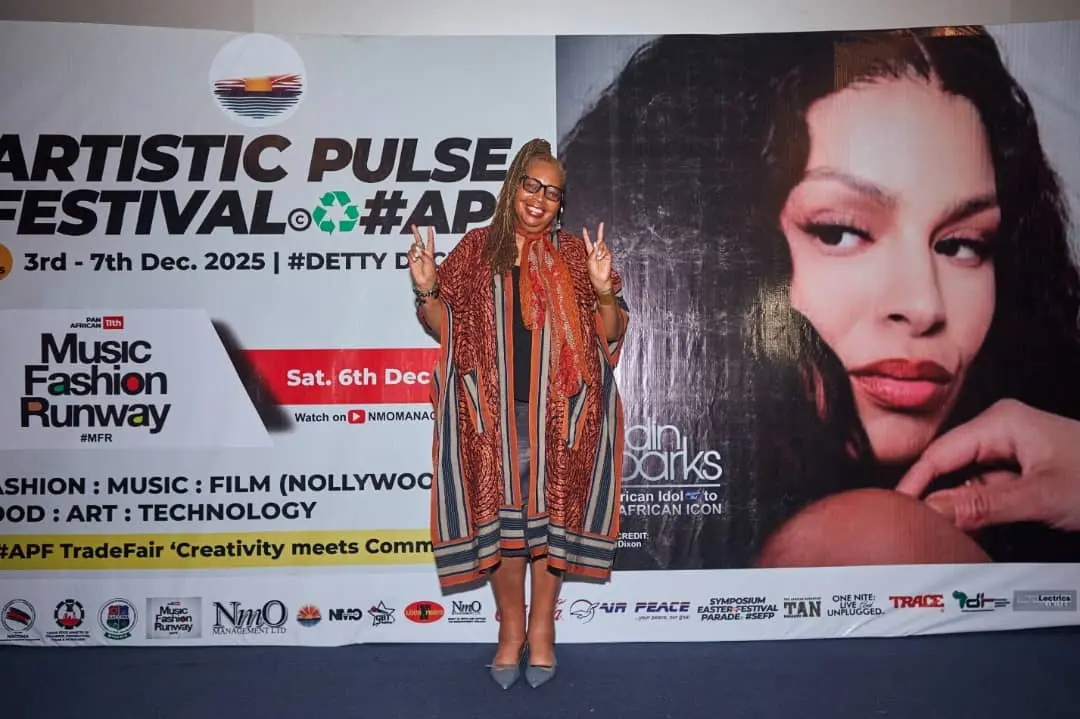
The 2026 edition will take place from 26–29 November at the Federal Palace Hotel, Victoria Island, Lagos, with the Trade Fair scheduled for 26–27 November. Our theme, Creativity, Enterprise, Trade and Sustainable Growth, reflects this ambition.
I would like APF to encourage a shift in the perception of artists and other cultural practitioners: not merely as entertainers or producers of content, but as entrepreneurs, employers, intellectual property owners and contributors to national development.
For me, the real opportunity lies in connecting talent with the businesses, institutions and markets that can support its growth.
Ultimately, APF is about moving beyond cultural celebration to creating meaningful commercial opportunities and lasting partnerships.
How has your experience as a woman in business shaped your approach to leadership, and what more needs to be done to create opportunities for women in Africa?
I believe the landscape is evolving. Across Africa, women are increasingly occupying influential positions, building successful enterprises and demonstrating that leadership, innovation and competence are not defined by gender.
My own experience has reinforced the importance of resilience, preparation, integrity and the confidence to pursue one’s ambitions. I also believe representation matters. When young women see others building institutions, leading businesses and making meaningful contributions to society, they begin to recognise what is possible for themselves.
One woman I have long admired is Dr Ngozi Okonjo-Iweala, Director-General of the World Trade Organization. Interestingly, we share the same first name and birthday. Beyond that coincidence, her career exemplifies expertise, courage, conviction and leadership that commands international respect.
What particularly inspires me is that she is an exceptional leader who happens to be a woman. I believe women should increasingly be recognised not simply for occupying leadership positions, but for the knowledge, capabilities and achievements they bring to those roles.
However, representation alone is insufficient. We should expand access to finance, professional networks, mentorship, markets and decision-making opportunities. More importantly, we need institutions that recognise merit, nurture talent and remove barriers to advancement.
Ultimately, I would like the next generation of African women to see leadership not as a distant aspiration, but as a responsibility they can prepare for, pursue and confidently embrace.
What distinguishes a creative talent that achieves temporary recognition from one that builds a sustainable business, and what needs to change in the African creative ecosystem to support long-term success?
Building a successful business in Nigeria is challenging, and sustaining that success demands even more. Beyond talent, it requires resilience, consistency, strategic thinking, adaptability and a genuine passion for what you do.
November 2026 marks 20 years since I came to Nigeria. Over those two decades, I have worked across different segments of the creative industries, including serving as Head of Marketing at MTV Base in 2009 and establishing platforms such as LoudNProudLive, GBT Auditions, the Pan-African Music & Fashion Runway (MFR) and The African Narrative (TAN) Magazine.
Each has contributed to my understanding of what it takes to build lasting institutions. LoudNProudLive, for instance, maintained a monthly live-music presence for 14 years before evolving online. Music & Fashion Runway is now 12 years old, while The African Narrative Magazine has spent approximately eight years promoting African stories and perspectives.
Their longevity reflects the importance of consistency, innovation and adapting to changing audiences, technologies and business realities.
These experiences have taught me that recognition may open doors, but lasting success depends on what happens afterwards. Talent must be supported by effective management, commercial partnerships, market access and the ability to generate continuing value.
My involvement in the organised private sector, particularly as Vice Chair of NACCIMA’s Creative Economy, has further reinforced the need for stronger connections between the creative industries and sectors such as finance, technology, manufacturing, tourism and trade.
We must move beyond providing platforms for visibility to developing the infrastructure, investment opportunities and institutional relationships that enable entrepreneurs to build viable businesses.
Ultimately, the difference between temporary recognition and lasting success lies in the ability to combine talent with discipline, adaptability and sound commercial strategy.
That remains central to my work: building platforms and partnerships that help African talent progress from recognition to enterprise and long-term growth.
Leadership often requires making difficult decisions when commercial realities conflict with personal ambition. Can you recall a moment when you had to reconsider a cherished idea, partnership or business direction, and how that decision ultimately influenced your professional journey?
One defining experience was the decision to rethink the business model of the Pan-African Music Fashion Runway brand and platform during the COVID-19 pandemic.
With live events suspended and restrictions on public gatherings in Lagos, we faced considerable uncertainty. We strictly complied with the prescribed and mandatory health protocols took it online, attracting over 10,000 live viewers – including audiences in the United Kingdom, United States and India.
What initially appeared to be a setback revealed itself to be opportunity. We subsequently adopted a hybrid model, combining physical events with digital engagement, an approach we have retained and extended to LoudNProudLive.
It also reinforced my belief in technology as a catalyst for industry development. Digital platforms can expand audiences, open international markets and create commercial opportunities that traditional models may not easily provide.
Technology is a key pillar at Artistic Pulse Festival (APF) & Trade Fair 2026, connecting talent with enterprise, investment and global markets.
Nigeria’s creative industries have enormous potential to contribute to economic diversification, employment and exports. However, realising that potential requires stronger investment in technology, infrastructure, financing and commercial partnerships.
I guess the lesson here is that effective leadership is not about resisting change, but recognising when change is necessary and the strategy should be flexible enough to respond to new realities. That lesson continues to guide my entrepreneurial journey.
What do you consider your most meaningful contribution to the creative ecosystem so far, and what important work remains unfinished?
I think about legacy less in terms of titles or personal achievements and more in terms of the opportunities created, the institutions built and what continues to thrive beyond our individual involvement.
Over the years, through NMO Management and its platforms such as LoudNProudLive, Pan African Music Fashion Runway #MFR and The African Narrative (TAN) Magazine, have sought to create opportunities for talent to be discovered, developed and connected with wider audiences.
I believe helping to change how we perceive the creative industries, they represent a significant source of employment, entrepreneurship, investment and trade.
Nigeria’s creative economy has been estimated at approximately US$4 billion, reflecting considerable potential, particularly for young people and women building businesses across music, fashion, film, beauty, design, media and technology.
Our youthful population possesses extraordinary talent and ambition, while small and medium-sized enterprises remain essential to job creation and business development. We have barely scratched the surface of what is possible.
The challenge is to move beyond this. Entrepreneurs need access to finance, technology, intellectual property protection, distribution networks and markets which requires greater collaboration between government, businesses, financial institutions and international partners.
Artistic Pulse Festival (APF) & Trade Fair 2026 is a platform that connects talent with enterprise, investment and trade, while encouraging partnerships capable of delivering opportunities beyond the festival itself.
The unfinished work lies in building an environment where more young people and women can transform their ideas into viable enterprises, compete internationally and create lasting opportunities for others. Such progress requires time, consistency and collective effort. No individual or organisation can achieve it alone.
Ultimately, I believe legacy is measured not simply by what carries your name, but by what continues to create value and impact.
If the platforms we establish open doors, the partnerships we build generate opportunities, and the businesses we support go on to create jobs and livelihoods, then we will have contributed to something far greater than personal achievement. That is a legacy worth building.
When you look ten years ahead, what do you hope to see for young African entrepreneurs, particularly women, and what role would you like the institutions and opportunities you are building today to play in shaping that future?
Ten years from now, I would like young African entrepreneurs to look back and recognise that the foundations established, made their journeys easier and their ambitions more achievable.
I envision a generation better equipped to transform ideas into successful businesses, access international markets and benefit from the intellectual property they create.
Read More : Video: Musk Launches New Tesla Flying Car
For young women particularly, genuine inclusion in leadership, enterprise and decision-making. Ambition supported by finance, knowledge, professional networks in an environment that rewards competence.
Africa possesses extraordinary talent, cultural influence and entrepreneurial energy. Harnessing these strengths will require sound governance, stronger institutions and sustained cooperation between government and the private sector.
Ultimately, our true contribution will be measured not by how far we have come, but by the opportunities we create for those who follow and the impact they go on to make.