Trending
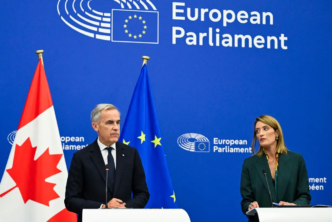
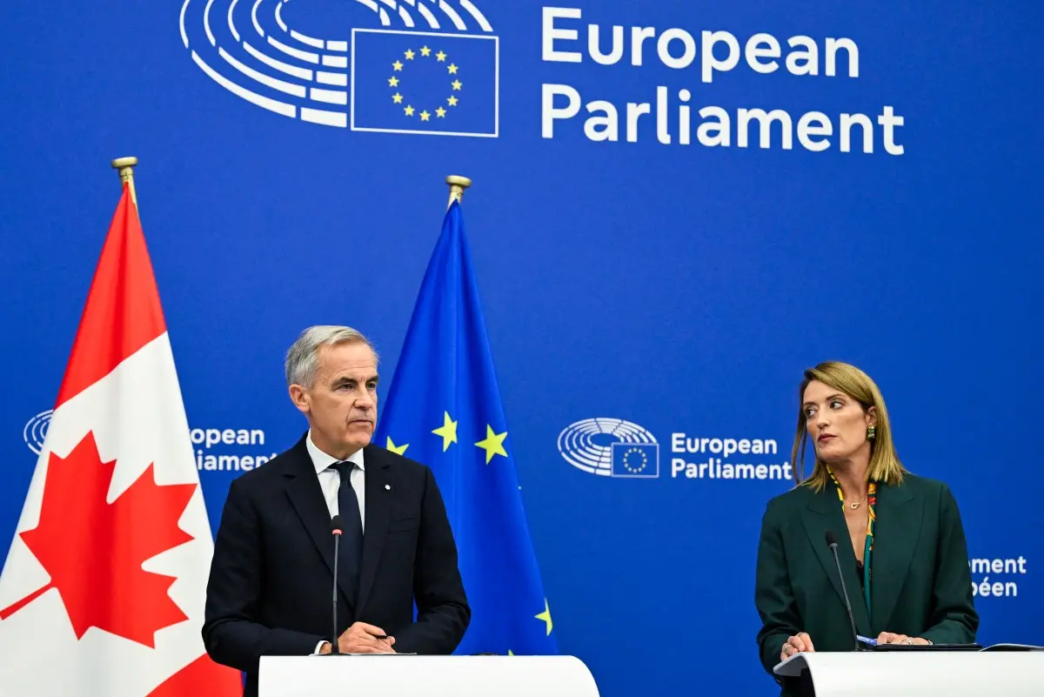
Canada’s Prime Minister Mark Carney has defended his push for closer ties with Europe, saying a proposed partnership with the European Union would strengthen Canada’s resilience as tensions with the United States continue over trade and foreign policy.
Addressing the European Parliament in Strasbourg, Carney welcomed an idea proposed by EU Commission President Ursula von der Leyen for Canada to become the bloc’s first “associate member”.
“Europe and Canada are stronger together,” Carney told lawmakers, adding that Ottawa was ready to deepen cooperation with Europe in areas including artificial intelligence, defence, energy, critical minerals and digital trade.
The speech received a standing ovation from EU lawmakers as Carney presented the partnership as a way to expand cooperation rather than oppose existing allies.
His comments came after US President Donald Trump criticised the proposal and warned of possible economic retaliation against Europe if the arrangement moved forward. Responding to the threat, Carney said Canada would continue making its own international decisions.
“No one is going to dictate our culture, or with whom we can strike agreements internationally,” he told reporters.
Carney said the proposed alliance was focused on building economic and strategic resilience, adding that Canada wanted partnerships that would protect its sovereignty and democratic institutions.
“We are pursuing resilience so no one, no one can control our open markets, impair our sovereignty, threaten our territorial integrity, or undermine our freedoms, our democracies, our rule of law,” he said.
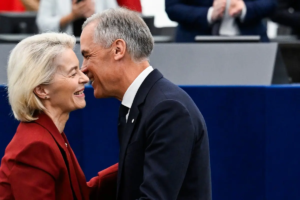
Von der Leyen has described the proposal as a partnership that is “not against anyone else”, while Carney said a stronger Canada would also remain a more effective partner for the United States.
The details of the associate membership idea remain unclear, as EU treaties do not currently provide for such a status. However, Carney said the focus should be on practical cooperation rather than the title.
“What matters is the substance — what are we actually building together?” he said.
The proposed cooperation could include Canadian support for Europe’s energy security through liquefied natural gas and hydrogen supplies, as well as collaboration in artificial intelligence, space technology, defence industries and payments systems.
Canada and the EU already have the Comprehensive Economic and Trade Agreement (CETA), which removed most tariffs between both sides. Trade in goods and services has increased significantly since the agreement came into effect.
European leaders have shown varying support for closer ties, with some calling for further discussions before approving any new arrangement.
The proposal comes as Canada and the United States face growing trade tensions, while the EU also navigates strained relations with Washington over tariffs and geopolitical disputes.